 WhatsApp Us Now
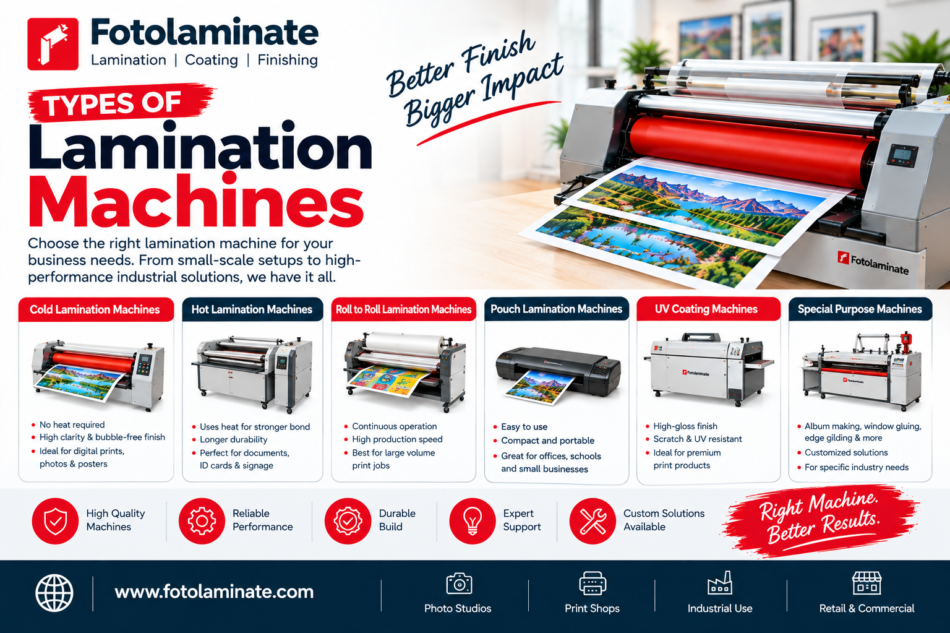
Lamination is an important finishing process in printing, photography, signage, and several commercial applications. It helps protect compatible printed materials and can improve their appearance by adding a smooth, glossy, or matte surface. For businesses handling regular production work, choosing suitable lamination equipment can make the finishing process more consistent and manageable.
However, different machines are designed for different materials and workloads. Understanding how cold lamination works and what industrial equipment offers can help businesses make a more informed purchasing decision.
What Is Cold Lamination Machine?
If you are wondering what is cold lamination machine, it is equipment that applies an adhesive film to a material using pressure rather than heat to activate the bonding process. The film is designed for cold application, making the process useful for selected prints and surfaces that are compatible with pressure-sensitive adhesive films.
Cold lamination is commonly considered for applications such as:
- Photographs and photo prints
- Posters and promotional graphics
- Signage and display materials
- Digital prints
- Selected labels and printed sheets
The final result depends on the adhesive film, print surface, machine settings, and application technique. A suitable film must be selected for the material being laminated.
How Does Cold Lamination Work?
The process generally involves placing a compatible printed material and adhesive film into the machine. Rollers apply pressure as the material passes through, helping the film bond to the surface.
Although the process is straightforward, preparation matters. Dust, uneven feeding, incorrect alignment, or unsuitable film can affect the finish.
For better results, operators should:
- Check that the print and film are compatible.
- Clean the working area and inspect the print surface.
- Align the material before feeding it into the rollers.
- Follow the manufacturer’s instructions for pressure and operation.
- Inspect the laminated material for bubbles, wrinkles, or uneven edges.
Testing new materials before starting a large batch can help reduce waste and improve consistency.
Choosing an Industrial Lamination Machine India Businesses Need
Businesses looking for an industrial lamination machine India suppliers can provide should begin by identifying their production requirements. Industrial applications vary considerably, from print shops handling regular poster orders to businesses producing large-format graphics.
The right machine should match the materials, dimensions, and workload involved in daily operations.
Important features to compare include:
Working width: The machine should accommodate the largest prints you expect to process regularly.
Roller construction: Roller quality, alignment, and pressure adjustment can influence material handling and finishing consistency.
Operating mechanism: Depending on the model, manual, powered, or pneumatic systems may be available.
Speed control: Adjustable speed can be useful when working with different materials or managing a varied production schedule.
Material compatibility: Confirm which films and substrates are supported before making a purchase.
Maintenance and support: Ask about cleaning procedures, servicing, spare parts, and warranty coverage.
A machine with the right specifications can support regular production without requiring unnecessary capacity or features.
Industrial and Small-Scale Lamination: What Is the Difference?
A small photo studio and a commercial printing unit may both need lamination, but their operational priorities can differ.
A compact machine may be sufficient for smaller prints and moderate workloads. An industrial model may be more appropriate when businesses regularly process wider materials, handle larger batches, or require additional operating controls.
Before deciding, consider the following:
- How many prints do you laminate on a typical working day?
- What are the smallest and largest material sizes?
- Do you need to process different types of film?
- How much workspace is available?
- Would powered rollers or pressure adjustment improve your workflow?
These questions help connect machine specifications with actual business requirements instead of relying on broad product descriptions.
Cold Lamination vs. Hot Lamination
Cold and hot lamination differ mainly in how the adhesive bonds to the material. Cold lamination uses pressure-sensitive adhesive film, while hot lamination uses heat with a compatible adhesive or laminating film.
Cold lamination may be preferable for suitable heat-sensitive materials. Hot lamination can be appropriate for applications that require heat-activated film. Neither method is ideal for every material, so compatibility should always be checked before processing.
The decision should be based on the print substrate, film requirements, desired finish, and the machine’s operating capabilities.
Maintaining Equipment for Consistent Results
Routine care helps keep a lamination machine ready for regular use. Follow the manufacturer’s instructions for cleaning rollers, inspecting components, and storing compatible films. Operators should also avoid feeding materials that exceed the machine’s stated limits.
When defects occur, check the condition of the print, film alignment, and machine settings before continuing with the batch. Keeping a record of successful settings for frequently used materials can also help improve repeatability.
Finding Equipment That Fits Your Production Needs
Selecting industrial lamination equipment requires a balance between working width, operating features, material compatibility, maintenance, and budget. A larger machine is not automatically the best option if its capacity exceeds your actual requirements.
Codalam offers laminating equipment for professional printing and finishing applications. Businesses can explore available models, compare specifications, and request current pricing based on their intended use.
Before purchasing, explain your materials, print dimensions, and expected production volume to the supplier. This makes it easier to identify a machine that fits your workflow and supports dependable finishing over time.


