 WhatsApp Us Now
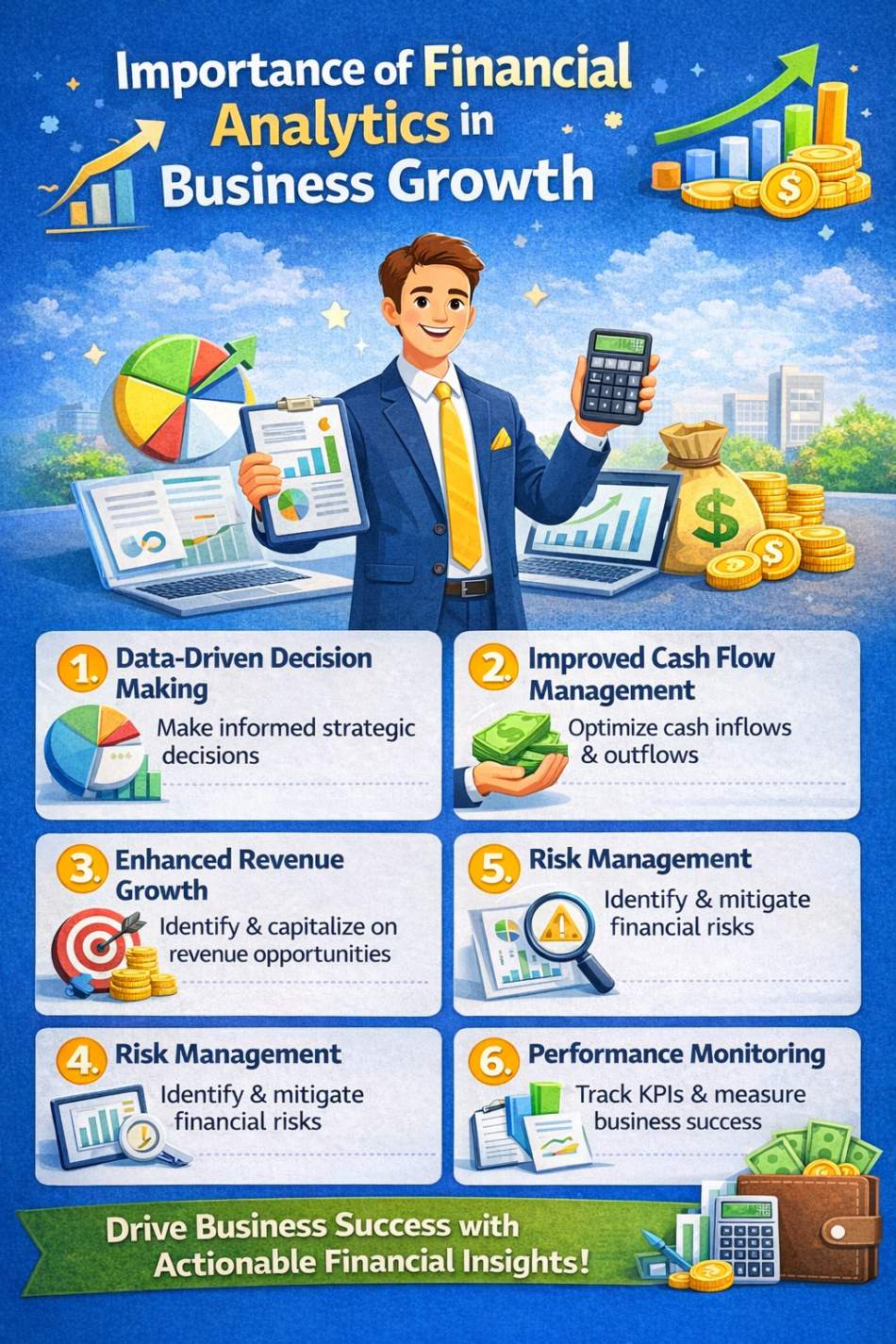
In today’s competitive business landscape, data-driven decision-making is crucial for achieving sustainable growth. Financial analytics plays a pivotal role in helping companies understand their financial health, optimize performance, and create strategies that drive profitability. By leveraging advanced financial analytics tools and methodologies, businesses can forecast trends, manage risks, and make informed strategic decisions that lead to long-term success.
At CfoProAnalytics, we provide expert financial analytics services designed to help online businesses in the USA maximize growth, streamline operations, and achieve measurable results. By analyzing financial data effectively, businesses gain insights that empower them to make smarter decisions and stay ahead in the market.
What Is Financial Analytics?
Financial analytics refers to the process of examining financial data to identify trends, patterns, and insights that can inform business decisions. It combines traditional accounting methods with advanced data analysis techniques to provide actionable insights on revenue, expenses, profitability, and risk management.
Key elements of financial analytics include:
- Budgeting and forecasting
- Cash flow analysis
- Profitability assessment
- Expense tracking and optimization
- Performance benchmarking
By leveraging these insights, businesses can plan strategically, allocate resources efficiently, and improve financial performance.
Why Financial Analytics Is Crucial for Business Growth
Financial analytics is no longer just a back-office function; it is a strategic tool for business growth. Here’s why:
Data-Driven Decision Making
Decisions based on intuition can lead to inefficiencies or missed opportunities. Financial analytics provides objective insights derived from real data, enabling leaders to make informed choices that maximize growth potential.
Optimizing Cash Flow
Cash flow is the lifeblood of any business. By analyzing inflows and outflows, financial analytics helps companies maintain liquidity, reduce shortfalls, and ensure funds are available for investment and operations.
Identifying Profitability Drivers
Financial analytics helps businesses understand which products, services, or customer segments are the most profitable. By focusing on high-performing areas and addressing low-performing ones, companies can improve overall profitability.
Risk Management
Financial analytics provides visibility into potential risks, such as debt exposure, market fluctuations, or operational inefficiencies. Proactive risk management helps businesses avoid losses and make more secure investment decisions.
Strategic Growth Planning
Companies can use financial analytics to forecast future trends, set realistic goals, and develop strategies to achieve them. This ensures that growth plans are achievable and aligned with the company’s financial capabilities.
Core Components of Financial Analytics
Effective financial analytics involves several critical components that together provide a comprehensive view of a business’s financial health.
Budgeting and Forecasting
Budgeting allows businesses to allocate resources efficiently, while forecasting predicts future financial performance. Together, they provide a roadmap for decision-making and help businesses stay on track with growth objectives.
Cash Flow Analysis
Analyzing cash inflows and outflows is essential to ensure liquidity. Financial analytics helps identify trends in revenue collection, expense patterns, and working capital requirements, enabling better financial planning.
Performance Metrics and KPIs
Financial analytics tracks key performance indicators (KPIs) such as gross margin, net profit, return on investment, and operational efficiency. These metrics provide a clear picture of business performance and areas needing improvement.
Expense Management
Monitoring and analyzing expenses allows businesses to identify cost-saving opportunities and optimize spending. Financial analytics helps control unnecessary expenses and improve overall financial efficiency.
Scenario Planning and Forecast Modeling
Advanced financial analytics uses scenario planning to predict outcomes under different assumptions. This helps businesses prepare for market changes, economic shifts, or operational challenges, ensuring resilience and agility.
Benefits of Financial Analytics for Online Businesses
For online businesses in the USA, financial analytics offers unique advantages:
Enhanced Decision-Making
By providing real-time insights, financial analytics allows business leaders to make decisions with confidence. This includes pricing strategies, investment planning, and market expansion.
Increased Profitability
Understanding revenue streams, expenses, and customer behavior helps online businesses identify opportunities to increase margins and optimize resource allocation.
Improved Operational Efficiency
Financial analytics highlights inefficiencies and bottlenecks in operations, enabling businesses to implement improvements and reduce costs.
Better Strategic Planning
Forecasting and trend analysis allow businesses to plan growth initiatives, product launches, or marketing campaigns effectively, reducing risk and increasing success rates.
Competitive Advantage
Companies leveraging financial analytics can respond faster to market changes, identify new opportunities, and outperform competitors who rely solely on intuition or historical data.
Tools and Techniques in Financial Analytics
Financial analytics uses a combination of traditional accounting methods and modern technology. Some common tools and techniques include:
- Accounting Software: QuickBooks, Xero, or NetSuite for financial tracking
- Business Intelligence Tools: Tableau, Power BI, or Looker for data visualization
- Predictive Analytics: Machine learning models to forecast trends
- Scenario Analysis: Simulating multiple financial outcomes for decision-making
- Dashboards: Real-time reporting to monitor KPIs and financial performance
Using these tools allows businesses to extract actionable insights from complex financial data quickly and accurately.
How to Implement Financial Analytics in Your Business
Implementing financial analytics effectively requires a structured approach:
Define Objectives
Identify key goals such as increasing profitability, optimizing cash flow, or improving operational efficiency.
Collect Accurate Data
Gather financial data from all sources, including sales, expenses, payroll, and investments. Accuracy is essential for reliable insights.
Analyze Data
Use analytics tools and techniques to identify trends, patterns, and anomalies in your financial data.
Generate Insights
Translate analysis into actionable recommendations, such as adjusting budgets, reallocating resources, or modifying pricing strategies.
Monitor and Adjust
Financial analytics is an ongoing process. Continuously monitor performance, track KPIs, and refine strategies as needed to ensure sustained growth.
CfoProAnalytics provides online financial analytics services in the USA, helping businesses implement these steps efficiently and gain a strategic advantage.
Common Misconceptions About Financial Analytics
Despite its importance, many businesses misunderstand financial analytics:
Financial analytics is only for large companies
Small and medium-sized businesses can benefit significantly from financial analytics, especially in making data-driven growth decisions.
Financial analytics is just accounting
While accounting tracks financial transactions, financial analytics transforms data into strategic insights for decision-making.
It’s too complex to implement
With modern tools and online services, implementing financial analytics has become accessible, even for small online businesses.
Emerging Trends in Financial Analytics
Financial analytics is evolving rapidly, especially for online businesses:
- AI and Machine Learning: Predictive models for revenue, expenses, and customer behavior
- Cloud-Based Analytics: Access to financial data and dashboards anytime, anywhere
- Real-Time Reporting: Instant insights for faster decision-making
- Integrated Analytics: Combining financial, operational, and marketing data for holistic strategies
- Scenario Planning: Preparing for uncertainties and economic fluctuations
Final Thoughts
Financial analytics is no longer optional for businesses aiming to grow in today’s competitive market. By leveraging financial insights, companies can make smarter decisions, improve profitability, manage risks, and develop robust growth strategies.
For online businesses in the USA, CfoProAnalytics provides expert financial analytics services designed to streamline operations and support strategic growth initiatives. By turning complex financial data into actionable insights, businesses can navigate challenges, optimize performance, and achieve sustainable success.
Investing in financial analytics today ensures that your business is well-positioned for tomorrow’s opportunities and challenges.


