 WhatsApp Us Now

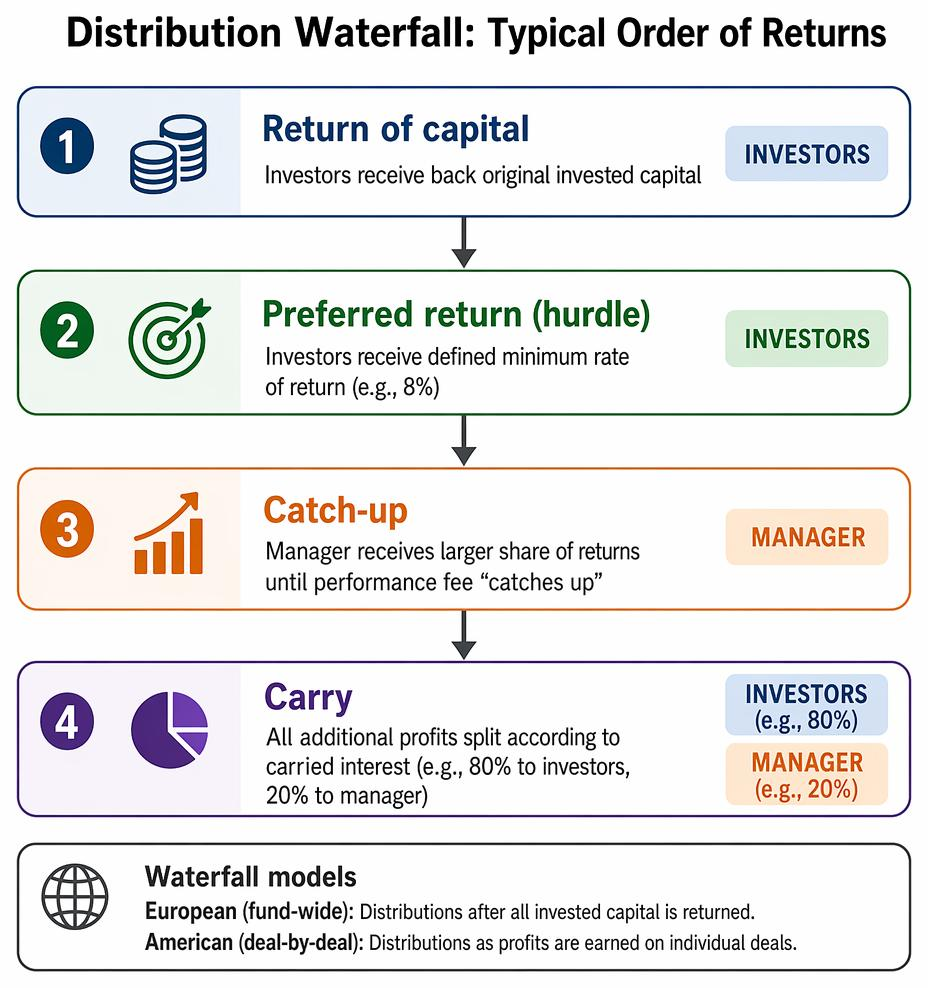
Distributing fund returns is not always as straightforward as it appears. When a fund generates profits, managers need to determine how those returns should be allocated between investors and the general partner, taking into account agreed terms, capital contributions, preferred returns, and carried interest. Even a small misunderstanding in the distribution structure can lead to confusion, lengthy reviews, or disagreements among stakeholders.
This is where accurate waterfall calculations become important. They help fund managers follow the agreed distribution rules, understand how returns move through different tiers, and provide investors with a clearer explanation of how their share has been determined.
Why Investor Distributions Can Become Difficult to Manage
As private equity, venture capital, and other investment funds mature, distribution arrangements can become more complicated. Different investors may have different commitments, while fund agreements may include multiple return thresholds and allocation rules.
Fund managers may face challenges such as:
- Understanding how profits should be allocated across different distribution tiers.
- Tracking preferred returns and investor capital repayment accurately.
- Managing carried interest calculations without inconsistencies.
- Reconciling distribution figures across spreadsheets and financial records.
- Responding to investor questions when calculations are difficult to explain.
Without a consistent process, distribution reviews can take longer than expected and create unnecessary pressure during important fund events.
Bringing Greater Transparency to Every Distribution Tier
A well-structured distribution waterfall outlines how available proceeds are allocated at each stage. Rather than treating the distribution as a single payment, it follows the order established in the fund agreement.
This can help managers and investors understand how the distribution progresses, from returning contributed capital to allocating profits and calculating carried interest where applicable.
Clear calculation records make it easier to see:
- How much capital is returned to investors.
- Whether preferred return thresholds have been met.
- How profit-sharing arrangements are applied.
- What amount is allocated to investors and the fund manager at each stage.
When each step is documented properly, investors have a clearer picture of how their distribution was determined.
Reducing Errors Before They Become Investor Concerns
Manual calculations can become difficult to maintain when a fund has multiple investments, different transaction dates, complex agreements, and repeated distribution events. A spreadsheet may work for a simple structure, but the risk of inconsistencies can increase as the fund grows.
Accurate waterfall calculations help establish a more controlled approach to distribution processing. Reviewing the underlying data, applying the correct terms, and validating figures before payments are finalised can reduce avoidable errors.
A more reliable process can help fund managers:
- Identify discrepancies before distributions are communicated.
- Maintain consistency across multiple distribution events.
- Reduce repetitive calculation and reconciliation work.
- Keep supporting records ready for review.
Helping Fund Managers Respond to Investor Questions
Investors naturally want to understand what they are receiving and why. When distribution statements lack detail or figures are difficult to reconcile, investor queries can take time away from the fund management team.
Clear distribution reporting helps managers explain the outcome without repeatedly reviewing calculations from the beginning. It also supports more meaningful conversations about fund performance, realised returns, and the distribution structure.
For investors, clarity is not only about the final amount received. It is also about understanding the process behind that amount.
Supporting Better Fund Operations as Investments Mature
Distribution complexity often increases when funds begin realising investments, managing partial exits, or preparing for final liquidation. At these stages, accurate financial records and well-maintained calculation models become particularly important.
A consistent distribution process can support:
- Better coordination between fund accounting and investor reporting.
- More organised documentation for internal and external reviews.
- Clearer communication around realised proceeds.
- Greater confidence in distribution reporting.
Making Distribution Reporting Easier to Trust
Investor distributions are an important moment in a fund’s lifecycle. Managers need calculations that follow the fund agreement, records that can be reviewed, and reporting that investors can understand without unnecessary complexity.
By taking a structured approach to waterfall calculations, fund managers can improve distribution accuracy, reduce operational friction, and bring greater transparency to the allocation of returns. When the process is clear and well documented, both managers and investors can spend less time questioning the numbers and more time understanding the fund’s results.


