 WhatsApp Us Now

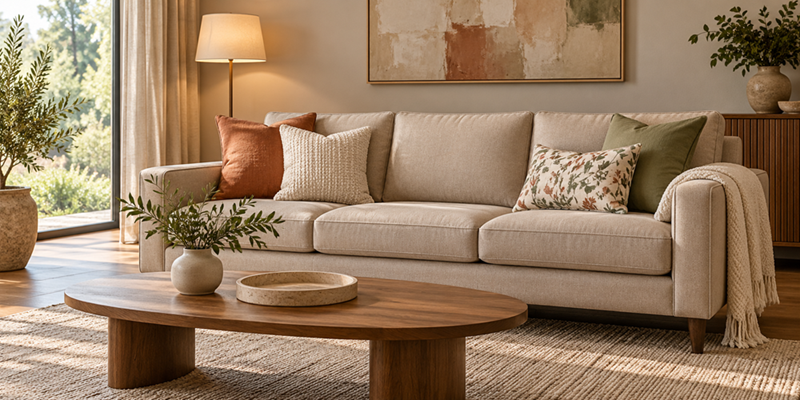
A sofa often takes up the most space in a living room, so the way you style it can influence the whole setting. The colours, cushions, textures, and nearby accessories all contribute to how the space feels.
A designer look comes from making these details work together. With a few considered changes, you can give your sofa a more polished appearance while keeping it comfortable for everyday use.
1. Start with a Small Colour Palette
Use the sofa’s upholstery as your starting point, then choose two or three supporting colours from the room. A rug, curtain, painting, or decorative object can provide inspiration.
For a beige sofa, you might combine terracotta, cream, and muted green. A grey sofa could work with navy, warm ivory, and mustard accents. Repeat one or two of these shades elsewhere in the room to create a sense of connection.
If your sofa already has a strong pattern, begin with simpler accessories that pick up colours from the upholstery.
2. Use Cushion Covers to Introduce Colour and Texture
Cushion covers offer a flexible way to refresh a sofa’s appearance. They let you introduce new patterns and textures without changing the main furniture.
Try combining a plain cover, a patterned design, and a textured option. For example, a solid rust cushion could sit alongside a small floral print and a cream woven cover. A shared colour helps the different designs feel coordinated.
Consider the scale of the patterns, too. Pairing a larger motif with a smaller print can create variety without making everything compete for attention.
Choose cushion covers that suit your routine as well as your style. Check the care label, fastening, and recommended insert size before buying.
3. Arrange Cushions Around the Available Seating Space
The right number of cushions depends on the sofa’s size and how you use it. On a three-seater, try two larger cushions near the arms and one smaller rectangular cushion towards the centre. Then adjust the arrangement until there is enough room to sit comfortably.
Matching cushions at both ends create an orderly appearance. A looser grouping with different sizes can feel more relaxed.
Check the inserts as well. Covers should look comfortably filled, with corners supported and closures sitting neatly.
4. Add a Throw with an Intentional Placement
A throw introduces another layer of texture. Fold it over one arm for a tidy finish, or drape it across a corner with a few natural folds.
Choose a colour that connects with your cushions or rug. If the sofa already has several patterned cushions, a plain throw can give the eye somewhere to rest.
Keep the fabric suited to the season and your household. A lightweight woven throw creates a different effect from a chunky knit.
5. Connect the Sofa to the Surrounding Furniture
Look at the sofa together with the rug, coffee table, and side tables. If you are using a rug, placing the sofa’s front legs on it can help visually connect the seating area.
Keep the coffee table arrangement simple: a tray, a small vase, or a few books may be enough. Leave useful space for drinks and everyday items, and allow comfortable walking room around the furniture.
6. Finish with Lighting and a Clear Background
A nearby floor lamp or table lamp can make the seating area feel inviting in the evening. Position it so the light is useful without creating an uncomfortable glare.
Behind the sofa, consider one artwork or a carefully spaced group of frames. Choose a scale that feels balanced with the furniture below.
Start by arranging what you already own, then step back and look at the whole room. Adjust cushion positions, remove anything that feels crowded, and repeat a few colours across the space. The finished sofa should look thoughtfully styled and remain somewhere you want to sit.


