 WhatsApp Us Now


You’ve narrowed your search to two lab-grown diamond rings. Both look great in the photos, but one costs noticeably more. Which is the better value? The answer rarely lives in the headline price. To compare two lab-grown diamond rings fairly, you need to line up the same details for each one: diamond quality, setting, metal, certificate and seller policies. This guide shows you how, step by step, so you can judge each ring on facts instead of photos.
Quick Answer
How do you compare two lab-grown diamond rings?
Match the shape and carat weight first. Then compare cut, color and clarity on each grading report, followed by the setting, metal and ring size. Finally, compare return policy, warranty and total price. If two rings differ on any of these points, the price difference may be fair.
Why Lab-Grown Rings Are Hard to Compare
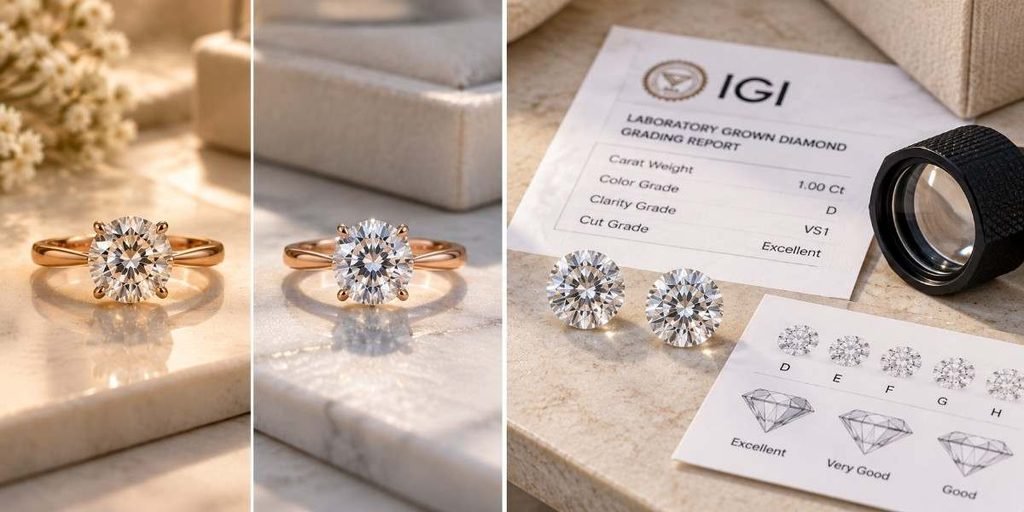
Lab-grown diamonds are graded on the same scale as mined diamonds. That’s helpful, but it also means two listings can share a carat weight and still differ in quality. A small shift in cut or color can change both the look and the price.
Photos add to the confusion. Lighting, zoom and editing can make any stone look brighter or larger. Specifications and documents tell you more than pictures do.
Step 1: Match the Basics First
A fair comparison starts with rings that are actually similar. Before you look at price, check that both rings share:
- Diamond shape: a round and an oval carry different price tags
- Carat weight: keep both within a small range of each other
- Metal type: 14K gold and platinum cost different amounts to make
- Setting style: a solitaire and a halo are different products
If one ring is a 1.5 carat halo in platinum and the other is a 1 carat solitaire in 14K gold, the price gap tells you very little. Change one variable at a time, or the comparison won’t hold up.
Step 2: Compare the 4Cs Side by Side
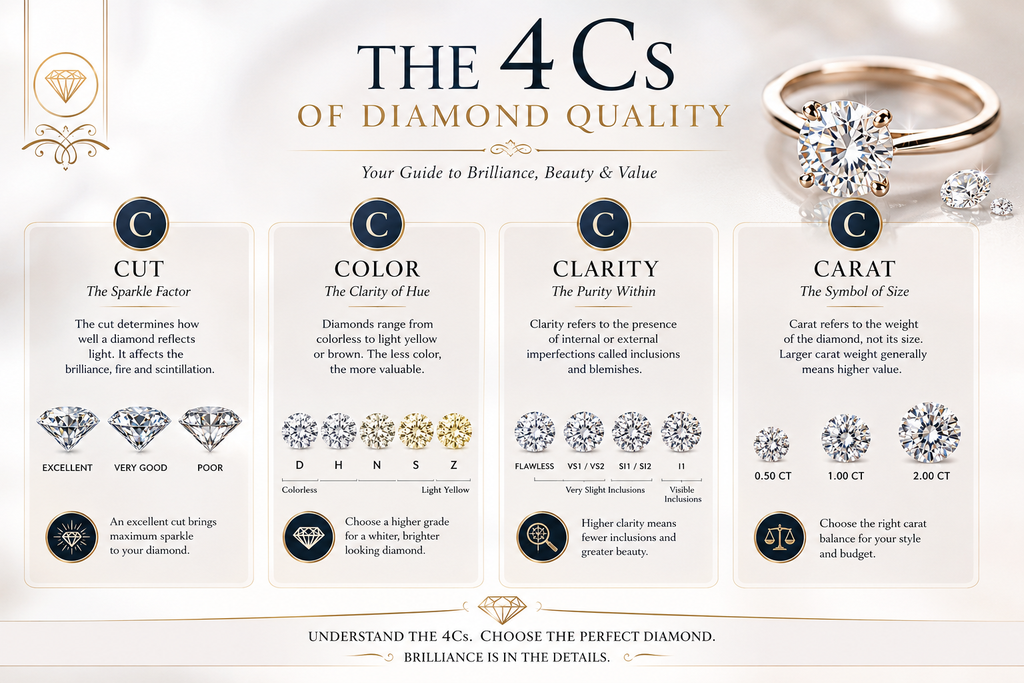
The 4Cs are the standard way to grade a diamond: cut, color, clarity and carat. Write down each grade for both rings.
Cut
Cut describes how well the facets are shaped and polished. It controls light return, which is what creates brilliance and sparkle. Cut grades apply mainly to round diamonds. For fancy shapes like oval or pear, look at polish and symmetry grades instead.
If you only have time to compare one grade closely, make it this one. A stone with a weaker cut can look dull even with strong color and clarity.
Color
Color measures how colorless a white diamond appears. Less color usually costs more. Many buyers find that a slight tint is hard to notice once the stone sits in a setting. Compare the color grades, then ask yourself whether you’d see the difference in daily wear.
Clarity
Clarity covers small internal marks and surface features. Most are invisible without magnification. Two diamonds with different clarity grades can look identical to the naked eye, yet one can cost more. Check whether a lower grade is “eye-clean,” meaning no flaws show at normal viewing distance.
Carat
Carat measures weight, not size. A 1.00 carat oval and a 1.00 carat round can look different because the weight spreads across different outlines. Compare the millimeter measurements on the report if visual size matters to you.
Step 3: Read the Grading Report
A diamond grading report, also called a certificate, records a diamond’s specifications. It usually lists carat weight, color, clarity, cut grade where applicable and exact measurements.
Use the report to confirm three things:
- The report belongs to the exact diamond in the listing
- The grades match what the seller advertises
- The measurements fit the shape you expect
If a listing doesn’t include a report number or won’t share one, treat that as a red flag. Different laboratories grade with different standards, so ask which lab issued each report. If the two rings use different labs, compare the grades with a bit more caution.
For more background on these terms, read our Engagement Ring Buying Guide.
Step 4: Compare the Setting and Metal
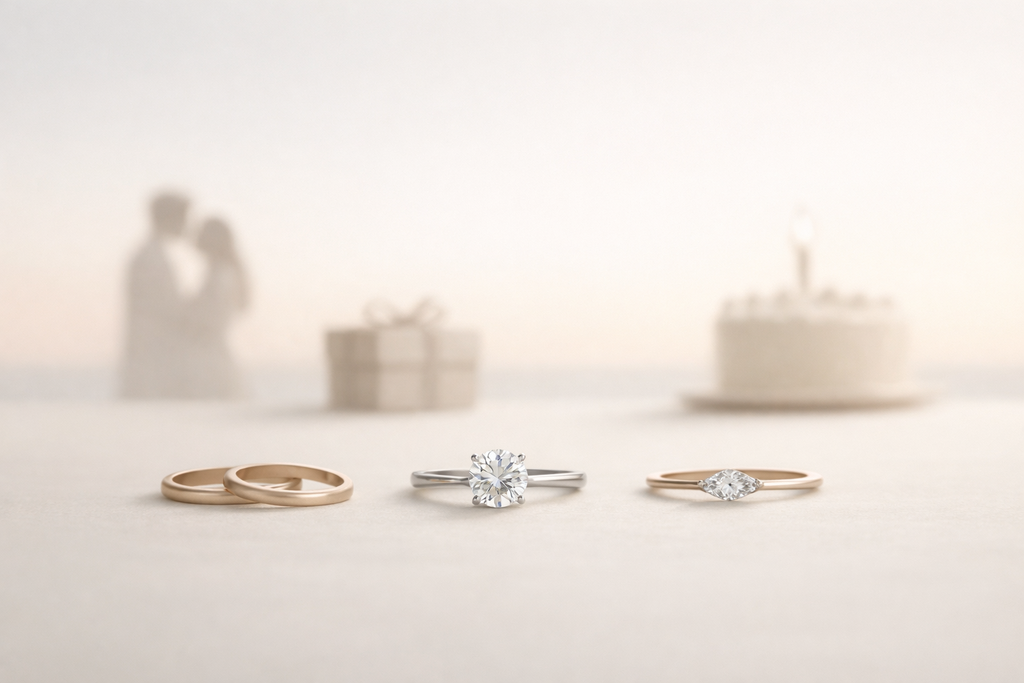
The diamond is only part of the ring. The setting and metal affect looks, comfort and upkeep.
- Solitaire: one stone, simple lines, easy to clean
- Halo: small stones circle the center diamond, adding sparkle and visual size, with more crevices to clean
- Three-stone: side stones add balance but also add cost
- Pave band: accent stones add shine and need occasional checks for loose stones
Metal matters too. 14K gold is harder than 18K and usually costs less. 18K has a richer color but is softer. Platinum is dense and naturally white, and it often costs more. White gold usually carries a rhodium plating that can wear down and need reapplying.
If you prefer a clean, minimal design, you can buy solitaire rings and compare diamond quality without extra design variables getting in the way.
Step 5: Check Size, Returns and Warranty
Two identical rings can still be unequal purchases if the policies differ. Compare these details for each seller:
- Resizing: is it available, how long does it take, and is it free?
- Return window: how many days do you have, and who pays shipping?
- Warranty: what does it cover, and for how long?
- Shipping: is it insured, and how long does it take?
- Customization: can you change the metal or stone?
Resizing depends on the design. Plain bands usually adjust more easily, while eternity-style bands may have limits. Ask before you buy, especially for a surprise proposal.
Side-by-Side Comparison Chart
Copy this into a note or spreadsheet and fill it in for each ring:
| Detail | Ring A | Ring B |
|---|---|---|
| Shape | ||
| Carat weight | ||
| Cut / polish / symmetry | ||
| Color grade | ||
| Clarity grade | ||
| Report lab and number | ||
| Setting style | ||
| Metal and purity | ||
| Ring size and resizing terms | ||
| Return window | ||
| Warranty | ||
| Shipping and fees | ||
| Final price |
Once both columns are full, differences stand out quickly. You might find that the pricier ring has a stronger cut grade and a longer return window. Or you might find that the two rings match closely and the cheaper one is simply a good deal.
Common Comparison Mistakes
- Comparing different carat weights. A 0.25 carat gap can change the price a lot.
- Ignoring the cut grade. It shapes how the diamond handles light.
- Skipping the report. Without one, you rely on the seller’s description.
- Comparing only the diamond price. Setting, metal and policies add real cost.
- Trusting photos alone. Images can’t show true color or sparkle.
- Forgetting resizing and return terms. These matter if the ring doesn’t fit.
Questions Buyers Often Ask
How do you compare two lab-grown diamond rings with different prices?
Start by making sure the rings match in shape, carat, setting and metal. Then compare cut, color, clarity and the report. If the quality is equal, check policies and total cost, including shipping and fees. A real quality or service difference often explains the gap.
Which matters most when comparing lab-grown diamonds?
Cut matters most for visible sparkle. After that, balance color and clarity against your budget. Choose grades you can’t easily distinguish by eye, then spend the savings on a better cut, a larger stone or a stronger setting.
Should two lab-grown diamond rings have the same certificate?
Not necessarily, but you should know which lab graded each stone. Laboratories apply different standards, so grades from different labs may not match exactly. Confirm that each report number matches its diamond.
Is a bigger carat weight always better value?
No. Carat only measures weight. A larger stone with a weaker cut can look less lively than a smaller, well-cut diamond. Compare cut grades and measurements before you decide.
Can I compare rings with different settings?
Yes, but separate the diamond from the setting. Compare the diamonds first on grades and measurements. Then compare the settings on style, protection and maintenance, since halos and pave bands add both cost and cleaning time.
Conclusion
To compare two lab-grown diamond rings fairly, match the basics, read each report and check the setting, metal and policies. Then add up the final price. Fair comparison means judging the whole ring, not one number on a product page.
When you’re ready to shop, you can buy engagement ring online and use the chart above to check each option you like.