 WhatsApp Us Now

Untreated factory water cannot go straight into a river, a sewer or the ground. Regulators set discharge limits, and many sites now want water back for reuse. So picking an industrial wastewater treatment plant is a design problem, not a catalogue choice. Wastewater composition, daily flow and the quality needed at the outlet decide what gets built. A suitable process handles the contaminants and fits how your crew runs the site. Get that right, and the wider wastewater management system becomes far easier to operate.
How an Industrial Wastewater Treatment Plant Works
Treatment is a toolbox, not a fixed recipe. Most plants draw on physical steps such as screening and settling, chemical steps such as coagulation and pH correction, biological steps where microbes eat dissolved organics, and membrane filtration for fine separation. Your wastewater characteristics and the output quality you must hit decide which ones earn a place. A brewery may skip stages that a metal finisher cannot. Read any stage list as a menu, and order only what your own water analysis supports. Regular testing also helps maintain consistent performance and meet discharge standards.
Match Treatment to Wastewater Quality
Food processing effluent carries heavy organic loads and fats. Textile dyeing brings colour, salts and swings in pH. Oily operations add free and emulsified oil that fouls downstream equipment. Assess flow rate, suspended solids, organic pollutants, oil and pH first. Preliminary screening pulls out rags and large debris, equalization tanks smooth flow and strength, and chemical dosing adjusts pH or binds fine particles where needed. Sample across several shifts, because Monday washdown water rarely matches Thursday production water. Settle the process before you specify any equipment.
Select the Right Treatment Technology
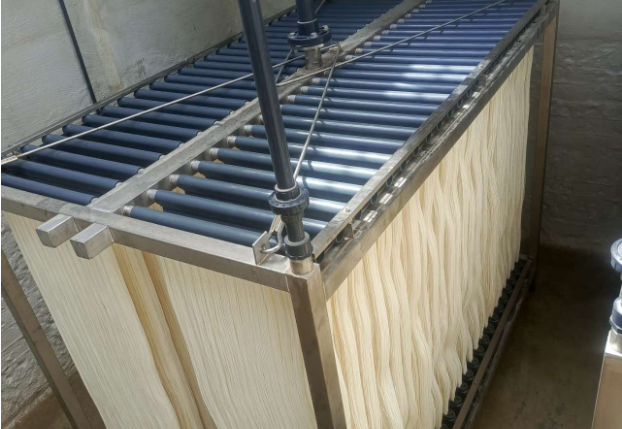
Biological treatment and membrane filtration work with a membrane bioreactor. Microorganisms break down organics and the membrane holds back solids. Industrial wastewater treatment plants use this technology for industrial and municipal wastewater and reclaimed water applications.
Dissolved air flotation lifts suspended solids, oils and grease with fine bubbles before later stages and the Dissolved Air Flotation Machine fits that role. The PVDF MBR Modular suits membrane based options, arriving as a prefabricated package that is easy to transport and install. Ultrafiltration and nanofiltration join in when project requirements justify them. The right mix follows the wastewater analysis and the intended output.
Plan for Output Quality and Water Reuse
Output targets set the treatment. Membrane filtration, tertiary polishing and disinfection come in where the target demands them. Hinada Water Treatment’s textile dyeing wastewater reuse project shows the idea. It is designed for 800 cubic meters per day and treats polyester dyeing wastewater for reuse within production.
Energy use, maintenance access, automation, sludge handling and operating costs belong in the wastewater management system plan from day one. They shape how the plant behaves in year five, long after commissioning day. The reuse design draws on screening, equalization, coagulation, DAF, biological treatment and MBR filtration, with tertiary steps where applicable. And nobody should promise an output quality without project evidence.
Conclusion
Start with the water, not the equipment. Analyse it, match the technology to it, and define the output you need. Then check that the design covers cleaning, sludge and running costs, because an effective wastewater management system must deliver treatment performance and keep running well afterwards, shift after shift. Test your actual wastewater characteristics before choosing equipment.
Want a second opinion? Feel free to contact Hinada Water Treatment regarding the composition of the wastewater, treatment capabilities, discharge or reuse objectives. Discuss suitable equipment solutions.
FAQs
Q: What is an industrial wastewater treatment plant?
It is an installation where wastewater from industries is treated for disposal or recycling purposes.
Q: How does a wastewater treatment plant function?
The processes include physical, chemical, biological and membrane processes based on the nature of the wastewater and the product required.
Q: Which treatment technology is suitable for industrial wastewater?
That depends on contaminants, flow rate and output requirements. A wastewater analysis points to the right combination.
Q: Can treated industrial wastewater be reused?
Yes, when treatment performance meets the quality the intended application needs. Project data should confirm it.
Q: What are the cost drivers for wastewater treatment plants?
They include capacity, wastewater characteristics, process complexity, energy consumption and maintenance.


