 WhatsApp Us Now
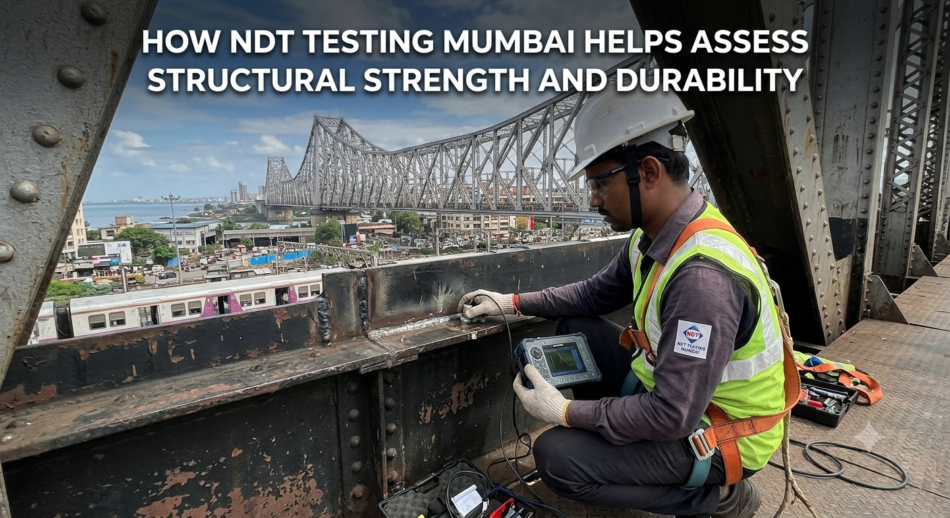
Buildings are continuously exposed to environmental conditions, usage, moisture, temperature changes, and regular wear. Over time, these factors can affect concrete, reinforcement, masonry, and other structural components. Identifying deterioration at an early stage is important for maintaining safety and extending a building’s service life. This is where NDT Testing Mumbai can provide valuable engineering information without causing significant damage to the structure.
Non-destructive testing, commonly known as NDT, involves specialized techniques used to evaluate certain properties and conditions of construction materials and structural components. When appropriately selected and interpreted by qualified professionals, these tests can support structural assessments, audits, repair planning, and maintenance decisions.
What Is Non-Destructive Testing?
Non-destructive testing refers to inspection and testing techniques that allow engineers to investigate materials or components while minimizing physical damage. Unlike destructive testing, which may require removing or breaking samples, NDT methods can often be performed directly on existing structural elements.
The objective is not simply to produce a test number. Instead, test results are interpreted alongside visual observations, structural information, drawings, building history, and other engineering evidence.
NDT can therefore be particularly useful when assessing existing buildings where preserving the structure during investigation is important.
Why NDT Testing Is Important for Structural Assessment
Visual inspection can identify obvious problems such as cracks, exposed reinforcement, spalling concrete, dampness, or surface deterioration. However, some conditions may not be immediately visible.
For example, concrete may have variations in quality, reinforcement may be affected by corrosion, or deterioration may exist beneath the surface. Appropriate NDT methods can provide additional information that helps engineers determine whether further investigation is necessary.
The results can contribute to a broader understanding of the building’s condition and assist professionals in developing suitable recommendations.
Common NDT Methods Used in Building Assessment
Different testing methods provide different types of information, and NDT Testing Mumbai can help professionals select suitable techniques based on the structure, material, suspected defect, and purpose of the investigation.
Rebound Hammer Test
The rebound hammer test is commonly used to assess the surface hardness of concrete. It provides an indication that can be correlated with concrete quality under suitable conditions.
However, the results can be influenced by factors such as surface condition, moisture, age, carbonation, and testing technique. Therefore, rebound hammer results should not be treated as a direct standalone measurement of compressive strength.
Ultrasonic Pulse Velocity Testing
Ultrasonic Pulse Velocity, or UPV, testing involves transmitting ultrasonic pulses through concrete and measuring the travel time.
It can help assess concrete uniformity and identify areas that may require further investigation. Variations in pulse velocity may indicate differences in material condition, although interpretation depends on several factors.
Using UPV alongside other inspection methods can provide a more comprehensive assessment.
Cover Meter Survey
A cover meter can help locate reinforcement and estimate concrete cover. This information can be useful when investigating reinforcement placement, cover adequacy, or potential corrosion-related concerns.
Knowing reinforcement locations can also help engineers plan further testing or repair work while reducing the risk of accidentally damaging reinforcement during drilling or other activities.
Half-Cell Potential Testing
Half-cell potential testing can assist in evaluating the likelihood of reinforcement corrosion in reinforced concrete structures.
The technique provides electrochemical potential measurements that can help identify areas where corrosion activity may be more likely. It is generally interpreted together with other observations and testing rather than used as an isolated diagnosis.
Carbonation Assessment
Carbonation is a chemical process that can reduce the alkalinity of concrete. If carbonation reaches reinforcement and other conditions are favorable, corrosion risk may increase.
A carbonation assessment can help determine the depth of carbonation and whether it has progressed toward reinforcement in selected areas.
How NDT Helps Assess Structural Strength
Structural strength cannot normally be determined from one NDT test alone. Instead, testing provides supplementary information that engineers can use with other evidence.
For example, rebound hammer and UPV testing may provide information about concrete characteristics and uniformity. Where necessary, engineers may recommend additional investigations or complementary testing to obtain more reliable conclusions.
The structural professional considers the test results together with factors such as structural design, loading conditions, observed deterioration, material characteristics, and the building’s history.
This integrated approach helps avoid making decisions based on a single test result.
Assessing Structural Durability Through NDT
Durability refers to a structure’s ability to continue performing adequately over its intended service life under expected environmental and usage conditions.
NDT can help investigate several factors associated with deterioration. These may include concrete quality, reinforcement location, corrosion-related activity, carbonation, cracking, and areas of material inconsistency.
For buildings exposed to moisture or aggressive environmental conditions, such information can help engineers identify areas that may require preventive maintenance or more detailed investigation.
Role of NDT in Structural Audits
A structural audit generally involves a systematic assessment of a building’s condition. Depending on the project, it may include document review, visual inspection, NDT, structural analysis, and recommendations.
NDT can strengthen the assessment by providing information that cannot always be obtained through visual inspection alone.
For older residential societies, commercial properties, industrial buildings, and other existing structures, appropriate testing can help engineers prioritize areas requiring repair or further investigation.
Benefits of NDT Testing for Existing Buildings
NDT offers several practical benefits when used appropriately.
Minimal Structural Damage
Many NDT techniques can be performed without major removal or destruction of structural materials. This makes them suitable for existing buildings where preserving components is important.
Better Maintenance Planning
Testing information can help identify areas requiring attention and support the development of maintenance priorities.
Early Identification of Potential Concerns
Some deterioration processes may develop before severe visible damage appears. Appropriate investigation can help identify indications that warrant closer examination.
Support for Repair Decisions
Before undertaking expensive repair or rehabilitation work, engineering information can help determine the nature and extent of deterioration.
Useful for Older Structures
Existing buildings may lack complete construction documentation. Testing and inspection can provide additional information that supports engineering evaluation.
When Should NDT Testing Be Considered?
NDT may be considered in several situations, including:
- During structural audits
- When significant cracks are observed
- Where concrete deterioration is present
- When reinforcement corrosion is suspected
- Before major structural repairs
- During building rehabilitation
- Before or during strengthening work
- When evaluating aging structures
- During investigations of suspected material deterioration
- When additional information is needed beyond visual inspection
The exact tests required should be determined according to the project’s objectives and the condition of the structure.
Choosing a Professional NDT Testing Service
Selecting an experienced testing and engineering professional is essential because test results need proper interpretation.
When comparing service providers, consider their technical qualifications, experience with similar buildings, testing equipment, reporting practices, and ability to provide engineering interpretation.
It is also important to ask whether the service includes only testing or a broader assessment. In many cases, test results are most useful when they are incorporated into a comprehensive structural evaluation.
For property owners seeking professional engineering support, Nambiar Associates provides services including structural audits, NDT testing, structural assessments, building repairs, rehabilitation, and project management consultancy.
Importance of Combining NDT With Visual Inspection
NDT should generally be considered part of a broader assessment rather than a replacement for professional inspection.
Visual examination can reveal cracks, spalling, leakage, corrosion staining, deformation, and other physical symptoms. NDT can then provide additional information about selected materials or components.
By combining these sources of information, engineers can develop a more complete understanding of the building’s condition.
NDT Testing and Building Rehabilitation
Rehabilitation projects often require careful evaluation before repair work begins. Simply repairing visible damage without understanding its cause can result in recurring problems.
NDT can help identify areas of deterioration and provide information that supports decisions regarding repair methods, strengthening, and preventive measures.
Following rehabilitation, additional inspection or testing may also be considered where appropriate to evaluate the condition of repaired areas.
Conclusion
NDT Testing Mumbai can play an important role in evaluating the condition, strength-related characteristics, and durability of existing structures. By using suitable non-destructive techniques, engineers can gather valuable information while minimizing damage to building components.
However, NDT results should always be interpreted in context. No single testing method can provide a complete picture of structural performance. Visual inspection, engineering analysis, building history, material information, and appropriate testing should work together to support reliable conclusions.
For property owners, housing societies, commercial establishments, and other building managers, professional assessment can help identify potential concerns, plan maintenance, and make informed decisions about repairs and rehabilitation. With the right technical approach, NDT can become a valuable part of responsible structural evaluation and long-term building maintenance.
FAQs
1. What is NDT testing in structural engineering?
NDT testing consists of non-destructive techniques used to obtain information about construction materials and structural components while minimizing damage. It can support structural inspections, audits, repair planning, and condition assessments.
2. Can NDT testing determine the exact strength of concrete?
NDT can provide useful indicators of concrete characteristics, but a single non-destructive test should not automatically be treated as an exact measurement of compressive strength. Engineers interpret results alongside other evidence and may recommend additional testing where necessary.
3. Which NDT methods are commonly used for buildings?
Common methods include rebound hammer testing, ultrasonic pulse velocity testing, cover meter surveys, half-cell potential testing, and carbonation assessment. The appropriate method depends on the structural issue being investigated.
4. Is NDT testing useful for old buildings?
Yes. NDT can be particularly useful for existing and aging structures because it can provide additional information about concrete and reinforcement conditions while minimizing damage to the building.
5. Is NDT testing enough for a complete structural assessment?
No. NDT is generally one component of a broader structural evaluation. A comprehensive assessment may also involve visual inspection, document review, structural analysis, and engineering judgment.


