 WhatsApp Us Now

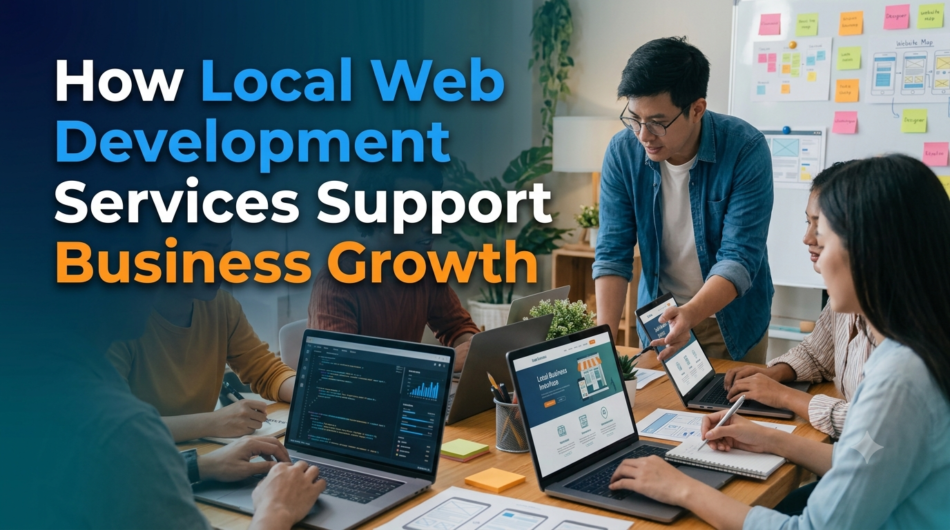
A website is often the first place people go when they hear about a business. They may see a social post, get a referral from a friend, or find the company on Google and then check the website before doing anything else. This is where a local web development agency India can make a real difference, especially for businesses that want their website to bring in enquiries rather than just sit online looking nice.
Your Website Is Part of Your Sales Process
A business website does a lot more than display a logo, services, and phone number. It answers questions before a potential customer ever speaks to someone from the company.
What do you offer?
Where are you located?
How much experience do you have?
Can people trust you?
And, perhaps most importantly, how can they contact you?
A confusing website can make people leave within seconds. A clear one gives them a reason to stay.
This is particularly important for local businesses. Someone searching for a service in their city usually wants quick information. They aren’t interested in clicking through twelve pages just to find a phone number.
Good local web development services focus on making those basic interactions easy.
Local Web Development Understands Local Customers
There is a practical benefit to working with a company familiar with the Indian market.
Customer behaviour isn’t identical everywhere. A business serving customers in Delhi may have different requirements from one operating in Pune, Jaipur, Bengaluru, or Bhopal. Even smaller details can matter, such as preferred contact methods, local search terms, payment options, language preferences, and mobile browsing habits.
A web development company in India can build around these everyday realities.
For example, a local service business may receive most enquiries through WhatsApp. A website that makes WhatsApp contact obvious can be far more useful than one with a tiny contact form hidden at the bottom of the page.
Little things matter.
A Mobile-Friendly Website Can Bring More Enquiries
A lot of website visits now happen on phones. People check businesses while travelling, sitting in a café, waiting for an appointment, or even standing inside a store.
If the website loads slowly or the text is difficult to read on a small screen, visitors may simply close the tab.
Mobile-friendly web development helps businesses create pages that work comfortably across phones, tablets, and desktops. Menus should be easy to tap. Buttons should be visible. Images shouldn’t push important content halfway down the screen.
Nobody wants to pinch and zoom just to read a service description.
A better mobile experience can also support local SEO because search engines consider page experience and mobile usability as part of the wider picture.
Website Speed Affects User Experience
Have you ever clicked a website and waited… and waited?
Most people don’t wait very long.
Website speed affects how visitors interact with a business. Heavy images, unnecessary scripts, poor hosting, and badly built pages can all make a website feel sluggish.
Professional website development services in India can address technical issues such as image sizing, page structure, browser caching, code quality, and hosting requirements.
The goal isn’t to make a website complicated. Quite the opposite. A clean website that loads quickly usually gives visitors less reason to leave.
Web Development and Local SEO Work Together
Building a website and getting people to find it are two different jobs, but they are closely connected.
A website can have attractive visuals and still struggle in Google search if its structure is unclear. Pages need sensible URLs, useful headings, descriptive page titles, readable content, internal links, and information that helps search engines understand the business.
This is where SEO-friendly web development becomes useful.
A developer can create the technical foundation while SEO work helps the pages target searches such as:
- web development services in India
- local web development company
- website development company in India
- affordable website development services
- small business website development
- mobile-friendly website development
- local business website design
- professional website development services
The keywords shouldn’t be stuffed into every paragraph. That usually makes content awkward anyway. They should appear where they actually make sense.
A Website Can Build Trust Before the First Call
Imagine two local companies offering the same service.
One has an outdated website with broken links, blurry photos, and an old contact number.
The other has a clean layout, recent information, customer reviews, service details, an address, and simple ways to get in touch.
People naturally notice the difference.
A website doesn’t magically prove that a company is good. But it can give visitors useful signals about how seriously the business presents itself.
Adding testimonials, project photos, certifications, FAQs, team information, service areas, and clear contact details can help visitors feel more comfortable before making an enquiry.
For a small company trying to compete with larger brands, this can matter quite a bit.
Better Websites Can Support Paid Advertising
Businesses often spend money on Google Ads or social media advertising to bring visitors to their websites. Yet there is a common problem: getting the click is only one part of the process.
If someone clicks an advertisement and lands on a confusing page, the advertising budget may not produce many enquiries.
This is where conversion-focused website development comes in.
Landing pages should match the message people saw in the advertisement. The service should be obvious. The call to action should be easy to find. Forms shouldn’t ask for unnecessary information.
A visitor shouldn’t have to figure out what to do next.
Good website development gives advertising campaigns a stronger place to send potential customers.
Local Businesses Can Start Small and Grow Gradually
A company doesn’t need a huge website from day one.
A local plumber might only need pages for services, service areas, about information, reviews, and contact details. An interior designer may need project galleries and enquiry forms. A restaurant could need menus, location information, opening hours, and online ordering.
Later, new sections can be added.
Maybe a blog. Maybe an online booking system. Maybe an ecommerce section.
This is one reason website development for small businesses should focus on the actual needs of the company rather than adding features just because they sound impressive.
A simple website that works is often more useful than a huge website that nobody knows how to manage.
Security and Maintenance Matter Too
Website development doesn’t really stop after launch.
Software needs updates. Plugins can create problems. Security weaknesses can appear. Forms may stop working. Business information can become outdated.
Regular website maintenance services help keep a site functional and secure over time.
There is also the small stuff. Updating a phone number, adding a new service, replacing an old image, fixing a broken link. These changes may seem minor, but visitors notice when a website looks abandoned.
Choosing the Right Local Web Development Partner
When comparing web development companies, look beyond the appearance of their own website.
Ask how they handle mobile performance, SEO structure, security, content updates, hosting, analytics, and ongoing maintenance. Check whether they have worked with businesses similar to yours.
It is also useful to ask what happens after the website goes live. Who fixes problems? Who makes updates? What happens if you need a new landing page six months later?
Those questions can save a lot of frustration.
A website should fit the way your business actually operates. Not the other way around.
For local businesses in India, a well-built website can become a useful part of everyday marketing — helping people find the company, understand its services, ask questions, and eventually get in touch. It doesn’t need flashy effects everywhere. Sometimes clear information, quick loading pages, good mobile usability, and an obvious contact button are enough to make a noticeable difference.
And honestly, that’s what most customers are looking for anyway.


