 WhatsApp Us Now
Introduction
Ever feel like you’re carrying too much alone? Life can be overwhelming, especially when dealing with emotional wounds, trauma, or mental health struggles. That’s where group therapy steps in—not as a quick fix, but as a lifeline. Think of it as a team huddle where everyone supports each other’s healing journey. Unlike the traditional idea of lying on a couch talking to a therapist, group therapy offers a space to connect, share, and grow with others facing similar challenges. But how exactly does this work, and why does it feel like such a powerful space for change?
What Is Group Therapy?
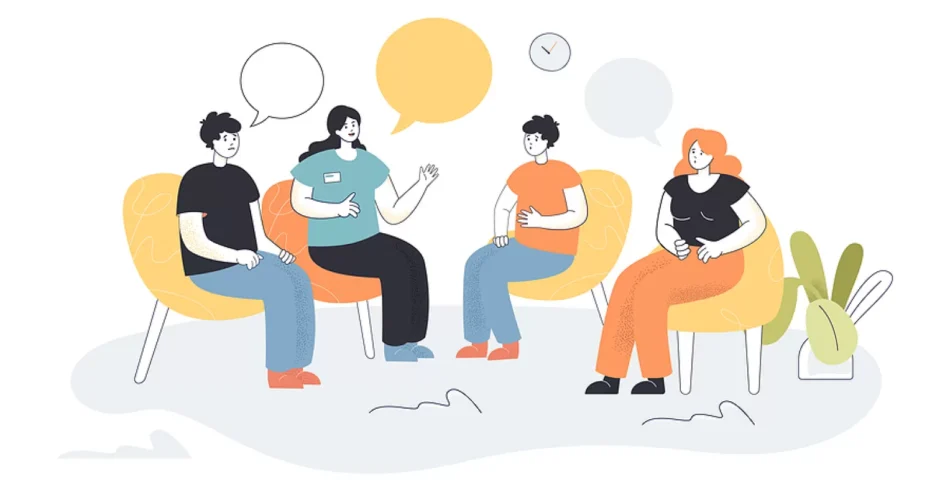
Group therapy is a form of psychological treatment where a small group of people meet regularly to talk, share, and support one another—typically under the guidance of a trained therapist. Unlike individual therapy, this format brings people together who might be experiencing similar struggles such as anxiety, addiction, grief, or depression.
Imagine sitting in a circle, each person holding a different puzzle piece. Together, as stories are shared and feelings are expressed, the picture becomes clearer—not just for one person, but for the entire group.
Why Safe Spaces Matter in Healing
A safe space is where you can speak your truth without fear of judgment. In group therapy, this emotional safety is foundational. It’s a place where you don’t have to wear a mask, where vulnerability is seen as strength, not weakness.
When people feel safe, they open up. And when they open up, healing begins.
The Power of Shared Experience
One of the most transformative elements of group therapy is realizing, “I’m not alone.”
When someone across the room voices a thought or fear you’ve had, it creates a connection. This shared experience reduces shame, fosters empathy, and helps you see your problems from new angles. It’s like realizing you’re walking through a dark tunnel—but you’re not the only one there, and others have flashlights.
Types of Group Therapy
There are various types of group therapy, each tailored to specific needs:
- Psychoeducational Groups: These focus on teaching about mental health topics (like stress management or trauma recovery).
- Cognitive Behavioral Therapy (CBT) Groups: Help members identify and change negative thought patterns.
- Process-Oriented Groups: Focus on emotions and relationships, allowing free-flowing discussion and personal insights.
- Support Groups: Often peer-led, they provide emotional support for issues like grief, addiction, or chronic illness.
- Skills Development Groups: Teach practical skills for communication, anger management, or parenting.
- Therapy for Specific Populations: Like LGBTQ+ groups, veterans, or teens—ensuring shared understanding and cultural relevance.
Choosing the right type of group therapy can make a big difference in your healing process.
Support Groups vs. Therapy Groups
While the terms are often used interchangeably, they have subtle differences:
- Support Groups: Usually peer-led and focus on sharing experiences and emotional support.
- Therapy Groups: Led by licensed professionals and use therapeutic methods to treat mental health conditions.
Both offer value, but if you’re seeking clinical treatment, therapy groups may be more structured and beneficial.
Who Leads Group Therapy?
A trained therapist or counselor usually leads the group. Their role is to:
- Facilitate conversation
- Maintain boundaries
- Ensure a safe and respectful environment
- Offer therapeutic interventions when needed
Think of the therapist as the guide who ensures the journey is meaningful, even when the road gets bumpy.
How Trust is Built in a Group Setting
Trust doesn’t happen overnight. It’s built gradually, through:
- Consistent meetings
- Shared confidentiality agreements
- Respectful communication
Many groups open with simple ground rules to foster respect and safety. Over time, as people open up and respond with kindness, a deep sense of connection forms.
The Role of Confidentiality
“What’s said in the room, stays in the room.”
This golden rule is critical. Members must agree to keep each other’s stories private. Knowing your words won’t be shared outside creates the freedom to speak openly and honestly.
Emotional Safety: Key to Growth
Emotional safety means being free from ridicule, shame, or invalidation. When people feel emotionally safe, they:
- Express themselves more honestly
- Take emotional risks
- Work through difficult memories or trauma
Without this safety, true healing is hard to reach.
Benefits Beyond the Therapy Room
The lessons learned in group therapy extend far beyond the sessions. Members often experience:
- Improved communication skills
- Greater self-awareness
- Increased empathy
- Stronger relationships in daily life
It’s like training your emotional muscles in a gym—over time, you become stronger, more balanced, and more resilient.
Common Challenges (and How They’re Handled)
Every group faces hiccups. Common issues include:
- Dominating members
- Silent participants
- Conflicts or triggers
Skilled therapists know how to manage these moments with grace, helping the group grow stronger through honesty and structure.
Who Can Benefit from Group Therapy?
Group therapy can help a wide range of individuals, including those dealing with:
- Anxiety or depression
- Substance abuse
- Grief and loss
- Relationship issues
- Low self-esteem
- Trauma and PTSD
You don’t need to “have it all figured out.” You just need to show up.
Virtual Group Therapy: Does It Work?
Absolutely. While in-person groups offer physical presence, virtual group therapy has opened doors for those who:
- Live in remote areas
- Have limited mobility
- Feel safer at home
Many find it just as effective, especially with strong facilitation and reliable platforms.
How to Find the Right Group for You
Start by asking yourself:
- What do I want to work on?
- Do I prefer structure or open discussion?
- Do I want a therapist-led or peer-led group?
You can find options through:
- Local mental health clinics
- Online therapy platforms
- Community centers
- Nonprofit organizations
Don’t be afraid to try more than one group—it’s about finding the right fit.
Final Thoughts: Embracing the Journey Together
Healing doesn’t have to be a solo act. Group therapy reminds us that even in our darkest moments, we can find light through connection. It’s about showing up as you are—and being met with compassion, not judgment.
Whether you’re grieving, growing, or just looking for understanding, there’s a group out there that can walk beside you.
FAQs
1. What are the main types of group therapy?
The main types include psychoeducational, CBT, process-oriented, support groups, and skill development groups, each serving different needs.
2. How long does group therapy usually last?
Sessions typically last 60–90 minutes, and groups may meet weekly for several weeks or even months.
3. Can I join a group if I’m shy or introverted?
Absolutely. Many shy individuals find group therapy helpful because it allows gradual participation and offers support from others.
4. Is group therapy better than individual therapy?
Not necessarily better—just different. Group therapy provides shared experience and connection, while individual therapy offers personalized focus.
5. How do I know if a group is right for me?
It should feel safe, relatable, and helpful. Give it a few sessions before deciding; sometimes connection takes time.


