 WhatsApp Us Now
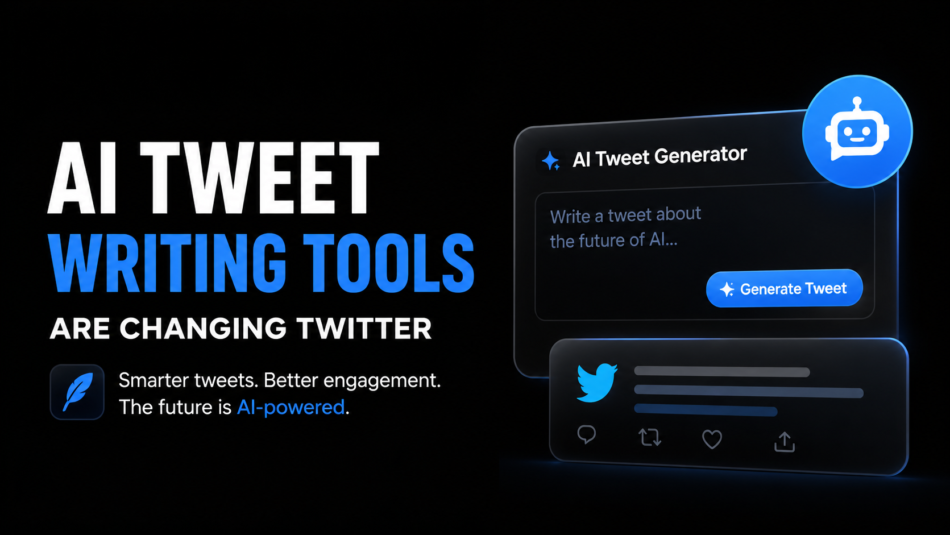
Social media moves quickly. A strong idea can get attention within minutes, while a poorly written post can disappear without making an impact. For individuals, creators, marketers, founders, and businesses, consistently creating useful and engaging content on Twitter can be challenging. The pressure to publish regularly, respond to conversations, and maintain a recognizable voice often turns social media management into a time-consuming task.
This is where artificial intelligence is becoming increasingly useful.
Modern AI-powered writing tools can help users brainstorm ideas, improve wording, create concise posts, and develop responses to conversations. Instead of replacing human creativity, these tools can serve as writing assistants, making the content creation process faster and more efficient.
An AI tweet writing tool, for example, can help transform a basic idea into a polished social media post. Similarly, an AI reply generator can assist users who want to respond to posts without spending several minutes deciding what to say.
Used correctly, these technologies can make Twitter engagement more consistent while still allowing people to add their own personality and perspective.
Why Twitter Content Requires More Than Just Good Ideas
Having valuable ideas is only one part of successful social media communication. The way those ideas are presented matters just as much.
Twitter content typically needs to be concise, clear, and interesting. Readers scroll quickly, which means the opening words need to communicate value or create curiosity. Long explanations, unclear language, and generic statements can make even a useful idea easy to overlook.
There is also the challenge of consistency. A business may want to publish several times a week. A creator may want to participate in industry discussions every day. A professional may want to build authority by sharing insights regularly.
Writing every post manually can become difficult over time.
AI writing technology can reduce some of that friction. Users can start with a topic, thought, question, or rough draft and use AI to explore different ways of presenting it.
The final decision, however, should remain with the person publishing the content.
What Is an AI Tweet Writing Tool?
An AI tweet writing tool is software that uses artificial intelligence to assist with creating short-form social media content.
Depending on the platform, users may provide a topic, keyword, idea, or rough sentence. The tool can then suggest possible wording, hooks, structures, or variations.
For example, someone who wants to discuss productivity might begin with a simple idea:
“Small improvements are easier to maintain than major changes.”
An AI writing assistant could help turn that thought into several possible social media formats. One version might focus on a practical lesson, another on a question, and another on a short observation.
The advantage is not simply producing text. The bigger benefit is helping users move from a blank page to a workable draft.
That can be especially useful when someone understands what they want to communicate but struggles to find the right words.
How AI Can Improve the Tweet Creation Process
AI can support several stages of content creation.
1. Generating Ideas
Coming up with new topics consistently is one of the biggest challenges for social media creators.
AI can help brainstorm potential themes based on a specific industry, audience, or subject. Instead of asking for finished posts immediately, users can ask for questions their audience might have, common problems in their industry, or different perspectives on a topic.
This approach gives the writer a starting point while preserving their ability to choose the most relevant ideas.
2. Creating Stronger Hooks
The beginning of a post can determine whether someone continues reading.
AI can suggest different opening styles, such as questions, observations, surprising statements, or practical advice. A writer can then select the version that best represents their message.
The goal should not be to create exaggerated clickbait. A strong hook should accurately represent what follows.
3. Improving Clarity
Sometimes a draft contains a good idea but uses unnecessary words or complicated language.
AI can help simplify sentences, improve structure, and identify unclear sections. This is particularly useful for professionals who need to communicate technical ideas to a general audience.
4. Creating Variations
One idea can often be communicated in several ways.
AI can produce alternative versions with different tones, structures, and levels of formality. This allows the writer to compare options rather than settling for the first draft.
Why AI Reply Generators Are Becoming Useful
Publishing content is only one part of building a presence on Twitter. Engagement is equally important.
People regularly discover new accounts through conversations. Thoughtful replies can demonstrate expertise, introduce a different perspective, or start meaningful discussions.
However, writing replies at scale can be challenging.
An AI reply generator can help users develop responses based on the context of a conversation. Instead of staring at a post and wondering how to contribute something useful, a user can use AI to generate potential directions for a response.
For example, if someone posts a question about digital marketing, an AI tool might suggest a response that adds a practical example, asks a follow-up question, or offers an alternative perspective.
The user can then edit the suggestion before posting it.
That final step is important because meaningful engagement should feel human rather than automated.
Using a Twitter Reply Generator Responsibly
A Twitter reply generator can be useful, but it should not encourage users to post identical or irrelevant responses everywhere.
Good social media engagement depends on context.
Before publishing an AI-assisted response, ask:
- Does the reply actually address the original post?
- Does it contribute something useful?
- Does it sound natural?
- Would I say this to another person in a real conversation?
- Does it reflect my knowledge and personality?
If the answer is yes, AI has served its purpose as an assistant rather than becoming a substitute for genuine participation.
A thoughtful reply might only require minor editing. In other cases, the AI-generated draft may provide an idea that the user completely rewrites.
Both approaches can be valuable.
The Difference Between Automation and Assistance
One common concern surrounding AI social media tools is that they can make communication feel generic.
That concern is reasonable.
If every post and reply is generated automatically without human review, accounts can quickly develop repetitive patterns. Followers may notice when responses lack context or personality.
AI assistance works best when humans remain involved in the process.
Think of AI as a first-draft partner. It can help with brainstorming, wording, structure, and variations. The human writer supplies judgment, experience, personal opinions, examples, and final approval.
This combination can produce content that is both efficient and authentic.
When a Tweet Reply Generator Can Save Time
A tweet reply generator can be particularly useful when a person has limited time but still wants to participate in relevant conversations.
Consider a founder who follows dozens of industry discussions every day. They may find several posts worth responding to but lack the time to formulate a response to each one.
An AI tool can help create initial drafts quickly.
The founder can then review each suggestion, add a personal observation, remove generic language, and publish only the replies that genuinely contribute to the discussion.
The same approach can work for marketers, consultants, creators, customer-facing teams, and professionals building a personal brand.
The objective is not to maximize the number of replies. It is to make valuable engagement easier.
Best Practices for AI-Assisted Twitter Content
Using AI effectively requires more than entering a topic and copying the result.
Give the AI Enough Context
A vague instruction usually produces a generic response. Providing information about the audience, topic, tone, and purpose can lead to more relevant suggestions.
Add Your Own Perspective
Personal experiences make social content more distinctive. After generating a draft, add an example, lesson, opinion, statistic, or observation that comes from your own experience.
Keep the Language Natural
Avoid overly formal phrases when the platform calls for conversational communication. Read the draft aloud and ask whether it sounds like something you would actually say.
Fact-Check Important Claims
AI-generated content can contain inaccurate or outdated information. Verify statistics, research findings, quotations, and claims before publishing them.
Avoid Excessive Keyword Usage
Search optimization should never make social content awkward. Keywords should appear naturally when relevant rather than being inserted repeatedly.
Review Every Reply
An AI-generated response may misunderstand the context of a post. Human review is especially important when discussing sensitive topics, customers, competitors, or controversial issues.
AI and the Future of Social Media Writing
AI is unlikely to eliminate the need for human writers. Instead, it is changing how writers approach repetitive parts of content creation.
The most valuable social media accounts are built around ideas, experience, credibility, and relationships. Technology can help communicate those qualities more efficiently, but it cannot manufacture genuine expertise.
As AI tools become more sophisticated, users will have more options for brainstorming, drafting, editing, and analyzing content. The competitive advantage may therefore shift away from simply producing more posts toward producing more relevant and distinctive content.
People who combine AI efficiency with human judgment can create a practical workflow: research a topic, develop an original perspective, use AI to explore possible wording, edit the result, verify important claims, and publish something genuinely useful.
That process keeps the human at the center.
Final Thoughts
Creating consistent Twitter content does not have to mean starting from a blank screen every time. AI-powered writing tools can provide useful support for brainstorming ideas, improving drafts, creating variations, and participating in conversations.
An AI tweet writing tool can make the initial writing process faster, while an AI reply generator can help users develop thoughtful responses to relevant discussions. A Twitter reply generator and tweet reply generator can similarly reduce the time required to formulate potential responses.
But the technology works best when it supports—not replaces—human creativity.
The strongest social media content still comes from understanding an audience, having something meaningful to say, and communicating it clearly. AI can help with the execution, but the ideas, judgment, experience, and personality behind the message remain what make content worth reading.
Used thoughtfully, AI can turn social media writing from a repetitive task into a more efficient creative process—giving writers more time to focus on what matters most: starting conversations and providing genuine value.


