 WhatsApp Us Now
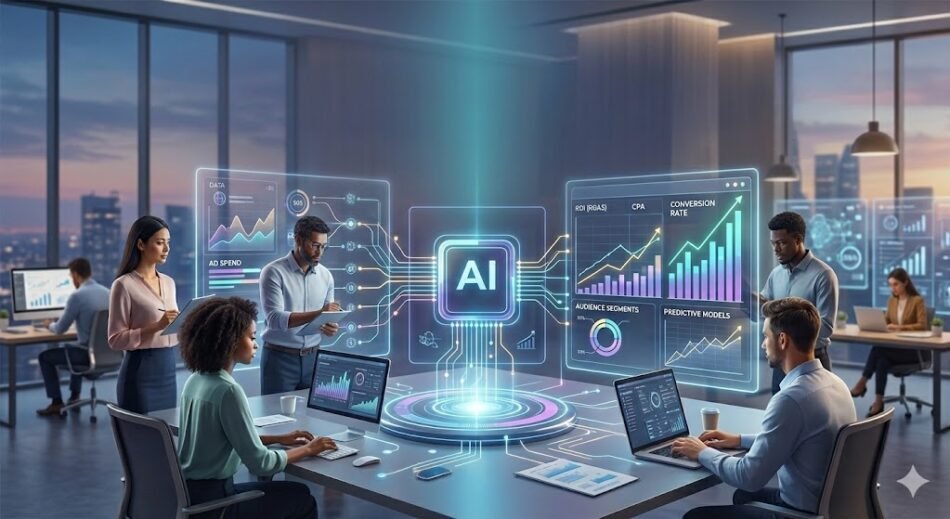
If you run an online business and invest in paid ads, you already know one thing: every dollar must bring results. Performance marketing is all about measurable outcomes — clicks, leads, purchases, bookings, or sign-ups. You don’t just pay for visibility; you pay for performance.
In 2026, Artificial Intelligence (AI) is no longer optional in performance marketing. It’s the core engine powering modern PPC campaigns. Whether you’re advertising on Google Ads, Meta Ads, TikTok, or selling through Amazon, AI is helping businesses get better results with smarter automation.
Let’s break down how AI is changing performance marketing in 2026 — in simple, practical terms.
1. Smarter Ad Targeting (Finding the Right Customers Automatically)
In the past, you had to manually choose:
- Age groups
- Locations
- Interests
- Devices
- Keywords
Now in 2026, AI analyzes massive amounts of data instantly. It studies user behavior, browsing patterns, purchase history, and engagement signals to identify who is most likely to buy from you.
Instead of guessing your audience, AI learns from real data and continuously improves targeting. This means:
- Less wasted ad spend
- Higher-quality traffic
- Better conversion rates
Even small businesses can now access enterprise-level targeting power.
2. Automated Bidding That Maximizes ROI
Manual bidding is almost outdated. AI-powered bidding systems automatically adjust your bids in real time based on:
- Device type
- Time of day
- User intent
- Competition level
- Likelihood of conversion
If someone is highly likely to purchase, the system bids higher. If the user is unlikely to convert, it bids lower or avoids showing the ad entirely.
The result?
You spend smarter — not just more.
For online businesses, this means higher return on ad spend (ROAS) without constantly managing campaigns 24/7.
3. AI-Generated Ad Copy and Creatives
One of the biggest changes in 2026 is AI-generated content.
AI tools now:
- Write ad headlines
- Create descriptions
- Suggest call-to-actions
- Generate product images
- Produce short video ads
Instead of testing one or two ad variations, businesses can now test dozens automatically. AI analyzes which message works best and prioritizes the winning versions.
For example:
- One headline might focus on price
- Another on speed
- Another on trust
- Another on social proof
The system learns which angle converts better — and shifts budget toward it.
This reduces creative guesswork and speeds up campaign optimization.
4. Predictive Analytics (Knowing What Will Work Before Spending Big)
AI doesn’t just look at past data — it predicts future outcomes.
Predictive analytics helps answer questions like:
- Which product is likely to trend next month?
- Which audience segment is heating up?
- When will demand increase?
- Which customers are about to churn?
Instead of reacting late, businesses can act early.
In performance marketing, this means launching campaigns before competitors even realize there’s an opportunity.
5. Better Personalization at Scale
Personalization used to mean adding someone’s first name to an email.
In 2026, personalization is much deeper.
AI can show different:
- Headlines
- Images
- Offers
- Landing pages
Based on:
- User behavior
- Previous purchases
- Browsing history
- Geographic signals
Two people can search for the same product — and see completely different ads tailored specifically to them.
This level of personalization increases trust and significantly improves conversion rates.
6. Advanced Audience Segmentation
AI now builds micro-audiences automatically.
Instead of broad groups like:
- “Men 25–45”
You get: - “Users who viewed product twice but didn’t buy”
- “High-value customers who purchased 3+ times”
- “Cart abandoners in last 48 hours”
These highly specific segments allow businesses to create targeted remarketing campaigns that feel relevant and timely.
The more relevant the ad, the higher the chance of conversion.
7. Fraud Detection and Budget Protection
Ad fraud has always been a problem — fake clicks, bot traffic, and invalid impressions.
AI now detects suspicious behavior patterns instantly and filters out low-quality traffic.
This protects your budget and ensures your money is going toward real potential customers, not bots.
8. Real-Time Performance Optimization
In the past, marketers checked campaign results daily or weekly.
Now AI adjusts campaigns in real time.
If a campaign starts underperforming:
- Budget shifts automatically
- Poor ads pause
- Winning ads scale
- New variations are tested
This constant optimization ensures your campaigns are always improving — even while you sleep.
9. Voice Search and Conversational Ads
With the rise of voice assistants and AI chat systems, search behavior has changed.
People no longer type:
“Best running shoes cheap”
They ask:
“What are the best affordable running shoes for beginners?”
AI-powered advertising platforms understand conversational queries better than ever. This allows businesses to match long, natural-language searches and capture high-intent buyers.
10. Data Privacy and Smarter Tracking
With stricter privacy regulations and reduced third-party cookies, tracking has changed.
AI now relies more on:
- First-party data
- Behavioral modeling
- Predictive conversion tracking
Instead of losing data, platforms use machine learning to estimate conversions when direct tracking isn’t available.
This keeps performance marketing effective — even in a privacy-focused digital world.
What This Means for Online Business Owners
In 2026, performance marketing is less about manual work and more about strategic oversight.
You no longer need to:
- Constantly adjust bids
- Manually test every ad
- Guess your audience
- Analyze spreadsheets for hours
AI handles the heavy lifting.
But here’s the important part:
AI is powerful — but it still needs the right strategy.
It needs:
- Clear goals
- Strong offers
- Proper tracking setup
- Quality creative direction
Businesses that combine human strategy with AI automation see the best results.
Final Thoughts
AI is not replacing performance marketing — it’s upgrading it.
In 2026, successful online businesses use AI to:
- Spend smarter
- Target better
- Personalize deeper
- Optimize faster
- Scale confidently
Performance marketing has become more data-driven, more automated, and more efficient than ever before.
If you’re running paid ads today, the real question isn’t whether AI is being used.
It already is.
The real question is:
Are you using it strategically to grow your business — or just running ads the old way?
In today’s competitive digital world, smart AI-powered performance marketing isn’t a luxury.
It’s the new standard.


