 WhatsApp Us Now
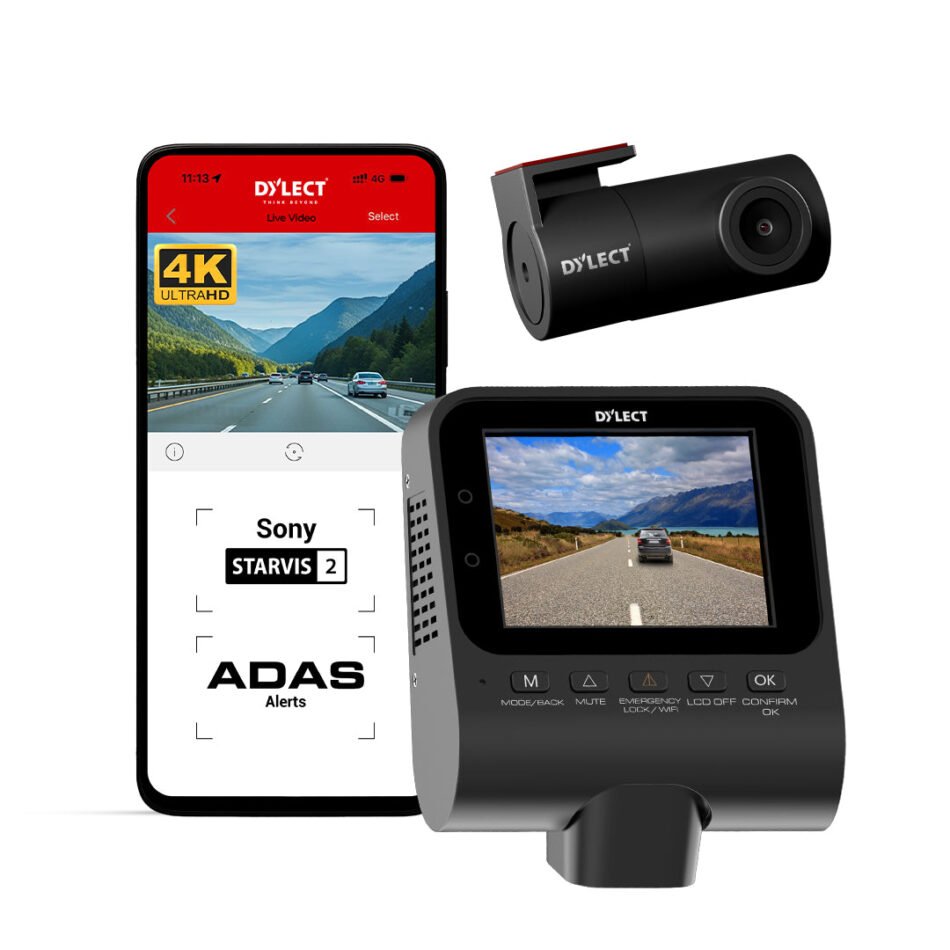
A dash cam is useful not only while driving but also when a vehicle is left unattended. Cars parked outside homes, offices, shopping areas, hotels, or on the street can be exposed to minor collisions, scratches, attempted break-ins, and other unexpected incidents. A dual dash cam for car can improve parking surveillance by recording activity around both the front and rear of the vehicle, provided the dash cam supports recording while parked.
Unlike a single front-facing camera, a dual dash cam uses two cameras to provide wider coverage. When combined with a suitable parking mode and continuous power solution, this setup can provide useful video evidence if something happens while the car is unattended.
What Is a Dual Dash Cam?
A dual dash cam generally consists of a front camera and a second camera positioned toward the rear of the vehicle. During normal driving, both cameras can record their respective views. Some systems can also use both cameras while the vehicle is parked, depending on the model and its parking-mode functionality.
This two-camera arrangement is particularly useful for parking surveillance because an incident may happen either in front of or behind the vehicle. A front-only camera may not capture what happens at the rear, leaving an important part of the situation undocumented.
How Does Parking Mode Work?
Parking mode allows a compatible dash cam to continue monitoring the vehicle after the engine has been switched off. Depending on the dash cam, parking mode may use motion detection, impact detection, time-lapse recording, or a combination of these functions.
For example, some systems remain ready to record and save footage when movement is detected in the camera’s field of view. If the vehicle experiences an impact or vibration, the dash cam’s G-sensor can also trigger an event recording. Some systems retain a few seconds of footage before the trigger, which can help provide context around an incident.
However, not every dash cam automatically records after the car is switched off. Parking surveillance usually requires a compatible parking mode and an appropriate power connection.
Front and Rear Coverage Adds Another Layer of Monitoring
One of the biggest advantages of a dual dash cam is coverage from two directions.
Imagine your car is parked parallel to a busy road. A vehicle reverses into your rear bumper and drives away. A front-only dash cam may not capture the incident clearly. With a rear camera recording simultaneously, there is a better chance of capturing the vehicle or movement involved.
The same applies to activity occurring in front of the car. With two cameras working together, the system can provide a more complete view of the area immediately around the vehicle.
Some dual-channel dash cams can trigger parking recordings from motion detected by either the front or rear camera and save footage from both cameras.
Helps Capture Parking Lot Incidents
Parking lots can be unpredictable. Vehicles may move closely around parked cars, people may walk between vehicles, and shopping carts or other objects can occasionally hit a car.
A parking-mode dash cam can record relevant motion or impact events, depending on its features and settings. This footage can be useful for reviewing what happened later.
For instance, if you return to your car and notice a new dent or scratch, recorded footage may help establish when the incident occurred and what happened around the vehicle.
Useful Against Minor Hit-and-Run Incidents
Not every parking incident is a major accident. A small bump while reversing or opening a door can leave a mark without the other person reporting it.
A dual dash cam can provide an additional source of evidence by recording activity around the vehicle. If the rear camera captures the event, for example, you may be able to review the footage and identify useful details such as the direction of movement or the vehicle involved.
The usefulness of the footage will naturally depend on factors such as camera resolution, lighting conditions, field of view, recording mode, and whether the incident was actually captured.
Parking Surveillance Depends on Power
One important consideration is how the dash cam receives power while the car is switched off.
A standard connection that only provides power when the ignition is on may not allow the dash cam to continue recording after you park. Parking-mode systems commonly use a dedicated parking-mode cable or another continuous-power solution. Garmin, for example, describes its parking-mode cable as a way to provide constant power so a compatible dash cam can record while the vehicle is parked and turned off.
Some parking-mode systems also include battery protection. This is important because continuously powering a camera from the vehicle’s battery can otherwise create a risk of excessive battery discharge. Certain systems can automatically shut down when the battery reaches a specified voltage or after a set period.
For installation involving the vehicle’s electrical system, following the manufacturer’s instructions or using a qualified installer is advisable.
What Should You Look for in a Dual Dash Cam?
If parking surveillance is an important reason for buying a dual dash cam, consider more than just front-camera resolution.
1. Parking Mode
Check whether the dash cam specifically supports recording while parked. A camera that only records when the engine is running will not provide continuous parking surveillance.
2. Front and Rear Recording
Make sure the rear camera can also operate in parking mode if this is important to you. Some systems allow the rear camera to record alongside the front camera while parked, while others may have different limitations.
3. Motion and Impact Detection
Motion detection can help identify activity around the vehicle, while an impact sensor can save footage when the car experiences a bump or collision.
4. Battery Protection
If the dash cam draws power from the vehicle while parked, look for a system that includes appropriate battery-protection features or use a compatible external power solution.
5. Night Recording
Parking incidents can happen at any time. A dash cam with good low-light or night recording capabilities can provide more useful footage after dark.
6. Storage Capacity
Parking mode can generate additional video files. A suitable microSD card and proper recording management are important, particularly if the vehicle is regularly parked for long periods.
Dual Dash Cam vs. Single Dash Cam for Parking
A single-camera setup can provide useful front coverage, but it leaves a blind spot at the rear. A dual dash cam addresses this by recording both directions.
This doesn’t mean that a dual camera guarantees that every incident will be captured. Camera positioning, obstructions, darkness, weather, parking-mode settings, power availability, and storage capacity can all affect the footage.
The key benefit is broader coverage. Instead of monitoring only what happens in front of the vehicle, a dual setup can provide visibility toward both the front and rear.
Final Thoughts
A dual dash cam for car can be a practical addition for drivers who want more than basic driving footage. When equipped with a suitable parking mode and reliable power solution, it can monitor activity around a parked vehicle and record motion or impact events.
The combination of front and rear cameras, parking-mode recording, motion detection, impact detection and battery protection can make the system more useful for documenting parking-lot bumps, hit-and-run incidents, unexpected activity and other events.
Before purchasing one, check the actual parking-mode capabilities of the model rather than assuming that every dual dash cam continues recording after the vehicle is turned off. This ensures that the camera you choose matches your requirements for both everyday driving and parking surveillance.


