 WhatsApp Us Now
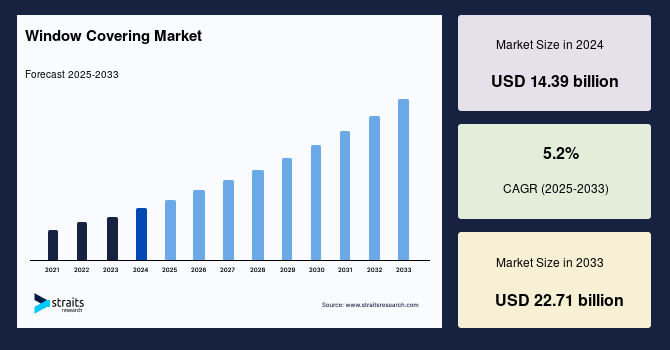
The global window covering market size was valued at USD 14.39 billion in 2024 and is projected to be worth USD 15.14 billion in 2025 and reach USD 22.71 billion by 2033, exhibiting a CAGR of 5.2% during the forecast period (2025-2033).
Market Overview and Key Drivers
Window coverings serve multifunctional roles in buildings by enhancing energy efficiency, controlling natural light, ensuring privacy, and elevating interior aesthetics. The diverse product types encompass wood, cloth, plastic, and metal materials engineered for different applications. The global market’s steady expansion is propelled by increased construction activities, rising disposable incomes, and heightened focus on energy-saving regulations.
Rapid urbanization in emerging economies such as India, China, Brazil, and countries in Southeast Asia is significantly fueling demand for window treatments. Growth in both residential and commercial infrastructure including offices, hotels, and smart city projects creates opportunities for tailored window coverings that balance functionality and style.
In addition, an increasing consumer focus on sustainability and customization is reshaping market dynamics. Advanced window coverings, like automated and motorized blinds integrated with home automation systems, are gaining traction due to their convenience and energy-saving benefits.
Technological Innovations Shaping the Market
The integration of smart technology in window coverings marks a pivotal trend in the industry. Motorized and automated window treatments controlled via mobile apps, voice assistants such as Alexa or Google Home, and centralized home automation hubs are becoming mainstream in luxury homes, upscale apartments, and modern commercial buildings.
Besides convenience, these smart solutions contribute to energy efficiency by optimizing the use of natural light and reducing reliance on artificial heating and cooling. Innovations in artificial intelligence (AI), the Internet of Things (IoT), and machine learning are driving continuous improvements in these systems, making them more reliable, affordable, and user-friendly. Consequently, middle-income segments are also increasingly adopting smart window coverings.
Market Segmentation Insights
Among the product types, the blinds and shades segment led the global market with 43.2% of total sales in 2024. This popularity is driven by their superior energy efficiency and acoustic properties, such as honeycomb blinds that reduce noise and improve insulation. Multifunctional window treatments, including layered shades and blackout blinds, are in demand due to their ability to enhance privacy, natural lighting, and energy conservation.
Residential applications remain the primary growth driver, supported by urban population expansion and preferences for space-efficient window solutions. Post-pandemic lifestyle changes and remote work trends have accelerated home remodeling activities, boosting demand for retrofit window coverings like wood blinds, Roman shades, and vintage-style drapes with modern aesthetics.
Despite the rise of automation, manually operated blinds and curtains maintain popularity among consumers seeking simplicity, affordability, and ease of use, especially in smaller urban apartments. These manual options increasingly feature enhancements like UV resistance and thermal insulation.
Regional Market Dynamics and Opportunities
North America dominated the window covering market in 2024, commanding a 41.3% revenue share, largely due to robust residential construction and remodeling activity in the United States. Safety regulations, such as mandatory cordless or child-safe designs, further stimulate demand for innovative, consumer-friendly window coverings.
Asia-Pacific is the fastest-growing region, expected to expand at an 11.2% CAGR from 2025 to 2033, propelled by rapid urbanization and a growing middle class in key countries like China, India, Vietnam, and the Philippines. The hospitality and real estate sectors in China and Southeast Asia are major consumers of modern window treatments, especially motorized and smart solutions.
Other regions, including Europe, the Middle East, and Latin America, display varying preferences influenced by local cultures and income levels. For example, strong smart home technology adoption fuels demand in Europe, while developing economies focus on cost-effective, practical options.
Market Challenges and Competitive Landscape
One of the significant constraints in the window covering market is the volatility of raw material prices, including wood, aluminum, synthetic fibers, and textiles. Global economic instability, inflationary pressures, trade conflicts, and supply chain disruptions affect procurement and pricing strategies, impacting profit margins, especially for smaller manufacturers.
The market is fragmented, with multinational corporations competing alongside small regional players that offer locally tailored, cost-effective designs. This diverse competitive environment fosters innovation and drives product differentiation. Emerging companies leveraging digital platforms and online customization tools are gaining market share by meeting consumers’ demands for personalized and sustainable window coverings.
A notable emerging player is Lutron Electronics, gaining recognition for its advanced smart window covering technologies focused on automation and energy efficiency. Other brands emphasize user-friendly installation and improved aesthetics, catering to evolving consumer lifestyles.
Future Outlook
The window covering market is expected to continue its steady growth trajectory, underpinned by rising consumer interest in home aesthetics, energy conservation, and smart home integration. Increasing urbanization and disposable incomes in emerging economies will sustain demand in both residential and commercial sectors.
Technological advancements in motorized, automated, and IoT-enabled window coverings will open new avenues for innovation and profitability. As smart home ecosystems mature, the seamless integration of window treatments with other smart devices will become a key differentiator.
Retail channels will remain significant, with physical stores offering personalized consultations and customization services, complemented by growing online sales. The evolving regulatory landscape and material innovations will influence product design and market competitiveness.
Overall, the window covering sector is adapting to lifestyle trends, sustainability goals, and digital transformation, positioning itself for robust opportunities and expanded market reach over the coming decade.


