 WhatsApp Us Now

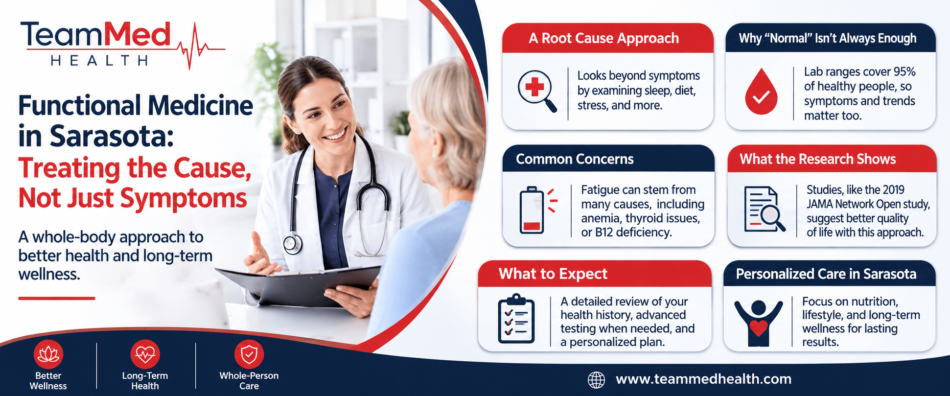
Most chronic symptoms don’t have one tidy explanation. Tiredness that lingers, a gut that never settles, sleep that stays broken, hormones that seem to shift without warning: each of these can come from several overlapping sources, and untangling them takes work.
That is the gap functional medicine in Sarasota and other cities aims to address. Its starting question is different. Instead of asking which diagnosis fits a symptom, it asks what could be driving it. How well it answers depends on the practice, so it helps to know what the method involves and where the evidence runs thin.
What the Approach Actually Involves
Functional medicine looks at chronic problems through a root cause lens. A clinician reviews sleep, diet, activity, stress, medications, family history, and environment, then tries to see how those pieces might feed into each other. First visits can run an hour or longer, and the plans that come out of them lean on food, movement, sleep, and stress management. Lab testing gets added when the history points to it.
Two things are worth saying plainly. Functional medicine is not a recognized medical specialty, and it doesn’t replace conventional care. Reputable practices still use standard diagnostics, follow evidence based treatment, and refer patients to specialists when needed.
Why “Normal” Doesn’t Always Settle the Question
A lab’s reference range is usually built from the middle 95 percent of results in a healthy group. That design has a built in consequence: roughly 5 percent of healthy people land outside the range on any given test. The reverse also holds. A result inside the range doesn’t rule out a problem, which is why clinicians weigh symptoms, history, and trends over time alongside the number.
The National Heart, Lung, and Blood Institute diagnoses metabolic syndrome when at least three of five risk factors are present: a large waist, high triglycerides, low HDL cholesterol, high blood pressure, and high fasting blood sugar. Any one can appear alone, but they tend to cluster, and the cluster is linked with a higher risk of heart disease and type 2 diabetes.
Fatigue Is a Good Test Case
Fatigue has a long list of possible causes. MedlinePlus names anemia, depression, thyroid problems, sleep disorders, diabetes, and certain medicines among them. The standard workup begins with a medical history and blood tests that check for anemia, diabetes, and thyroid and kidney function.
Vitamin B12 is a more specific example. The NIH Office of Dietary Supplements says deficiency can cause tiredness and weakness, that many older adults absorb B12 poorly from food, and that acid reducing medicines and metformin may lower absorption. It also says B12 supplements haven’t been shown to improve energy in people who already get enough, so checking a level before supplementing can make sense.
What the Research Says
The best known study, published in JAMA Network Open in 2019, reviewed past records from patients at the Cleveland Clinic Center for Functional Medicine and found an association between the model and better patient reported quality of life. It was retrospective and observational, so it can show a link but not prove cause and effect, and the authors called for prospective studies. Much of the lifestyle advice used within the approach rests on a wider body of research, while evidence for the full model is thinner.
What a First Visit Usually Looks Like
Expect a lot of questions. A first visit for functional medicine in Sarasota typically covers sleep habits, meals, stress, family history, and every medication and supplement you take. Testing is chosen based on what that history suggests, and the visit ends with a plan that has specific steps and a schedule for reviewing progress.
Structure varies from one practice to the next. The longevity program at TeamMed Health pairs a detailed intake with advanced lab panels, a body composition scan, and a 90 day plan, followed by visits to check progress.
Follow Up From Home
Most plans depend on follow up. Telehealth in Sarasota can handle part of it: results can be reviewed, medications adjusted, and progress checked over video without a trip to the office. For blood pressure specifically, the Community Preventive Services Task Force found strong evidence that home monitoring combined with clinical support helps people with hypertension lower their readings. Telehealth does have limits, since a physical exam or certain tests still need an in person visit.
Questions to Ask Before You Commit
The label isn’t tied to a licensing board, so practices vary widely. Is the clinician a licensed physician or advanced practice provider? Can they explain why each test is ordered and what the result would change? Will they coordinate with your primary care doctor and any specialists? What will it cost, given that coverage varies and many programs are paid out of pocket? Promises to cure unrelated conditions, or long supplement lists that don’t connect to your results, are reasons for caution.
Final Thoughts
A normal lab report and ongoing symptoms can both be true at once, and both are useful information. Care that takes both seriously, with testing guided by history, plans grounded in lifestyle evidence, and honesty about what remains unproven, is what good functional medicine in Sarasota should offer. The label guarantees nothing, so ask direct questions, bring your records, and expect clear answers.
Frequently Asked Questions
Is functional medicine a replacement for my primary care doctor?
No. It works best alongside primary care.
Is there strong evidence for it?
Evidence for the full model is still early and mostly observational. Many of its lifestyle recommendations are supported by broader research.
Does insurance cover it?
Coverage varies, and many programs are paid out of pocket. Ask before you start.
Can telehealth in Sarasota handle follow ups?
Often, yes, for reviewing results and progress. Some needs still require an in person exam.
