 WhatsApp Us Now
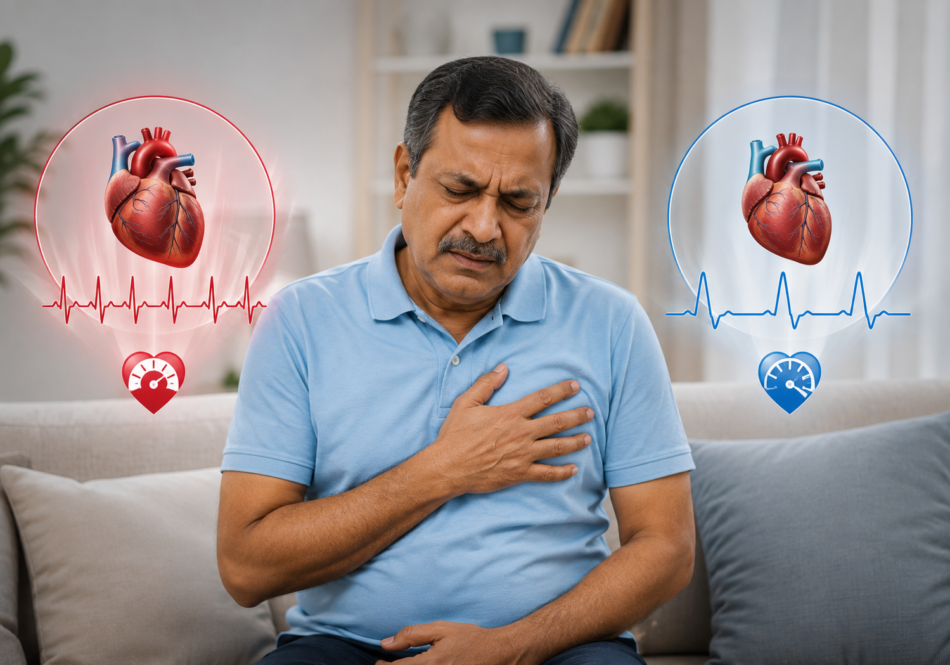
Your heart never stays the same. Sometimes it rushes fast, like when you’re running, climbing stairs or are stressed out, the other times it slows down when you meditate, sleep or sit back and relax. Until your heart beats too fast or too slow without any clear reason, the variations in its beats are perfectly normal. Only in the extreme scenarios, one must pay close attention and see a doctor immediately.
Heart beats per minute is called heart rate, which is more than just a number. If read right, it can be the first clue to your heart’s health, its electrical system’s function, and its overall condition. It can offer important clues about how well your heart’s electrical system is working. A consistently faster or slower heartbeat is not normal but is also not always dangerous, however in some cases it can be a symptom of an underlying heart condition that needs immediate medical attention. It is imperative that we become familiar with what is Tachycardia and what is Bradycardia. Even when the change in the heart’s rhythm is not dangerous, it can’t be overlooked. In order to know when to seek medical attention, we need to understand the two conditions thoroughly.
For most healthy adults, the normal resting heart rate is between 60 and 100 beats per minute. The hearts of the athletes and physically active individuals pump blood more efficiently, therefore their hearts may naturally have lower heart rates than normal individuals. Likewise, during physical activity, mental stress or in moments of excitement it is normal that your heart beats faster. The real concern begins when these heart rhythm changes happen suddenly, that too without any clear explanation.
What is Tachycardia
In simple terms, it is a heart condition where the resting heart rate remains over 100 beats per minute. It is crucial to identify the cause of the faster heart rate because the treatment depends entirely on what’s driving the rhythm.
Common Causes Of Tachycardia
Coronary artery disease
Thyroid disorders
Anaemia
Excessive alcohol consumption
Emotional stress or constant anxiety may also trigger Tachycardia
Symptoms Of Tachycardia
Chest discomfort
Breathlessness
Palpitations
Dizziness
Fainting
Remember, if left unchecked, Tachycardia can lead to abnormal blood flow and oxygen supply to the heart, reducing the heart’s efficiency, which may even lead to heart failure. Managing Tachycardia effectively is therefore vital for long-term heart health.
What is Bradycardia
On the completely opposite end is Bradycardia. It is a condition where the resting heart rate is below 60 beats per minute. It is to note that many healthy adults, specifically endurance athletes, naturally have slower heart rates. The real concern begins when the heart slows down to an extent where it can no longer pump enough blood to meet the body’s bare minimum requirement.
Common causes of Bradycardia
- Age-related heart’s electrical system changes
- Certain medicines that are used to treat hypertension or abnormal heart rhythms
- Thyroid disorders
- Electrolyte imbalances
- Sleep apnoea.
Symptoms of Bradycardia
- Unusual tiredness
- Light-headed
- Breathless
Both Tachycardia and Bradycardia require proper medical evaluation and intervention. To effectively manage these abnormal heart rhythms, one common approach is to implant cardiac electronic devices such as pacemakers. Patients with vascular blockages may need stents to restore healthy blood flow through the arteries.
Which Is Worse, Fast or Slow Heartbeat?
Like any other rhythm in the universe, even the heart seeks that balance. Suddenly too fast, or too slow never works well, it’s either chaos or simply dull. Both Tachycardia and Bradycardia can adversely affect the heart’s ability of pumping blood efficiently.
When Does It Becomes An Emergency
When the faster or slower heartbeat is followed by chest pain, fainting, breathlessness or episodes of dizziness, immediate medical attention must be given to the patient. Understanding what is Tachycardia and Bradycardia is more about paying attention to persistent symptoms, managing underlying conditions including diabetes and hypertension, leading an active lifestyle and attending regular health check-ups.
When Heart Finds Its Rhythm
Understanding how to manage conditions like Tachycardia and Bradycardia is a vital step towards better heart health. Taking control of your heart’s rhythm and proactively addressing these issues can reduce your risk of heart disease. Stay informed, make heart healthy lifestyle choices, and consult a healthcare professional to secure a healthier heart and future.

