 WhatsApp Us Now

Piping systems that carry hot acids, chloride-heavy streams, and aggressive process fluids fail faster than most engineers expect. Pitting starts at weld seams. Crevice attack hides under gaskets and fitting shoulders. A single corroded elbow can shut down a reactor line and cost days of lost production. This is why plants in chemical processing, petrochemical refining, and pharmaceutical manufacturing turn to Hastelloy C276 Pipe Fittings when ordinary materials give out. The alloy holds up where stainless steel pits and cracks within months.
What gives the material its edge is composition. Its nickel-molybdenum-chromium structure resists pitting, crevice corrosion, and attack from wet chlorine, hypochlorite, ferric chloride, and both oxidizing and reducing acids. Molybdenum fights localized corrosion. Chromium handles oxidizing conditions. Together, they let Hastelloy Pipe Fittings survive media that destroy 316L in weeks. Picking the right fitting, though, takes more than naming the grade. You weigh operating conditions, pressure and temperature limits, material specifications, dimensions, and fabrication needs before you commit to a purchase order.
What Are Hastelloy C276 Pipe Fittings?
Hastelloy C276 Fittings are UNS N10276 Fittings that are made of an alloy with an approximate composition of 57% nickel, 16% molybdenum, 16% chromium, and the balance tungsten and iron. Plants use them to join, redirect, branch, and terminate pipe runs carrying corrosive fluids. Common types include elbows for direction changes, tees for branch connections, reducers for diameter transitions, caps for line ends, and stub ends for flanged joints.
The difference from stainless steel fittings comes down to chemistry under load. Where 304 or 316 stainless suffers chloride stress cracking and acid pitting, this alloy keeps its surface intact across a far wider chemical range. Most factory-made wrought fittings follow ASTM B366, which covers nickel and nickel-alloy fittings, while dimensional and pressure requirements trace to ASME B16.9 and ASME B16.11. Get it wrong, and the fitting corrodes regardless of how good the base alloy is.
Key Properties of Hastelloy C276 Pipe Fittings
- Resists a broad span of corrosive chemicals including sulfuric, hydrochloric, and phosphoric acids across many concentrations.
- Withstands pitting and crevice corrosion in warm chloride solutions better than standard austenitic stainless grades.
- Holds up against chloride-induced stress corrosion cracking in seawater and brine service lines.
- Works in oxidizing and reducing environments (function of actual inter-process chemistry and concentration).
- Provides mechanical strength in problematic piping systems at pressure and temperature.
- Hastelloy Pipe Fittings weld cleanly when fabricators follow correct procedures and use matching filler metal.
- Serves reliably in selected high-temperature industrial settings up to around 1040°C for short exposure.
Why Material Selection Matters for Industrial Piping Systems
Choosing the correct fitting alloy decides whether a line lasts two years or twenty. The right material stops premature corrosion before it damages wall thickness and triggers a leak. It keeps aggressive fluids moving safely through the system instead of seeping into secondary containment or the atmosphere.
Durability improves when the alloy actually suits the conditions it faces. Alloy C276 Pipe Fittings reduce the risk of unplanned shutdowns, cut leakage incidents, and lower the frequency of emergency maintenance. They stay chemically compatible with the process media, so you avoid the slow degradation that forces early replacement. When operators match the alloy correctly, the system runs for years without corrosion surprises. There is a cost dimension too. Weighing the higher upfront price of Hastelloy C276 Fittings against extended service life and fewer repair cycles usually tips the math in the alloy’s favor for severe service.
Industrial Applications of Hastelloy C276 Pipe Fittings
- Chloride and acid-corrosive environments in intermediate plants.
- Petrochemical refineries and process lines in sour gas, sulfur compound, and high-temperature hydrocarbon service.
- Pharmaceutical plants where the purity of the product requires fittings to be withstand disinfection and chemical assault.
- Pulp and paper bleaching systems handling chlorine dioxide and other aggressive oxidizing agents.
- Pollution control units and flue gas desulfurization scrubbers dealing with wet acidic gases.
- Plants that treat waste with mixed corrosive effluents and neutralize chemical cocktails.
- Corrosion protection of critical assets at heat exchanger inlets & process equipment nozzles.
- Specialty systems carrying hazardous chemicals and high-rated chemical shipping solutions and daily concentrated acids and brines.
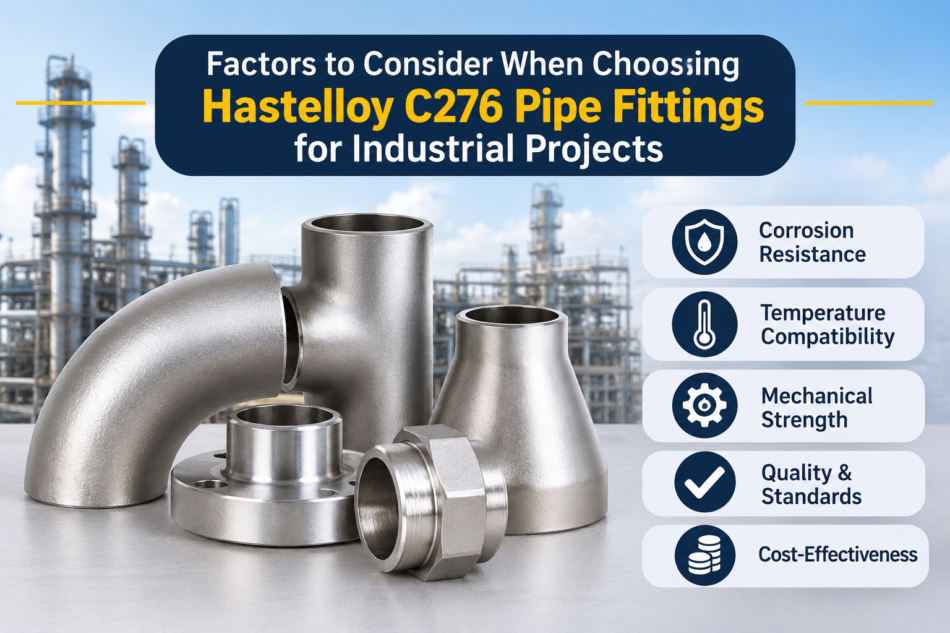
Factors to Consider When Choosing Hastelloy C276 Pipe Fittings
- Operating and Maximum Temperature: Higher temperatures reduce strength, pressure rating, and corrosion resistance.
- Pressure: Fitting class, wall thickness, and pressure rating should correspond with system pressures and design.
- Chemical Compatibility: Assess fluid type and concentration, including chlorides, acids, and oxidizers, before confirming the alloy suits the service.
- Fitting Type and Dimensions: Pick elbows, tees, reducers, or caps sized to the pipe schedule, nominal bore, and connection style.
- Applicable Standards: Confirm compliance with ASTM B366, relevant ASME codes, and any project-specific specification.
- Welding and Fabrication: Plan for weldability, correct filler metal, joint design, and post-weld inspection where codes require it.
- Material Certification: Verify mill test certificates, heat numbers, chemical analysis, and mechanical results for full traceability.
- Quality Inspection: Review dimensional checks, surface finish, and non-destructive testing records before accepting delivery.
- Supplier Capabilities: Judge whether a Hastelloy C276 Fittings Supplier can meet your grades, sizes, certifications, and documentation.
- Lifecycle Cost: Compare purchase price against expected service life, maintenance load, and the downtime a failure would cause.
Conclusion
Selecting a suitable Hastelloy C276 Pipe Fittings protects piping systems that handle acids, chlorides, and punishing process conditions day after day. The decision rests on a few core checks. Chemical compatibility, pressure and temperature limits, correct fitting dimensions, applicable standards, and verified material certification all shape whether a line performs or fails. Work through these factors carefully, and you improve system reliability, cut corrosion-related breakdowns, and keep operations running steadily over the long haul. Sound material choices today save far costlier interventions later.


