 WhatsApp Us Now
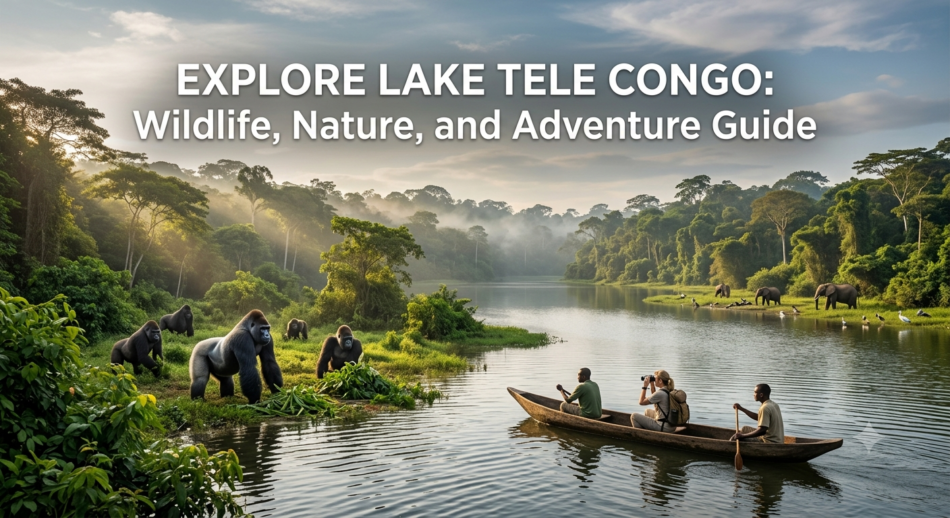
For travelers seeking an authentic African wilderness experience, few destinations offer the remote character and ecological richness of the Congo Basin. Lake Tele Congo is one such destination, surrounded by wetlands, swamp forests, waterways, and diverse wildlife. Located in the Likouala region of the Republic of Congo, this remarkable wetland landscape provides an opportunity to discover a quieter and less-explored side of Central Africa.
Unlike heavily visited safari destinations, the area around the lake is characterized by its isolation and strong connection between local communities and the natural environment. From wildlife observation and nature exploration to cultural encounters and peaceful water journeys, the region can appeal to travelers looking for something beyond conventional African tourism.
Where Is Lake Tele Congo?
Lake Télé is located in the northern part of the Republic of Congo within the Likouala region. The lake and its surrounding wetland form part of the Lac Télé/Likouala-aux-herbes Ramsar Site, a Wetland of International Importance designated in 1998. The Ramsar site covers approximately 438,960 hectares and contains swamp forests, flooded forests, wooded savannahs, and floating vegetation.
Its position within the Congo Basin makes the landscape especially important for biodiversity. Rather than being a single isolated body of water, the lake forms part of a broader network of wetlands and waterways that support wildlife and local livelihoods.
The remote location is also part of the attraction. Visitors can experience an environment where forests, rivers, marshes, and open water dominate the scenery, creating a distinctive setting for nature-focused travel.
Wildlife Around Lake Tele Congo
One of the biggest attractions of Lake Tele Congo is its rich variety of wildlife. The surrounding wetland ecosystem provides habitats for several notable African species.
Western lowland gorillas are among the most important animals associated with the region. The Ramsar information describes the site as supporting one of the region’s denser populations of western lowland gorillas. Chimpanzees, forest elephants, buffaloes, duikers, and hippopotamuses are also recorded within the wider ecosystem.
Wildlife sightings in such a remote environment should never be guaranteed, however. Dense vegetation, water channels, seasonal conditions, and animal movements all influence what visitors may encounter.
For wildlife enthusiasts, the real appeal is the opportunity to explore a relatively undisturbed ecosystem. Instead of focusing solely on checking animals off a list, travelers can appreciate animal tracks, bird calls, forest vegetation, waterways, and the natural rhythms of the Congo Basin.
A Rich Wetland Ecosystem
The natural environment surrounding Lake Tele Congo is remarkably diverse. Swamp forests and flooded woodlands are mixed with floating prairies, savannah areas, rivers, and other wetland habitats. These environments create ecological niches for mammals, birds, fish, reptiles, and countless smaller organisms.
The waterways are particularly significant. Ramsar documentation notes that the rivers in the area support rich fish resources and populations of African darters. This highlights how closely aquatic ecosystems are connected with terrestrial habitats.
The wetlands also perform important environmental functions. Wetland landscapes can store water, support biodiversity, and contribute to broader ecological stability. In the Congo Basin, these interconnected ecosystems form part of a much larger natural system with importance far beyond the immediate region.
For photographers and nature lovers, the combination of reflective water, tropical vegetation, open wetlands, and wildlife creates opportunities for distinctive landscape and nature photography.
Adventure Activities to Consider
Exploring this part of Congo is less about conventional sightseeing and more about experiencing wilderness. Depending on local conditions, access, conservation arrangements, and available operators, visitors may participate in activities such as guided nature walks, wildlife observation, birdwatching, fishing experiences, and water-based exploration.
Wildlife Observation
Guided wildlife exploration can provide opportunities to search for signs of gorillas, chimpanzees, elephants, buffaloes, hippos, and smaller forest species. Experienced local guides can help travelers understand animal behavior and recognize tracks, calls, feeding areas, and other signs that might otherwise go unnoticed.
Birdwatching
The wetlands provide excellent habitat for aquatic and forest birds. The African darter is specifically documented within the wider Ramsar site.
Birdwatching can be particularly rewarding in a wetland environment because different habitats attract different species. Early mornings are often ideal for listening to bird calls and observing activity around waterways.
Water Exploration
Canoes and boats can provide a practical and immersive way to experience the waterways where locally appropriate and permitted. Moving quietly across the water can reveal a completely different perspective of the forest and wetlands.
Because conditions can vary significantly, water activities should always be arranged with knowledgeable local guides and follow local safety and conservation requirements.
Local Communities and Culture
A visit to the region is not only about wildlife. Communities around the wetland have longstanding connections with the landscape and rely on natural resources for aspects of everyday life.
Fishing and subsistence agriculture are important local activities, while natural resources are also used for food, medicines, construction materials, and canoe making.
This relationship makes responsible tourism particularly important. Travelers should respect community traditions, ask permission before photographing people, follow local guidance, and avoid interfering with fishing, farming, or other livelihood activities.
Choosing locally knowledgeable guides can also make the experience more meaningful. They can provide insights into the area’s environment and traditions that are difficult to obtain from a standard guidebook.
Conservation Importance
The conservation value of the region extends well beyond tourism. The Lac Télé/Likouala-aux-herbes area has international recognition as a Ramsar wetland. The broader transboundary wetland complex also connects with important wetland areas in the Democratic Republic of Congo.
Conservation in this landscape needs to balance biodiversity protection with the needs of communities that depend on natural resources. Historically, local communities have played an important role in the management and use of the wetland.
For visitors, this means choosing responsible travel practices is essential. Avoiding litter, minimizing environmental disturbance, respecting wildlife distances, and supporting legitimate conservation and community initiatives can help protect fragile ecosystems.
Travelers planning an African wilderness itinerary can work with experienced specialists such as Romaric Tour Guide to explore opportunities for responsible nature and wildlife experiences in Central Africa.
Best Time to Explore the Region
Weather and accessibility are important considerations when planning a journey to this remote wetland. Conditions can change considerably throughout the year, and water levels can affect transportation and access.
Rather than selecting dates based solely on generic safari recommendations, travelers should consider current local conditions, transportation options, wildlife objectives, and the type of activities they want to experience.
Because this is a remote destination, advance planning is particularly important. Travelers should confirm permits, transportation, accommodation, guide availability, health requirements, and local travel conditions before departure.
Travel Tips for Lake Tele Congo
A journey into this wilderness requires more preparation than a typical city or mainstream safari holiday.
Consider these practical tips:
- Travel with experienced local guides: Remote environments require knowledge of waterways, wildlife, weather, and local customs.
- Pack lightweight, practical clothing: Breathable clothing and suitable footwear are useful in tropical conditions.
- Carry reliable insect protection: Wetland environments can have substantial insect activity.
- Protect your equipment: Waterproof bags or protective cases can be valuable around rivers, boats, and humid forests.
- Bring binoculars: Many wildlife encounters happen at a distance.
- Respect wildlife: Never approach, feed, or attempt to attract wild animals.
- Follow community guidelines: Local traditions and access rules should always be respected.
- Prepare for limited infrastructure: Connectivity and services may be limited compared with major tourist destinations.
Working with a responsible safari specialist can simplify logistics and help travelers create a more realistic itinerary. Romaric Tour Guide can be considered by travelers looking for tailored African wildlife and wilderness experiences.
Why Visit Lake Tele Congo?
The greatest attraction of this destination is its sense of discovery. Travelers are not simply visiting a famous landmark; they are entering a complex ecosystem shaped by forests, wetlands, waterways, wildlife, and communities.
Lake Tele Congo offers an experience particularly suited to adventurous travelers, wildlife photographers, conservation enthusiasts, and people who want to discover less-commercialized destinations in Africa.
Its western lowland gorillas, chimpanzees, elephants, hippopotamuses, birds, forests, and wetlands make the region ecologically fascinating. At the same time, its remoteness means visitors should approach the journey with patience, preparation, and respect.
Conclusion
Lake Tele Congo represents the extraordinary natural diversity of the Congo Basin. Its wetlands and forests provide habitat for remarkable wildlife while supporting communities whose lives are closely connected to the environment.
For adventurous travelers, exploring this region can provide a deeper understanding of Central Africa’s wilderness. The experience is less about luxury or crowded attractions and more about nature, discovery, conservation, and cultural connection.
With careful planning, responsible travel practices, and knowledgeable local support, a journey into the Lake Télé landscape can become an unforgettable African adventure.
FAQs
Q1. Where is Lake Tele located?
Lake Télé is located in the Likouala region of the Republic of Congo. It forms part of the Lac Télé/Likouala-aux-herbes Ramsar wetland, which was designated as a Wetland of International Importance in 1998.
Q2. What wildlife can be found around the lake?
The wider wetland ecosystem supports western lowland gorillas, chimpanzees, forest elephants, buffaloes, duikers, hippopotamuses, birds, and numerous aquatic species.
Q3. Is Lake Tele suitable for adventure travelers?
Yes. Its remote forests, wetlands, waterways, and wildlife make it appealing to travelers interested in wilderness exploration, nature, birdwatching, photography, and authentic African experiences.
Q4. Why is the Lake Télé wetland important?
The area contains diverse wetland habitats and supports significant wildlife populations. It also provides natural resources that local communities depend upon for activities such as fishing and subsistence agriculture.
Q5. How should travelers prepare for a trip to the region?
Travelers should plan transportation, accommodation, guides, permits where required, health precautions, suitable clothing, insect protection, and equipment well in advance. Because the destination is remote, professional local guidance is highly recommended.


