 WhatsApp Us Now
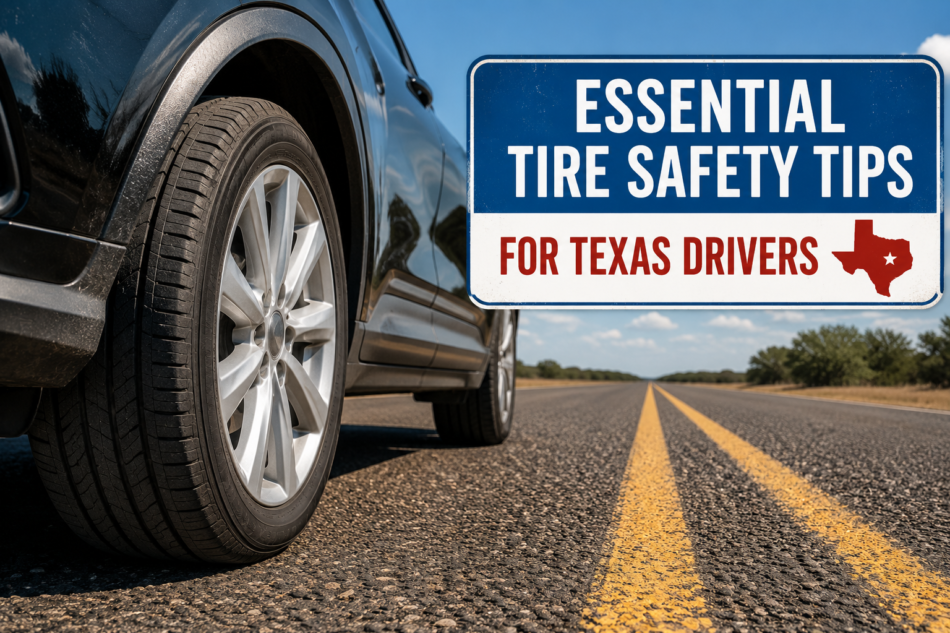
It is scorching in Texas during the summer, and you are on the highway, moving fast and feeling the heat. The asphalt you are driving on is around 140°F. Summer pavement is not kind to vehicle rubber.
Driving on hot asphalt damages your tires way more than just wearing down the tread. Most drivers don’t think about their tire condition until there is a full-blown flat. But knowing basic Texas tire safety and doing regular tire maintenance can help preserve your tires. Not knowing this could mean you are on the highway for an unexpected delay.
The Thermal Pressure: Rubber Chemistry Meets Asphalt
Hot pavement is a major concern in summer tire care. Hot pavement can reach temperatures of 140-160°F. Tires are generally made of synthetic, cross-linked rubber. When rubber is exposed to high temperatures, these links start to break.
Again, the internal steel belt of your tire can start to oxidize. This causes the steel belt to lose its integrity and begin to decompose. If you would like to understand more of the phenomena that can ruin a tire, look at the guide to tire damage in Texas.
At the same time, air pressure dynamics go wild. A basic rule of physics dictates that air pressure increases by roughly 1 PSI for every 10°F increase in ambient temperature.
Consider this real-world scenario:
You set tire pressure to 35 PSI early in the morning at 75°F. Then, at 2:00 PM, the outside temperature is now 105°F, and the pavement is over 140°F. That tire pressure is now over 40 or 42 PSI, just from the air in the tire heating up and expanding.
The contact patch with the road shrinks, and centralized tread wear happens, which is unfortunate. If your tire has a structural problem that you didn’t see, that pressure spike will blow the sidewall out. It doesn’t matter if you drive a commuter car; extreme heat isn’t picky about car choice.
Hydroplaning Physics: Why the Legal Limit on Tread Depth is Unacceptable
Texas summers mean hot afternoons and abrupt heavy rains. Combine that with old and worn-out tires, and you’re creating a disaster.
Texas law requires a minimum tire tread depth of 2/32 of an inch. If your tires hit that mark, the Texas DPS will not let you pass a vehicle inspection. Here is a tip from me to you: 2/32″ is a legal limit, not a safety standard.
You should know that at a tread depth of 4/32″, a tire has lost about 40% of its ability to drive safely in wet conditions. This is because the shallow treads on a tire cannot channel and evacuate water.
If you’re on the highway during the summer at 70 MPH, tires that are at the legal limit of 2/32″ are going to start hydroplaning about 15 MPH earlier than a new tire. Additionally, it will take 40-60% longer to brake on a wet highway.
How to Inspect Your Tires at Home
You don’t need expensive technical tools to perform a quick tire wear inspection. Grab pocket change and run these two quick tests:
- The Penny Test (2/32″ Legal Limit): Insert a penny head-first into the shallowest tread groove. If Lincoln’s entire head is visible, your tire is legally bald and unsafe to drive. Replace it immediately.
- The Quarter Test (4/32″ Highway Safety Limit): Put a quarter in the tire tread, head first. If you can see the top of George Washington’s head, your tires don’t have enough tread to carry the load at 75 MPH on the highway.
Then look at the DOT-stamped date on the sidewall of the tires. Look for four digits at the end of the DOT sequence (for example, “3219”). The first two digits are the week, and the last two digits are the year. So, “3219” would be the 32nd week of 2019. Regardless of how much tread your tires have left, if your tires are older than 6 years, they need to be replaced. Over time, tires dry out, increasing the risk of blowouts, especially in hot weather.
The “Texas Heat Shield” Action Checklist
Safe driving on Texas roads requires shifting from reactive repairs to proactive seasonal tire maintenance. Preventing tire blowouts comes down to routine maintenance steps that cost a fraction of a tow truck bill or an accident deductible.
Proper Tire Inflation: Always measure pressure when the tires are cold (before driving). Match the PSI to the vehicle manufacturer’s door-jamb plaque, not the maximum PSI stamped on the tire sidewall.
Wheel Alignment: Laser wheel alignment helps ensure your wheels are properly aligned. If you hit a bump, it throws the alignment out of whack, causing the wheels to wear unevenly.
Computer Balancing: Computer balancing uses high-speed rotation to diagnose any out-of-balance conditions. Tires out of balance cause wobbling that can damage the tires.
Tire Rotation Service: Typically, tire rotation services are performed in an “X” pattern. But when you rotate tires, you swap the front and rear tires. Switch the rear tires to the front every 6,000 miles to promote even tire wear.
When to Stop Repairing and Book a Replacement
A patch or plug is only meant for minor punctures in the center tread zone. You should immediately replace your tires if you notice any of these unrepairable warning signs:
- Tread depth at or below 4/32″ before long highway road trips.
- Any puncture located within 1 inch of the tire’s shoulder or sidewall.
- Visible sidewall bulging, bubble formation, or dry-rot cracks.
- Tires that have exceeded the 6-year DOT manufacture date limit.
Protect Your Journey Today
Don’t ignore your tires until they’re worn out from aggressive driving on a hot day, and don’t wait until a tire-pressure light comes on telling you to inflate them. Properly inflated & aligned, and in good condition, tires are essential for your safety and that of your family on the road.
If you don’t know how to check your tires to determine if they need replacement, you can get a proper inspection without an appointment from any independent tire shop in Texas. You could save yourself a ton of money and ensure your car is safe to drive for the rest of the summer by stopping for a quick 10-minute check.


