 WhatsApp Us Now
Quick Answer Summary
| Quick Answer: Go lab-grown over natural: it’s the identical stone for 30–40% less per carat. For metal, platinum and 14k gold both hold up beautifully for decades with minimal upkeep, so choose based on tone, not durability. On style, the most requested look right now is a round or emerald center paired with baguette side stones. Budget-wise, a genuine high end engagement ring typically runs $4,000–$15,000+ depending on carat weight and metal, and the fastest way to buy without regret is choosing your diamond and metal first, then building the setting around them. |
Lab-Grown Diamond Engagement Rings: The Real Comparison
A lab-grown diamond is chemically and optically identical to a mined one, with the same crystal structure, fire, and hardness. The only difference is where it formed: a lab, instead of the earth over billions of years. Grading and certification work exactly the same way, through GIA or IGI, using the same 4Cs. To verify any stone, check the report number on the certificate against the GIA or IGI database online. It takes thirty seconds and confirms the exact stone.
| Factor | Lab-Grown Diamond | Natural Diamond |
|---|---|---|
| Composition | Identical pure carbon crystal | Identical pure carbon crystal |
| Price per carat | 30–40% lower | Higher, rises sharply with carat size |
| Certification | GIA/IGI graded, same 4Cs | GIA graded, same 4Cs |
| Resale value | Lower resale market currently | Slightly stronger resale market |
| Best for | More stone for the budget | Buyers prioritizing rarity of origin |
If you want a bigger, cleaner stone without stretching into five figures, lab-grown diamond engagement rings are the smarter buy for most people right now.

Platinum vs. 14k Gold: Which Metal Should You Choose?
| Metal | Durability | Look | Maintenance | Best For |
|---|---|---|---|---|
| Platinum solitaire | Extremely durable, naturally white | Cool white-grey, develops a soft patina | Low, occasional polish | A lifetime, low-maintenance piece |
| 14k gold | Very durable | Warm tones (yellow, rose, white) | Low, white gold may need occasional replating | Color options and warmer tones |
| Titanium | Hardest of the three, lightweight | Modern matte-grey | Nearly maintenance-free | A distinctive, durable everyday piece |
A platinum solitaire engagement ring is dense, naturally hypoallergenic, and holds a stone more securely over decades of wear. A 14k gold engagement ring offers that same longevity with more warmth and color, and it typically costs a little less than platinum in the same design. Neither is the “wrong” answer; it’s about which one matches how you actually live.
Titanium is the one I get asked about most lately: it’s harder than platinum, about a third of the weight, and needs almost no upkeep. My gallery is America’s first dedicated titanium fine jewelry gallery, pairing it with lab-grown stones in a way that hasn’t really existed in engagement rings until now. Worth a look before defaulting to the traditional metals.
Diamond Shapes: What’s Actually Trending
Round brilliant is still the top seller overall, but the more interesting shift is happening around accent stones and pairings.
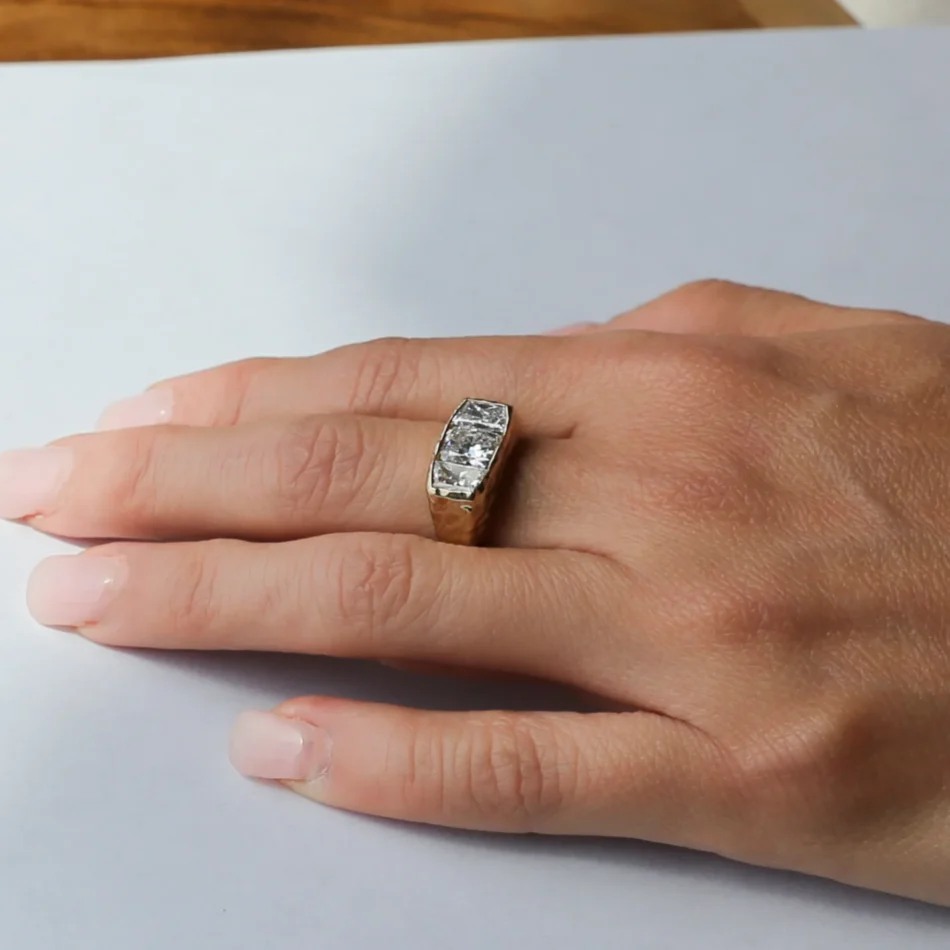
Baguette diamonds are rectangular step-cuts, most often used as side stones or in a three-stone setting. A baguette diamond engagement ring reads modern and architectural next to a round or emerald center, and it’s one of the most requested combinations I design right now. Emerald cut stones are long, clean-faceted, and editorial, though they show inclusions more readily than round, so clarity matters more. Radiant cut sits between the two, with brilliant faceting inside a rectangular outline. Round brilliant remains the most forgiving on inclusions, which is why it’s stayed the default for so long.
Oval suits anyone who wants a diamond that looks bigger for the same carat weight, since the elongated cut stretches across the finger. The cushion cut has soft, rounded corners with a vintage feel and hides inclusions well, similar to a round. Pear-shaped stones combine a rounded end with a point, a strong choice for a center stone that reads as distinctly their own.
If you’re torn between a plain solitaire and something with more detail, pairing a round or emerald center with baguette side stones has been the most requested style I’ve built this year.
What Does a High-End Engagement Ring Actually Cost?
“High end” doesn’t have to mean six figures. It means quality construction, a well-matched stone, and a setting built to last generations, not a specific number.
| Budget Range | What You Get |
|---|---|
| $2,500–$4,000 | Solid 14k gold band, 0.5–0.75ct lab-grown center stone |
| $4,000–$8,000 | Platinum or 14k gold, 1–1.5ct lab-grown diamond, custom details like baguettes or a halo |
| $8,000–$15,000 | 1.5–2.5ct lab-grown or smaller natural diamond, fully custom design |
| $15,000+ | Natural diamonds, larger carat weights, fully bespoke fine jewelry |
A genuinely high end ring is less about the price tag and more about whether the setting was built around your specific stone, hand, and lifestyle, which is why I design everything custom rather than sell off a shelf.
FAQs
Do lab-grown diamonds pass a diamond tester?
Yes. Since they’re chemically identical to natural diamonds, standard testers read them as real diamonds. Only specialized lab equipment can tell the difference.
Will a platinum ring turn yellow or fade over time?
No. Platinum is naturally white all the way through, so it never needs replating like white gold sometimes does. It develops a light patina with age that most people polish off or simply prefer.
Is 14k or 18k gold better for an engagement ring?
14k is harder and more scratch-resistant because it contains more alloy metal, making it a better choice for a ring worn daily. 18k has a richer color but is softer and shows wear faster.
How long does it take to build a custom engagement ring?
Most custom pieces take 3–6 weeks from final design approval to completion, depending on the stone sourcing and setting complexity.
Can I bring my own diamond or a family stone to be reset?
Yes. Resetting an heirloom or inherited stone into a new design is one of the most common custom requests I get, and it’s often more affordable than starting from scratch.


