 WhatsApp Us Now

Most homeowners have never watched a professional clean a dryer vent, so it is easy to wonder what the visit actually involves. Is it a quick brush through the lint trap? A blast of air? Or something more thorough? The truth is that a proper dryer vent cleaning service follows a clear, step-by-step process, from the first walk-through to the final airflow test. Knowing that process helps you judge whether the work you are paying for is complete.
This checklist walks through each stage, so you know exactly what a quality service looks like.
Pre-Service Conversation and Walk-Through
A good visit begins with a conversation. The technician asks about the symptoms you have noticed, such as longer drying times, hot clothes, or odd smells. They also ask when the vent was last cleaned, what type of dryer you have, and whether it runs on gas or electricity.
Then they walk the system. They locate the dryer, trace the likely duct path, and identify the exterior termination, whether it is on a wall, in a soffit, or on the roof. This first look helps them choose the right tools and spot potential challenges.
Protecting Your Home
Before touching anything, a careful technician protects the work area. They may lay down drop cloths or mats to protect flooring, set up vacuum equipment, and clear a path to the dryer. Lint is light and travels easily, so containment is part of a professional job.
Safe Dryer Disconnection
Next, the technician carefully pulls the dryer away from the wall. This step requires attention, especially with gas dryers, where the gas line and connection must not be strained. For electric dryers, the technician ensures the power cord is handled safely.
The duct is then disconnected from the dryer. At this point, the technician can see the condition of the connection, check for loose clamps or tape, and look for signs of crushing or damage.
Initial Inspection of the Duct
Before cleaning, the technician inspects the visible duct and, where possible, the interior. They look for:
- Heavy lint buildup or complete blockages
- Crushed, kinked, or sagging sections
- Gaps or loose joints where lint may escape into walls or attics
- Duct material, such as rigid metal, semi-rigid metal, foil, or plastic
- Duct length and the number of bends
- Signs of moisture, rust, or corrosion
This inspection helps determine whether cleaning alone will solve the problem or whether repairs are needed.
Cleaning the Duct With Rotary Brushes and Suction
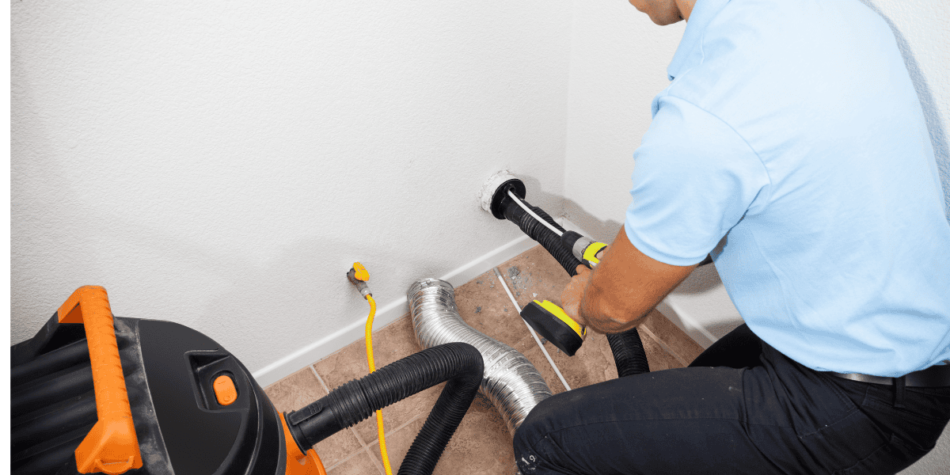
This is the core of the service. Technicians use flexible rotary brush systems, often powered by a drill, with brush heads sized to the duct. The brush spins and loosens lint from the walls as it moves through the line. At the same time, a high-powered vacuum captures the debris so it does not simply move to another part of the duct.
For long or complex runs, technicians may work from both ends, using extension rods to reach every section. Vertical runs and tight bends receive special attention, since these are the places where lint collects most.
Cleaning the Exterior Vent and Hood
The outside of the system is just as important. The technician clears lint, leaves, nests, and other debris from the exterior hood or termination. They check that the flap or louvers open fully and close properly, and that no screen or cap is restricting airflow. Birds, rodents, and insects often use these openings for shelter, and a blocked hood can stop airflow entirely.
Some exterior vents have screens that clog quickly with lint. Dryer vent terminations are generally not supposed to have fine screens, since lint catches on them, and a professional can advise on proper hardware.
Cleaning the Dryer’s Rear and Connection Area
With the dryer pulled out, technicians often clean the area behind and beneath it, along with the outlet where the duct leaves the back of the appliance. Lint collects there in surprising amounts. Some technicians also check the dryer’s exhaust port for buildup and vacuum accessible areas around the machine.
Deeper internal cleaning of the dryer cabinet is usually a separate service and often involves appliance disassembly, so ask whether it is included or offered.
Final Inspection and Repairs
After cleaning, the technician takes another look at the duct and connections. They may use a flashlight or camera to confirm the interior is clear. If minor adjustments are needed, such as replacing a clamp, reattaching a loose section, or swapping a damaged connector, they typically handle them now.
For larger problems, such as plastic duct, crushed sections, or excessive length, the technician explains the issue and offers options, without pressure to decide on the spot.
Reconnection and Positioning
The dryer is reconnected to the duct with secure clamps and proper fittings, avoiding kinks and sharp bends. It is then carefully moved back into position, leaving enough space behind it so the duct is not crushed. Gas dryers are reconnected with attention to the gas line, and the technician confirms the connection is secure.
Airflow Testing
The final test confirms that the work actually helped. The technician runs the dryer and checks airflow at the exterior vent, sometimes with a meter, or at least by feel and visual inspection of the flap. Strong, steady airflow indicates that the system is clear.
If airflow is still weak, the technician looks for remaining restrictions, such as damaged duct, a blocked termination, or excessive length.
Explanation and Recommendations
A professional ends the visit with a clear explanation. They tell you what they found, show before-and-after photos if available, and describe any issues that need attention. They also suggest a cleaning schedule based on your household and duct layout.
You should receive a straightforward summary of the work performed, along with pricing that matches the original quote, plus any approved extras.
Cleanup
Finally, the technician cleans up. That includes removing lint, vacuuming the work area, and picking up tools and drop cloths. The space should look as tidy as it did when they arrived.
What a Professional Does Not Do
Knowing what falls outside a quality service is also helpful:
- They do not clean only through the lint trap
- They do not rely only on compressed air without suction
- They do not skip the exterior hood
- They do not pressure you into unnecessary repairs
- They do not leave the dryer disconnected or unsecured
- They do not skip airflow verification
If a service omits these basics, the cleaning may be incomplete.
Local Considerations in Austin
Central Texas homes often have upstairs laundry rooms, interior closets, and long runs through attics. Hot attic temperatures can affect duct materials, and exterior vents near roofs and soffits are attractive to birds and pests. Technicians familiar with these layouts know what to look for and how to reach awkward terminations safely. You can review how a local team approaches this work by exploring its expert dryer vent cleaning service in Austin, Texas.
How Long Does the Process Take?
A standard residential cleaning often takes under an hour, though long, complicated, or heavily clogged runs can take longer. Roof or attic access, stacked units, and repairs may add time.
Your Pre-Visit Checklist
Help the visit go smoothly with a few simple steps:
- Clear the space around the dryer
- Empty the lint trap
- Make sure the technician can reach the exterior vent
- Remove items stored on or near the dryer
- Note any symptoms you have noticed
- Plan to be available at the end of the visit for questions
Your Post-Visit Checklist
After the technician leaves:
- Run a load of laundry and note the drying time
- Check that the exterior vent flap opens firmly
- Confirm that the dryer sits securely, without crushing the duct
- Keep a copy of the service summary
- Set a reminder for your next cleaning
Final Thought
A quality dryer vent cleaning is methodical, thorough, and verifiable. Now that you know what each step looks like, you can hold any provider to that standard. To see the process in action for your own home, visit https://greenwoodairductcleaning.com/services/dryer-vent-cleaning-austin/ and schedule a visit.


