 WhatsApp Us Now
Eye surgery is performed to improve vision, treat eye conditions, and enhance overall quality of life. However, some patients may experience unexpected visual changes during the recovery period. One of the concerns that patients may notice after a procedure is double vision, also known as diplopia. Understanding why double vision occurs after eye surgery and how it can be treated is important for a comfortable recovery process.
What Is Double Vision After Eye Surgery?
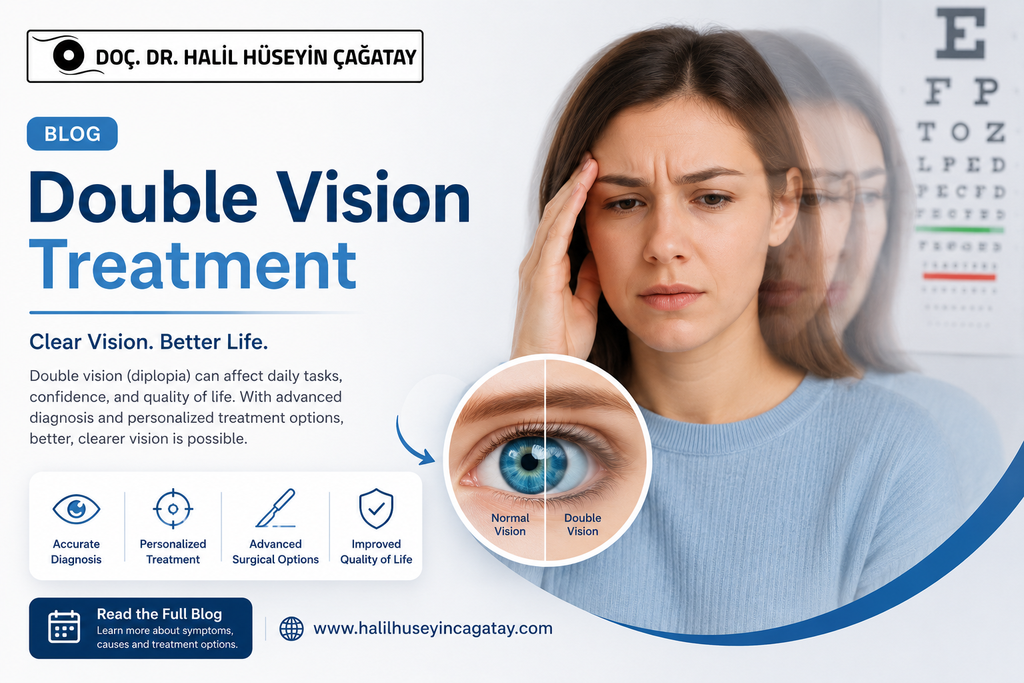
Double vision occurs when a person sees two images of a single object instead of one clear image. This condition can happen after different types of eye procedures, including cataract surgery, strabismus surgery, corneal procedures, or other eye treatments.
But why does double vision happen after eye surgery? The eyes work together through complex coordination between the eye muscles, nerves, and brain. Any temporary or permanent change affecting this coordination can cause the images received by both eyes to become misaligned.
In some cases, double vision after surgery is temporary and improves as the eyes heal. However, persistent symptoms may require detailed evaluation by an eye specialist to determine the underlying cause and appropriate treatment.
Why Can Double Vision Occur After Eye Surgery?
There are several possible reasons why patients may experience double vision after an eye procedure. Temporary swelling, changes in the eye’s structure, or adjustments during the healing period can affect how both eyes work together.
After cataract surgery, for example, some patients may notice double vision because the brain is adapting to a new visual system. Changes in the artificial lens position, pre-existing eye muscle imbalance, or differences between the two eyes can also contribute to visual discomfort.
Another important question is, can anesthesia or eye positioning during surgery cause double vision? In some situations, the muscles controlling eye movement may be temporarily affected, leading to alignment problems. These issues often improve with time, but monitoring by an eye doctor is essential.
Is Double Vision Normal After Eye Surgery?
Many patients ask, “Is double vision after eye surgery normal?” Mild visual disturbances can occur during the early recovery period. Blurred vision, light sensitivity, and slight image distortion may be part of normal healing.
However, ongoing or worsening double vision should not be ignored. If the symptom continues for several weeks, affects daily activities, or appears suddenly with other symptoms, a professional eye examination is recommended.
Early diagnosis can help identify whether the issue is related to healing, eye alignment, lens position, nerve function, or another eye condition.
How Is Double Vision Diagnosed After Surgery?
To determine the cause of double vision, an eye specialist performs a detailed evaluation. The examination may include checking eye movements, alignment, vision quality, and the overall condition of the eye.
The doctor may ask questions such as when the double vision started, whether it occurs when looking with one eye or both eyes, and whether it changes in different directions of gaze.
Why is this evaluation important? Because treatment depends on the specific cause. Double vision caused by temporary healing changes may require only observation, while other cases may need targeted treatment.
What Are the Treatment Options for Double Vision?
The treatment for double vision after eye surgery depends on the reason behind the condition. In some patients, symptoms improve naturally as the eyes recover. Regular follow-up appointments allow doctors to monitor progress and decide whether additional treatment is necessary.
For patients with ongoing double vision, treatment options may include prescription glasses with prism lenses, vision therapy, medication in specific cases, or surgical correction of eye muscle problems.
Prism glasses can help by adjusting the way light enters the eyes and allowing the brain to combine images more effectively. Vision therapy may also help improve eye coordination and control in selected patients.
In cases where eye muscle imbalance is responsible for persistent double vision, corrective procedures may be considered to improve eye alignment.
Can Double Vision Be Prevented After Eye Surgery?
While not every case of double vision can be prevented, proper pre-surgical evaluation and careful treatment planning can reduce risks. Before surgery, doctors assess eye health, previous vision problems, and any conditions that may affect recovery.
Following post-operative instructions is also important. Using prescribed eye drops, attending follow-up appointments, protecting the eyes, and reporting unusual symptoms early can support better healing.
Patients should also share their complete eye history with their doctor, including previous surgeries, vision problems, or symptoms of eye muscle imbalance.
When Should You See a Doctor for Double Vision?
Patients should seek medical advice if double vision continues, becomes more noticeable, or is accompanied by symptoms such as severe eye pain, sudden vision changes, headaches, drooping eyelids, or difficulty moving the eyes.
But when should double vision after surgery be considered urgent? Sudden onset double vision or rapid worsening of symptoms requires immediate evaluation because it may indicate an underlying eye or neurological issue.
A timely examination helps ensure that the correct treatment approach is started without unnecessary delay.
Conclusion
Double vision after eye surgery can occur for different reasons, ranging from temporary healing changes to conditions requiring specialized treatment. Understanding the cause is the first step toward finding an effective solution. With proper diagnosis, personalized treatment planning, and regular monitoring, many patients can achieve improved visual comfort.
Doç. Dr. Halil Hüseyin Çağatay provides detailed eye evaluations and personalized treatment approaches to help patients understand vision problems, including double vision after eye procedures. Through advanced examination techniques and patient-focused care, suitable solutions can be planned according to individual eye conditions and visual needs.


