 WhatsApp Us Now
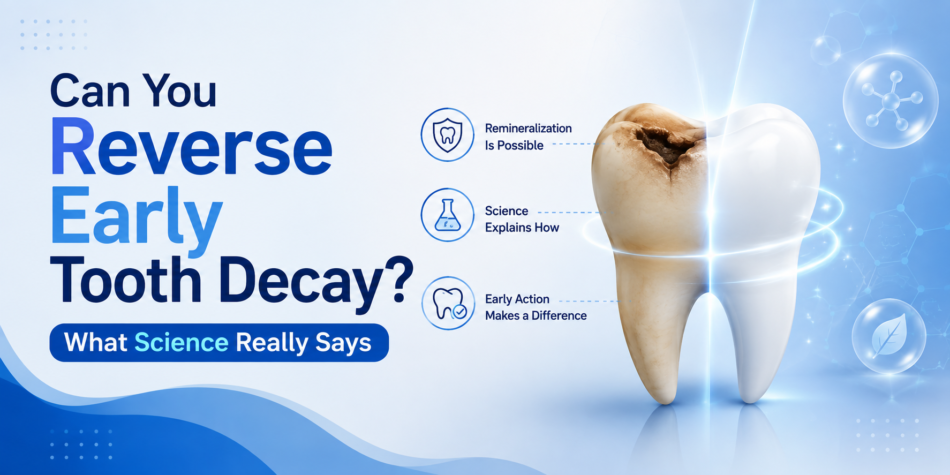
Tooth decay does not always begin with a hole.
In its early stage, decay can start as a change in the mineral content of the enamel. You may not feel pain, and you may not even notice anything when you look in the mirror.
This early stage is sometimes called enamel demineralisation or an early caries lesion.
The good news is that very early tooth decay can sometimes be stopped or even reversed before a permanent cavity forms.
But there is an important distinction here. Once a true cavity has formed and tooth structure has been lost, your body cannot simply grow the missing part of the tooth back.
So, can you reverse early tooth decay?
Sometimes, yes. The key is catching it early.
What Happens During Early Tooth Decay?
Your mouth contains bacteria that feed on sugars and produce acids.
When these acids repeatedly come into contact with your teeth, they can remove minerals from the enamel. This process is called demineralisation.
Your saliva naturally helps counter this process by supplying minerals and helping neutralise acids.
When mineral loss happens faster than repair, the enamel can weaken.
Early decay may appear as a white or chalky area on the tooth. These changes can sometimes be treated without drilling if the tooth has not developed a permanent cavity.
Can Early Tooth Decay Really Be Reversed?
In some cases, yes.
Your teeth are constantly going through cycles of mineral loss and mineral gain.
Fluoride plays an important role in this process. It can help strengthen enamel and make it more resistant to acid attacks.
If early decay is detected while the enamel surface remains intact, improving oral hygiene, reducing frequent sugar exposure, and using fluoride appropriately may help stop the progression.
This is different from repairing a cavity.
Once bacteria have created a physical hole in the tooth, the lost tooth structure does not naturally grow back.
What Role Does Fluoride Play?
Fluoride is one of the most studied tools for preventing and controlling tooth decay.
When fluoride is present around the teeth, it can help support remineralisation and make enamel more resistant to acid.
For everyday care, brushing twice a day with fluoride toothpaste is an important step.
Your dentist may recommend additional fluoride treatment if you have a higher risk of tooth decay.
The amount and type of fluoride care should be based on your individual needs.
Can Better Brushing Reverse Tooth Decay?
Good brushing can help control plaque, but there is a little more to it.
The goal is not to brush harder.
It is to clean your teeth thoroughly and consistently.
Try to:
- Brush twice a day with fluoride toothpaste
- Spend enough time cleaning all tooth surfaces
- Clean between your teeth every day
- Replace your toothbrush when the bristles become worn
- Avoid brushing with excessive pressure
Brushing helps remove plaque, which contains bacteria that contribute to acid production.
Still, brushing alone cannot reverse a fully developed cavity.
Does Cutting Down on Sugar Help?
Yes.
You may already know that eating too much sugar can contribute to tooth decay. But how often you consume it matters too.
Every time you eat or drink something containing fermentable carbohydrates, bacteria can produce acids.
Frequent snacking throughout the day gives your teeth repeated acid exposure.
Instead of constantly sipping sugary drinks or eating sweets between meals, try to keep these foods and drinks to less frequent occasions.
Water is a simple choice between meals.
Can Saliva Help Repair Early Tooth Damage?
Yes.
Saliva is an important part of your mouth’s natural defence system.
It helps:
- Wash away food particles
- Neutralise acids
- Keep the mouth moist
- Supply minerals to the tooth surface
Dry mouth can reduce some of these protective effects.
Certain medicines, dehydration, and other conditions can contribute to reduced saliva.
If your mouth frequently feels dry, mention it during a dental appointment.
What About Home Remedies?
This is where things can get confusing.
The internet is full of suggestions involving oils, powders, acids, or homemade mixtures.
Not every popular remedy has good evidence behind it.
Some DIY methods may also be abrasive or acidic, which can damage enamel rather than help it.
If you suspect early tooth decay, evidence-based dental care is a better approach than experimenting with untested remedies.
Simple habits usually matter more than complicated hacks.
How Does a Dentist Know If Decay Is Reversible?
A dentist looks at the condition of the tooth and the extent of mineral loss.
During an examination, they may check:
- Changes in enamel colour or texture
- Plaque accumulation
- Areas that are difficult to clean
- Your history of cavities
- Dietary habits
- Fluoride exposure
- Signs of an actual cavity
Dental X-rays may also be recommended when appropriate, especially when decay could be developing between teeth or in areas that cannot be examined directly.
The earlier the problem is identified, the more options you may have for managing it without extensive treatment.
When Does Tooth Decay Need a Filling?
A filling may be needed when decay has created a cavity and the tooth structure has been permanently damaged.
At that point, brushing and fluoride cannot rebuild the missing enamel and dentin.
The dentist removes the damaged tissue and restores the tooth with an appropriate material.
This is why early detection matters.
A small early lesion may be managed differently from a deep cavity that has progressed closer to the tooth’s nerve.
How Can You Prevent Early Decay From Getting Worse?
A few consistent habits can make a real difference.
Focus on:
- Brushing twice daily with fluoride toothpaste
- Cleaning between your teeth
- Drinking water regularly
- Limiting frequent sugary snacks
- Choosing fewer sugary drinks
- Having regular dental examinations
- Following any fluoride recommendations from your dentist
If you already have early enamel changes, your dentist may suggest a specific preventive plan based on your risk of further decay.
When Should You Get Your Teeth Checked?
You don’t need to wait for a toothache.
Early decay can exist without obvious pain.
If you notice white or brown changes on your teeth, increased sensitivity, food getting stuck in a particular area, or other changes, arrange a dental examination.
A dental professional at a Dental Clinic In Hor al Anz can assess the affected area and explain whether the problem can be managed with preventive care or requires restorative treatment.
Frequently Asked Questions
Can early tooth decay heal itself?
Very early enamel changes can sometimes remineralise when the conditions that caused mineral loss are controlled. A developed cavity cannot naturally grow back.
Can fluoride reverse early tooth decay?
Fluoride can support remineralisation and strengthen enamel. It is most useful when early decay is identified before a permanent cavity forms.
Does tooth decay always cause pain?
No. Early tooth decay often causes no noticeable symptoms. Pain may develop as decay progresses.
Can brushing remove a cavity?
No. Brushing removes plaque and helps prevent further decay, but it cannot rebuild a tooth once a physical cavity has formed.
Is sugar the only cause of tooth decay?
No. Tooth decay is influenced by several factors, including oral bacteria, frequency of sugar exposure, saliva, fluoride exposure, oral hygiene, and individual risk.
What Science Really Tells Us
The biggest takeaway is simple.
Early tooth decay is not always a one-way process.
When enamel is still intact, your mouth can repair some mineral loss through remineralisation. Fluoride, saliva, good oral hygiene, and reduced frequency of sugar exposure all support this process.
But once a true cavity forms, the missing tooth structure cannot simply grow back.
That is why catching decay early is so useful.
You don’t have to wait for pain to take your teeth seriously. Regular dental care and simple daily habits can help identify problems early and give you more options for protecting your natural teeth.

