 WhatsApp Us Now
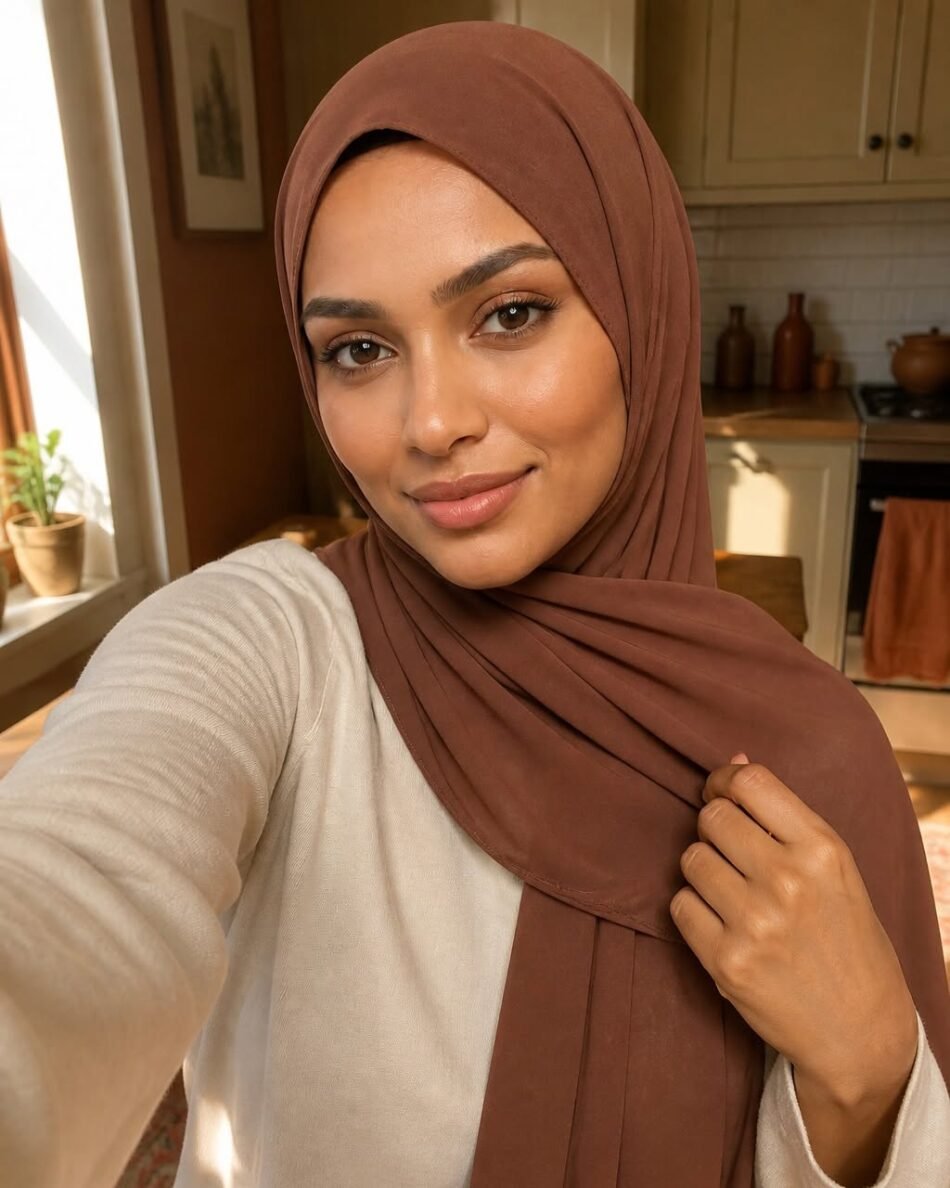
A brown chiffon hijab can stay smooth, soft, and elegant for a long time when it is washed, dried, stored, and pinned correctly. The biggest difference usually comes from simple habits: gentle washing, careful handling, proper storage, and keeping rough accessories away from the fabric. With the right care routine, your favorite brown chiffon hijab can continue looking fresh instead of becoming wrinkled, dull, or damaged after a few wears.
Chiffon is popular because it creates a soft, polished drape without adding much weight. That same lightweight quality means it needs a little more care than heavier fabrics. If you wear hijab for work, university, errands, Eid gatherings, weddings, or long family events, a few minutes of proper care can help your hijab stay wearable for much longer.
Why Does Brown Chiffon Need Proper Care?
Chiffon is a lightweight fabric with a smooth surface. Depending on the exact fiber blend and finish, it can be more sensitive to pulling, snagging, rough washing, and high heat.
Brown also deserves attention for another reason: marks, dust, makeup, and product buildup can become noticeable against a clean, even-colored surface.
A well-maintained brown chiffon hijab should have:
✔ A smooth appearance
✔ A clean, even color
✔ Neat edges
✔ No unnecessary pulls or snags
✔ A comfortable drape
✔ Minimal creasing
The good news is that you do not need an expensive laundry routine.
Most chiffon hijab care comes down to handling the fabric gently and avoiding things that cause unnecessary friction.
How to Wash a Brown Chiffon Hijab
The first rule is simple: check the care label before washing.
Different chiffon fabrics can have different fiber compositions. Polyester chiffon, silk chiffon, and blended fabrics may have different washing requirements.
If the label permits hand washing, that is often a convenient option for a delicate hijab.
A Simple Hand-Washing Method
- Fill a clean basin with cool or lukewarm water.
- Add a small amount of mild detergent.
- Place the hijab in the water.
- Gently move it through the water without scrubbing.
- Pay attention to makeup or visible marks.
- Rinse thoroughly with clean water.
- Press out excess water gently.
- Dry according to the care label.
Do not twist the hijab like you might twist a towel.
That can put unnecessary stress on the fabric and edges.
What About Washing Machines?
If the care label says machine washing is suitable, use a gentle or delicate cycle.
A mesh laundry bag can give the hijab extra protection from zippers, hooks, buttons, and other items in the washer.
Before putting it into the machine, check your clothing load.
Avoid washing a chiffon hijab with:
- Denim
- Clothing with exposed zippers
- Velcro
- Rough towels
- Garments with sharp metal decorations
A hijab can look perfectly fine when it goes into the washer and come out with small pulls simply because another garment caught the fabric.
Should You Use Hot Water on Chiffon?
In most cases, cool or lukewarm water is the safer choice unless the care label specifically recommends another temperature.
Hot water can be harder on some delicate fabrics and may affect the fabric’s finish or shape.
For regular hijab washing, there is rarely a reason to use very hot water.
If you are trying to remove a stain, treat the affected area gently rather than increasing the water temperature.
How to Remove Makeup From a Brown Chiffon Hijab
Makeup around the forehead, cheeks, and chin is one of the most common causes of visible marks on a frequently worn hijab.
Foundation, sunscreen, powder, and setting products can transfer to the fabric.
The best approach is to deal with the mark early.
For a Fresh Makeup Mark
- Avoid rubbing aggressively.
- Blot excess product gently.
- Apply a small amount of mild detergent to the affected area.
- Let it sit briefly if the care instructions allow.
- Rinse gently.
- Repeat if needed rather than scrubbing hard.
Always test a cleaning method on a less noticeable area if you are unsure how the fabric will react.
Do not automatically reach for bleach.
Bleach can damage or alter the color of brown fabric and may leave an obvious patch.
How to Deal With Sweat and Body Oils
If you wear the same hijab for several hours, especially during warm weather, sweat and natural oils can collect around the forehead and neck.
This is particularly relevant in warmer areas of the USA, such as Texas, Florida, Georgia, and parts of Southern California.
Instead of allowing buildup to remain in the fabric for a long time, wash the hijab according to its care instructions when it needs cleaning.
A lightweight undercap can also help reduce direct contact between hair, skin, and the hijab.
However, the undercap should be clean as well.
A dirty undercap can transfer oils and product residue back onto a freshly washed hijab.
How to Dry a Brown Chiffon Hijab
Drying is just as important as washing.
After rinsing, avoid wringing the chiffon.
Instead:
→ Gently press the water out.
→ Lay the hijab flat on a clean towel or hang it according to the fabric’s care instructions.
→ Keep it away from harsh direct heat.
→ Allow it to dry completely before storing.
Do not place a damp hijab into a drawer or closed storage box.
Moisture trapped in fabric can create unpleasant odors and may contribute to fabric problems over time.
Can You Put a Chiffon Hijab in the Dryer?
Only do so if the care label says the fabric is dryer-safe.
When in doubt, air drying is generally a more cautious option for delicate chiffon.
High heat can affect certain fabrics, and a hijab does not usually need a dryer to become wearable again.
If you are in a hurry before work or an event, gently smooth the fabric while it is still slightly damp and allow it to finish drying naturally.
How to Prevent Wrinkles in Brown Chiffon
Chiffon can develop creases when it is left crumpled in a bag, drawer, or laundry basket.
The easiest solution is to store it properly as soon as it is dry.
Try these habits:
✔ Fold it loosely rather than compressing it tightly.
✔ Hang it if your storage setup allows.
✔ Keep heavy clothing from sitting on top of it.
✔ Avoid throwing worn hijabs into a pile.
✔ Remove pins before folding or storing.
If you are going directly from work to dinner, avoid stuffing your hijab into a handbag.
A small breathable pouch can be much better for keeping it clean and reducing wrinkles.
How to Iron a Brown Chiffon Hijab Safely
Many chiffon hijabs do not need heavy ironing.
If your hijab is wrinkled, check the care label before applying heat.
If ironing is permitted, use the lowest appropriate temperature and consider placing a thin protective cloth between the iron and the hijab.
Never leave a hot iron sitting on chiffon.
A steamer may also be useful for suitable fabrics, but again, follow the manufacturer’s care instructions.
The goal is to relax wrinkles, not press the fabric aggressively.
How to Store Your Brown Chiffon Hijab
Good storage can add years of useful wear.
If you have several hijabs, organize them by color instead of throwing everything into one drawer.
For example:
Neutral section
- Brown
- Chocolate
- Beige
- Cream
- Black
Soft color section
- Dusty pink
- Sage
- Powder blue
Event colors
- Burgundy
- Emerald
- Plum
- Champagne
This makes it easier to find the right hijab without repeatedly pulling other pieces out of the drawer.
Hanging vs Folding
Both methods can work.
Hanging is useful when you want to reduce folding lines and have enough closet space.
Folding is more practical when you have many hijabs.
If you fold chiffon, avoid making extremely tight folds that stay in the same position for months.
Why Hijab Pins Can Damage Chiffon
A tiny pin problem can turn into a noticeable snag.
Before using a pin, inspect it.
If the pin has:
- A bent tip
- Rust
- Rough metal
- A damaged closure
- A sharp point
replace it.
Do not force a pin through several layers of chiffon.
The more fabric you push through a pin, the more pressure you may place on the fibers.
Magnetic pins can be another option for people who prefer less piercing of the fabric, but choose accessories appropriate for your particular hijab and styling method.
Common Mistakes Women Make With Chiffon Hijabs
After caring for modest clothing for years, one pattern is easy to recognize: many fabric problems start with small habits rather than the fabric itself.
Mistake #1: Washing After Every Short Wear
Not every short indoor wear requires a full wash.
If the hijab was worn briefly and remains clean, airing it out properly may be enough.
Frequent washing can add unnecessary wear.
Of course, if there is sweat, makeup, odor, or visible dirt, washing is appropriate.
Mistake #2: Leaving Pins Attached
Some people remove the hijab at night and put it away with the pins still attached.
This is an easy way to create pulls or small holes.
Always remove pins before storage.
Mistake #3: Using Too Much Detergent
More detergent does not automatically mean a cleaner hijab.
Excess detergent can be difficult to rinse completely and may leave residue.
Use the amount recommended for the washing method and product.
Mistake #4: Scrubbing Stains Aggressively
A stubborn foundation mark can tempt you to scrub harder.
That can damage the fabric.
Gentle treatment followed by another cleaning attempt is usually better than aggressive rubbing.
Mistake #5: Storing the Hijab Damp
This is one of the habits worth avoiding completely.
Let the hijab dry fully before putting it away.
Real-Life Example: A Brown Hijab for a Full Workday
Consider a woman who wears a brown chiffon hijab to an office from 8 a.m. until 5 p.m.
She has a morning commute, several meetings, lunch outside, and an evening dinner afterward.
Instead of wearing the hijab without an undercap and throwing it into her handbag at the end of the day, she uses a clean undercap and carries a lightweight storage pouch.
After getting home, she removes the hijab, checks for makeup around the face, lets it air out, and stores it properly.
If it needs washing, she washes it according to the care label.
That small routine can make a noticeable difference over months of use.
The expensive part of a wardrobe is not always the purchase price. Replacing pieces repeatedly because of avoidable damage adds up too.
Caring for a Brown Chiffon Hijab in Different US Climates
Local weather affects hijab care.
New York City and Nearby Areas
Humidity, rain, cold weather, and heated indoor spaces can all affect how clothing feels throughout the year.
During rainy days, do not put a damp hijab directly into a drawer after coming home.
Allow it to dry fully first.
Chicago and Nearby Suburbs
Winter brings cold outdoor temperatures and heated indoor environments.
Your hijab may move between very different conditions during one day.
A breathable storage method is useful when you return home, especially if the fabric has picked up moisture from snow or rain.
Houston, Sugar Land, and Nearby Areas
Heat and humidity can lead to more sweat around the forehead and neck.
A clean undercap and regular washing can help reduce buildup.
Choose breathable clothing underneath the hijab rather than adding unnecessary layers.
Dearborn and Detroit
Women attending work, university, mosque activities, family gatherings, Eid events, and weddings may need one hijab to work across several types of outfits.
Brown is useful because it pairs well with cream, black, burgundy, olive, and gold.
Keeping that hijab clean and wrinkle-free helps it remain useful across different occasions.
Washington, DC and Northern Virginia
For professional wardrobes, brown chiffon can be a practical neutral.
If you commute, carry the hijab carefully when changing outfits or traveling between locations.
Avoid placing it directly against rough surfaces inside a crowded bag.
GEO Guide: Nearby Areas Where Brown Hijab Care Matters
Local SEO content should not stop at one city because modest-fashion shoppers often travel between nearby communities.
For shoppers in Queens, Brooklyn, and Long Island, proper storage is useful for busy commutes and changing weather.
For women in Dearborn, Hamtramck, and greater Detroit, brown chiffon can work with both everyday modestwear and festive clothing.
For shoppers around Chicago, Naperville, and Schaumburg, winter moisture and indoor heating make proper drying and storage especially useful.
In Houston, Sugar Land, Stafford, and Katy, warm weather makes sweat and makeup management more relevant.
Around Washington, DC, Arlington, and Fairfax, a brown chiffon hijab can fit into professional wardrobes while still working for dinners and community events.
These locations have different weather patterns, but the basic care rules remain the same: wash gently, dry completely, protect the fabric from rough surfaces, and store it properly.
How Often Should You Wash a Brown Chiffon Hijab?
There is no universal number of wears that applies to every woman.
Washing frequency depends on:
- How long you wore it
- Whether you sweated
- Whether makeup transferred
- Whether it picked up an odor
- Whether it was worn outdoors
- Whether you wore a clean undercap
A hijab worn for two hours at an indoor event does not necessarily need the same treatment as one worn for a full summer workday.
Use the fabric’s condition as your guide while following its care label.
How to Keep the Brown Color Looking Fresh
Color care starts with washing.
Avoid unnecessary exposure to strong cleaning products.
When washing colored chiffon:
✔ Follow the garment-care instructions.
✔ Use suitable detergent.
✔ Avoid bleach unless the manufacturer specifically says it is safe.
✔ Keep it away from harsh chemicals.
✔ Do not leave it sitting wet for long periods.
Sun exposure can also affect some dyed fabrics.
If the care instructions recommend avoiding strong direct sunlight, follow that advice.
Can You Use Fabric Softener on Chiffon?
Do not assume that fabric softener is necessary.
Some fabrics may respond differently to softeners, and excess product can leave residue.
The care label should be your first reference.
If you are unsure, a gentle detergent and proper rinsing are usually a simpler approach than adding multiple laundry products.
Cost: Is Proper Care Cheaper Than Replacing Hijabs?
Yes, in many cases.
Suppose you buy a $20 hijab and replace it several times because of snagging, rough washing, stains, or poor storage.
The cost can quickly exceed what you would have spent maintaining one good piece.
For example:
One hijab: $20
Replacement three times: $60
A careful washing and storage routine costs very little by comparison.
You may only need basic items such as mild detergent, a laundry bag, a clean storage pouch, and suitable pins.
Good care is not about spending more money. It is about avoiding unnecessary damage.
What to Check When Buying a Brown Chiffon Hijab
Care begins before the purchase.
When shopping online, read the product description carefully.
Look for:
- Fabric information
- Measurements
- Care instructions
- Included accessories
- Color description
- Return information
- Shipping details
If you are interested in a coordinated option, a brown chiffon hijab set can be convenient because the matching pieces may simplify your styling routine.
Wazi Empire offers chiffon hijab options for women building modest wardrobes, but shoppers should always check the current product details before ordering.
Pros and Cons of Brown Chiffon Hijabs
Pros
✔ Lightweight and comfortable for many outfits
✔ Works with office clothing
✔ Suitable for weddings and Eid
✔ Easy to coordinate with neutral colors
✔ Brown hides some minor dust better than very light shades
✔ Can be worn across multiple seasons
✔ Works with gold, brown, cream, and black accessories
Cons
- Chiffon can snag if handled roughly
- Some versions may require an undercap for stability
- Certain chiffon fabrics can wrinkle when stored poorly
- Makeup can transfer around the face
- Care requirements vary by fabric composition
- Very dark brown may show lint more clearly
Knowing these points helps you decide how to handle the hijab rather than treating every chiffon fabric the same way.
When to Call a Professional in Your City
Most basic hijab care can be handled at home.
However, professional textile cleaning may be worth considering when the care label recommends professional cleaning or when the item has a difficult stain that you do not want to risk treating yourself.
This may be especially useful for an expensive chiffon piece worn to an important wedding or formal event.
Before handing over the hijab, tell the cleaner what the fabric is and mention any known stains or previous treatments.
Do not use a strong chemical at home simply because a stain looks difficult.
A professional cleaner may be a safer option for a delicate or valuable piece.
Why Choose Wazi Empire for Modest-Fashion Pieces?
When buying modest-fashion accessories online, product information matters.
Wazi Empire provides a dedicated chiffon hijab collection, making it easier for shoppers to compare colors and styles in one place.
For shoppers who prefer coordinated pieces, checking the available sets can also save time when building an everyday hijab wardrobe.
Before ordering, review the current product description, sizing, material information, and store policies.
A good shopping experience starts with knowing what you are buying rather than relying only on a product photograph.
A Simple Weekly Hijab-Care Routine
You do not need a complicated schedule.
Try this simple routine:
After wearing
→ Remove pins.
→ Check the face area for makeup.
→ Air out the hijab.
→ Store it neatly.
When washing is needed
→ Read the care label.
→ Use suitable detergent.
→ Wash gently.
→ Rinse well.
→ Dry completely.
Before wearing again
→ Check for wrinkles.
→ Check the edges.
→ Inspect for snags.
→ Choose clean pins and an undercap.
This takes very little time but helps prevent small problems from becoming permanent damage.
A Quick Brown Chiffon Hijab Care Checklist
Before washing:
☐ Check the care label
☐ Remove all pins
☐ Check for stains
☐ Separate from rough garments
During washing:
☐ Use suitable water temperature
☐ Use mild detergent
☐ Avoid aggressive scrubbing
☐ Rinse thoroughly
After washing:
☐ Do not twist
☐ Remove excess water gently
☐ Dry completely
☐ Avoid unapproved high heat
Before storage:
☐ Make sure the hijab is fully dry
☐ Fold or hang neatly
☐ Keep away from rough accessories
☐ Avoid heavy items pressing on it
Frequently Asked Questions
1. How should I wash a brown chiffon hijab in New York City?
Wash it according to the care label using a gentle method, then allow it to dry fully before storing it, especially during humid or rainy weather.
2. Can I machine wash a chiffon hijab in Chicago?
Yes, if the care label permits machine washing, use a delicate cycle and a mesh laundry bag to reduce contact with rough garments.
3. How can I remove makeup from a brown chiffon hijab in Houston?
Treat the makeup mark gently with a suitable mild detergent rather than scrubbing aggressively or using bleach.
4. How should I store my brown chiffon hijab in Dearborn?
Store it completely dry, away from rough pins and heavy clothing, and fold or hang it in a way that prevents excessive creasing.
5. Can I iron a brown chiffon hijab in Washington, DC?
You can iron it only if the care label permits ironing, using the appropriate low setting and avoiding direct high heat.
6. How often should I wash a brown chiffon hijab in Northern Virginia?
Wash it when it has sweat, makeup, odor, or visible dirt while following the fabric’s specific care instructions.
7. Is a brown chiffon hijab set a good option for everyday use in the USA?
Yes, a coordinated set can be convenient for everyday modestwear because it can provide matching pieces for a consistent and simple styling routine.
Final Thoughts
A brown chiffon hijab does not need complicated maintenance to stay attractive. The most useful habits are simple: remove pins before storage, wash gently, avoid harsh chemicals, dry the fabric completely, and protect it from rough surfaces.
Local weather also matters. Humid summer conditions can mean more sweat and makeup buildup, while rainy or snowy weather makes proper drying especially important.
If you treat your hijab as a regular wardrobe piece rather than something that can simply be thrown into a drawer, it is much easier to keep it looking neat.
A well-cared-for brown chiffon hijab can move comfortably between work, university, family gatherings, Eid celebrations, weddings, and evening plans. With the right washing and storage routine, that one warm neutral can remain a dependable part of your modest wardrobe for a long time.

