 WhatsApp Us Now

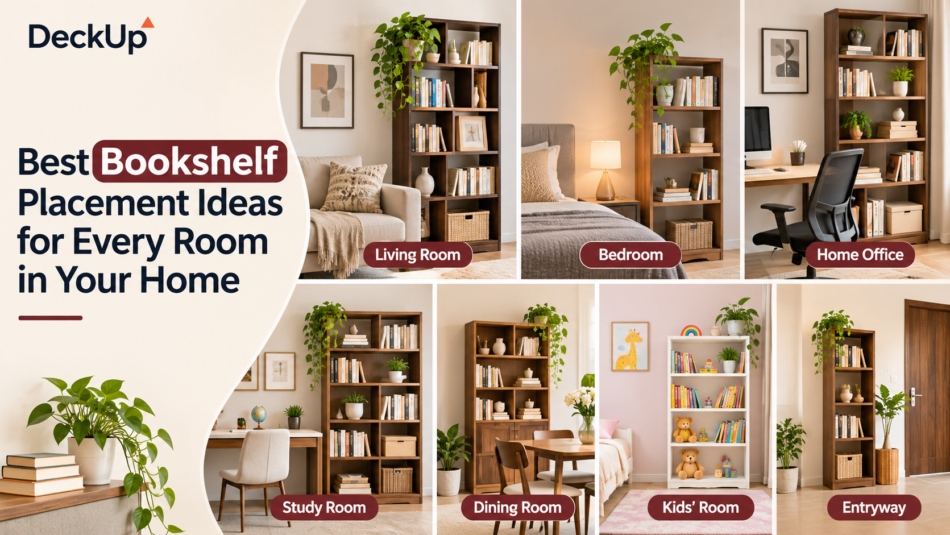
A bookshelf is more than a piece of furniture for storing books. When placed correctly, it can improve room organisation, make unused spaces functional, complement your home interiors and provide additional storage for everyday essentials. However, choosing the right bookshelf is only one part of the process. Its placement also determines how useful, accessible and visually appealing it will be.
Whether you live in a spacious house or a compact apartment, finding the right spot for a bookshelf can make a noticeable difference. From creating a small reading corner in the bedroom to organising study materials in a home office, the right placement helps you make better use of available space.
If you are planning to buy a bookshelf for your home, it is important to consider the room layout, available floor space, natural lighting, storage requirements and furniture arrangement before making a decision.
In this guide, we will explore practical bookshelf placement ideas for every room, along with useful buying considerations to help you choose a design that suits your home.
1. Living Room: Make Your Bookshelf a Functional Focal Point
The living room is one of the best places to position a bookshelf because it offers opportunities to combine storage with interior styling. Instead of using it only for books, you can arrange decorative objects, indoor plants, photo frames and other accessories to create an attractive display.
A well-positioned bookshelf can also fill an empty corner or make an unused wall more functional.
Best placement ideas for the living room
- Beside the TV unit: Position a bookshelf next to your TV cabinet to create a coordinated entertainment and storage area. It can hold books, magazines, decorative pieces and small accessories.
- Against an empty wall: A tall bookshelf can make an otherwise unused wall more practical without requiring additional furniture.
- Near the sofa: A compact bookshelf beside the seating area keeps reading materials within easy reach.
- In an unused corner: A narrow or vertical bookshelf can utilise corner space without interrupting the main walking area.
What type of bookshelf works best?
For living rooms, consider a modern bookshelf with multiple shelves, an open storage design or a combination of open shelves and closed cabinets.
If your living room has limited floor space, choose a vertical bookshelf rather than a wide design. This provides storage while keeping more of the floor area available.
Buying tip: Match the bookshelf finish with your existing TV unit, coffee table or other furniture to maintain a consistent interior appearance.
2. Bedroom: Create a Comfortable Reading and Storage Corner
A bedroom bookshelf can help keep your favourite books, journals and personal belongings organised. It is particularly useful for people who enjoy reading before sleeping or prefer keeping essential items close to their bed.
However, bedroom placement requires some planning because the room should remain comfortable and free from unnecessary furniture.
Ideal bookshelf placement options in the bedroom
Beside the bedside table
If you have enough space, place a slim bookshelf next to your bedside table. This arrangement gives you additional storage for books, magazines and personal accessories.
Near a reading chair
If your bedroom has a small seating area, place a bookshelf beside the chair. You can easily access your favourite books without walking across the room.
Against an unused wall
A tall, narrow bookshelf can work well against an empty bedroom wall. It provides vertical storage and helps organise books without occupying too much floor space.
Near the study corner
For bedrooms that also function as study spaces, placing a bookshelf beside the study table creates a practical arrangement. Textbooks, notebooks and stationery can remain organised in one location.
Which bookshelf should you choose for a bedroom?
A compact wooden bookshelf or a modern bookshelf with multiple storage sections can be a suitable option. Consider the height carefully so that frequently used books remain easy to reach.
Avoid placing a tall, heavy bookshelf where it could obstruct doors, windows or essential walking paths. Secure taller furniture appropriately to prevent accidental tipping.
3. Home Office: Keep Work Materials Organised
A home office requires an organised environment where documents, reference books and everyday work essentials are easy to access. A bookshelf can provide dedicated storage and reduce the need to keep everything on your desk.
For people working remotely, students and professionals, the right bookshelf placement can make a home office more functional.
Where should you place a bookshelf in a home office?
Next to the study table
This is one of the most practical arrangements. Position the bookshelf beside your desk so that you can access reference books, files and notebooks without interrupting your workflow.
Behind the office chair
If the room has sufficient depth, a bookshelf against the wall behind your chair can provide convenient storage. Ensure there is enough clearance to move your chair comfortably.
On an unused side wall
A side wall can accommodate a tall bookshelf without taking up the primary working area. This is especially useful in compact home offices.
Features to consider
When buying a bookshelf for a home office, look for:
- Multiple shelves for books and documents.
- Suitable shelf depth for the materials you store.
- A stable structure that can support the intended load.
- A design that complements your study table.
- Closed storage sections for items you do not want on display.
If you frequently handle large files or reference books, check the shelf dimensions and weight capacity before purchasing.
A practical bookshelf from DeckUp can complement a home office setup by providing dedicated space for books and everyday storage essentials.
4. Study Room: Make Learning Materials Easy to Access
A study room is an ideal location for a bookshelf, particularly in homes with school-going children, college students or people preparing for competitive examinations.
Books, notebooks, educational materials and stationery can quickly create clutter when they do not have designated storage.
Placing a bookshelf near the study table makes it easier to organise these items and maintain a functional learning environment.
Smart bookshelf placement ideas for study rooms
- Beside the study table: Keep frequently used textbooks and notebooks within reach.
- Behind the study table: Use an available wall to create a dedicated book storage section.
- Near the reading chair: Place a compact bookshelf beside a comfortable chair for independent reading.
- In a corner: Choose a vertical bookshelf to utilise unused space in a smaller study room.
How to organise a study room bookshelf
Instead of arranging everything randomly, divide the shelves according to usage.
For example:
- Top shelves: Reference books and materials used occasionally.
- Middle shelves: Frequently used textbooks and notebooks.
- Lower shelves: Heavier books and storage boxes.
- Separate sections: Stationery, files and other study accessories.
For children, keep frequently used materials on lower shelves where they can access them comfortably.
Buying tip: If the bookshelf will store heavy textbooks, check the shelf material, construction quality and maximum load capacity. Do not assume that every bookshelf can support the same weight.
5. Dining Room: Add Storage Without Crowding the Space
A bookshelf may not be the first furniture choice that comes to mind for a dining room, but it can be useful when the room has sufficient space.
Instead of using it exclusively for books, you can use selected shelves to organise cookbooks, magazines, decorative items and other lightweight household accessories.
Where can you position a bookshelf in the dining room?
Against an empty wall
A compact bookshelf placed against an unused wall can provide additional storage without interfering with dining activities.
Near a dining area corner
A narrow bookshelf can fit into an available corner and help utilise otherwise unused space.
Beside a sideboard
If your dining room has a sideboard or storage cabinet, a bookshelf positioned nearby can create a coordinated furniture arrangement.
What should you store?
- Cookbooks and recipe collections.
- Home decor accessories.
- Decorative plants.
- Magazines and reading materials.
- Lightweight storage baskets.
Avoid placing bookshelves too close to areas where food or liquids may frequently spill. Also, maintain sufficient distance from dining chairs so people can move comfortably.
6. Kids’ Room: Encourage Reading Through Better Organisation
A bookshelf in a child’s room can help create an organised environment while making books more accessible.
The placement is particularly important because children should be able to reach their favourite books without climbing or stretching.
Best bookshelf placement options for children’s rooms
Near the study table
A bookshelf beside the study table helps children organise textbooks, notebooks and educational materials.
Next to the reading corner
If you have created a small reading area with cushions or a comfortable chair, place a bookshelf nearby. This makes reading materials easy to access.
Along an unused wall
A low-height bookshelf can be positioned against a wall to keep the room organised without taking up too much space.
What features should parents consider?
When choosing a bookshelf for a child’s room, prioritise:
- Rounded or smooth edges where possible.
- A stable and sturdy structure.
- Accessible shelf heights.
- Easy-to-clean surfaces.
- Appropriate storage capacity.
- Secure anchoring to the wall.
Avoid placing heavy objects on upper shelves, and ensure the bookshelf is properly secured to reduce tipping risks.
7. Hallway or Entryway: Utilise Unused Wall Space
Hallways and entryways often have limited furniture because maintaining a clear walking path is important. However, if you have an unused wall or a wider entryway, a slim bookshelf can provide additional storage.
A narrow bookshelf can also create a small display area for decorative accessories and reading materials.
Practical placement ideas
- Place a slim bookshelf against a wider hallway wall.
- Use a compact design in an entryway corner.
- Position it away from doors and frequently used passageways.
- Choose a vertical design to maximise storage without occupying excessive floor space.
Before buying, measure the available width and depth. A bookshelf that looks compact in a furniture catalogue may feel bulky in a narrow hallway.
8. Guest Room: Combine Storage with Practical Styling
A guest room does not always need extensive furniture, but a small bookshelf can make the space more welcoming and organised.
Guests may appreciate having access to books, magazines and reading materials during their stay.
Where should you place it?
- Beside a reading chair, if the room has one.
- Against an unused wall near the bed.
- Near a study desk or dressing area, provided it does not obstruct movement.
- In an empty corner to make better use of available space.
A small wooden bookshelf or a compact open bookshelf can be suitable for guest rooms.
You can arrange a few books, magazines and decorative accessories to create a neat and welcoming display without overcrowding the shelves.
9. Balcony or Enclosed Utility Area: Use Space Carefully
An enclosed balcony or covered utility area may offer additional storage opportunities, especially in homes where indoor space is limited.
However, ordinary indoor bookshelves are not automatically suitable for outdoor or semi-outdoor environments.
If you plan to position a bookshelf in an enclosed balcony, consider the following:
- Avoid areas exposed to rain or direct water.
- Protect the bookshelf from excessive humidity.
- Keep it away from strong direct sunlight.
- Ensure adequate ventilation.
- Avoid storing valuable books where moisture can damage them.
A balcony bookshelf should only be considered when the area is sufficiently protected from weather conditions.
10. Things to Consider Before Choosing Bookshelf Placement
Finding the right location is important, but the bookshelf itself must also suit the available space and storage requirements.
Here are some factors to evaluate before purchasing.
1. Available Floor Space
Measure the width and depth of the intended location. Remember to account for nearby furniture, door openings and walking space.
For smaller homes, a tall bookshelf with a narrow footprint may be more practical than a wide unit.
2. Bookshelf Height
Choose a bookshelf height according to the room and your accessibility requirements.
A tall bookshelf works well when you need substantial storage, while a low bookshelf may be more suitable for children’s rooms or areas with low furniture.
3. Material and Construction
Bookshelves are available in different materials, including engineered wood, solid wood and metal.
When comparing options, consider:
- Overall construction quality.
- Shelf thickness and support.
- Surface finish.
- Resistance to everyday wear.
- Maintenance requirements.
A wooden bookshelf can complement several interior styles, from contemporary to traditional.
4. Open Shelves or Closed Storage
Open bookshelves make books and decorative accessories easy to access and display. Closed bookshelves help keep selected belongings out of sight and can create a less cluttered appearance.
If you have a combination of books and household accessories, consider a bookshelf with both open and closed storage sections.
5. Weight Capacity
Books can be surprisingly heavy, particularly when stored in large quantities.
Check the manufacturer’s recommended weight capacity for individual shelves and the overall unit. Distribute heavier books appropriately and avoid overloading any section.
6. Price and Overall Value
Bookshelf prices vary depending on material, size, construction, finish and storage configuration.
A compact bookshelf may be sufficient for a small bedroom, while a larger bookshelf with multiple compartments may be more suitable for a home library.
Instead of choosing only by price, compare the dimensions, material, storage capacity and expected usage. This helps you select furniture that meets your requirements without paying for unnecessary features.
11. Common Bookshelf Placement Mistakes to Avoid
Even a well-designed bookshelf can make a room feel uncomfortable if it is positioned incorrectly.
Here are some common mistakes to avoid:
Blocking natural light: Avoid placing a tall bookshelf directly in front of a window. It can reduce the amount of natural light entering the room.
Ignoring walking space: A bookshelf should not interfere with door openings, chair movement or everyday circulation.
Choosing the wrong size: A large bookshelf in a compact room can make the space feel crowded. Measure before purchasing.
Placing heavy books on weak shelves: Always check the weight capacity and distribute books evenly.
Ignoring room aesthetics: A bookshelf that clashes with the existing furniture finish can disrupt the overall interior appearance.
Leaving tall furniture unsecured: Tall bookshelves should be secured according to the manufacturer’s installation instructions, especially in homes with children or pets.
Overloading decorative shelves: Filling every section with books and accessories can make the bookshelf look cluttered. Leave some visual space between objects.
12. Why Choose a DeckUp Bookshelf for Your Home?
Choosing furniture involves more than finding an attractive design. You also need to consider how it fits into your daily routine, available space and storage requirements.
DeckUp offers furniture solutions for different home spaces, making it worth considering when planning a practical and coordinated interior setup.
When selecting a DeckUp bookshelf, evaluate the available design options based on your requirements.
Some important factors to consider include:
- Storage requirements: Select a design with enough compartments for your books, files and accessories.
- Room compatibility: Consider whether the bookshelf will be placed in a bedroom, living room, study area or home office.
- Space utilisation: Compare the product dimensions with your available floor and wall space.
- Interior coordination: Choose a finish that complements your existing furniture.
- Everyday functionality: Prioritise easy access, suitable shelf depth and convenient organisation.
Whether you need a bookshelf for a dedicated study room or additional storage in your living room, selecting the right size and configuration can help you make better use of your available space.
Before purchasing, review the product specifications, dimensions, material details and assembly requirements to make an informed decision.
Frequently Asked Questions (FAQs)
1. Where is the best place to keep a bookshelf at home?
The best place depends on your storage requirements and room layout. Living rooms, bedrooms, study rooms and home offices are popular locations. Position the bookshelf against an unused wall or beside a study table to maximise accessibility and space utilisation.
2. Can I place a bookshelf in my living room?
Yes, a living room is an excellent location for a bookshelf. You can place it beside a TV unit, against an empty wall or near a sofa. It can store books, magazines and decorative accessories while complementing your existing furniture.
3. Which direction should a bookshelf face?
A bookshelf should generally face an accessible area where you can easily reach and organise books. Avoid positioning it where it blocks doors, windows or natural light. The ideal orientation depends on the room layout and available wall space.
4. Is it good to place a bookshelf in the bedroom?
Yes, placing a bookshelf in the bedroom can provide convenient storage for reading materials and personal belongings. You can position it near your bed, reading chair or study table, depending on the available space.
5. How do I place a bookshelf in a small room?
Choose a tall, narrow bookshelf with a compact footprint. Position it against an unused wall or in an available corner. Avoid bulky designs that interfere with walking space, and use vertical storage to make better use of the room.
6. Should a bookshelf be placed near a window?
It is generally better to avoid placing a bookshelf directly in front of a window. Strong sunlight can cause book covers and pages to fade over time. Moisture and condensation near windows can also damage books and furniture.
7. Which bookshelf is best for a home office?
A bookshelf with multiple shelves and sufficient storage capacity is suitable for most home offices. Choose a design that can accommodate books, files and documents. Positioning it beside the study table makes frequently used materials easier to access.
8. How do I choose the right size bookshelf for my home?
Measure the available width, height and depth before purchasing. Consider the number and size of books you plan to store, along with the room’s existing furniture. Also, check the shelf dimensions and weight capacity to ensure the bookshelf meets your requirements.
Conclusion
The right bookshelf placement can improve storage, reduce clutter and make every room more functional. Whether you want to organise textbooks in a study room, create a reading corner in your bedroom or add decorative storage to your living room, selecting the right location is essential.
Before purchasing, consider your available space, storage needs, bookshelf dimensions, material and overall design. A well-chosen bookshelf should complement your existing furniture while making everyday organisation easier.
If you are planning to upgrade your home storage, explore the bookshelf collection from DeckUp. Compare available designs, dimensions and storage options to find a bookshelf that suits your room layout, interior preferences and everyday needs.