 WhatsApp Us Now
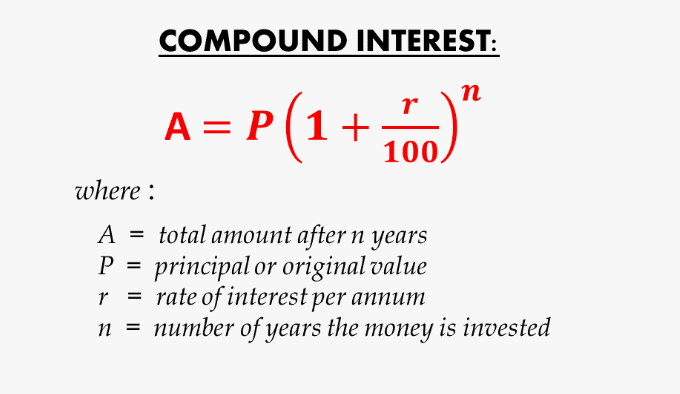
Understanding the nuances of interest calculations is essential for anyone looking to manage finances wisely. Interest can be categorized into two main types: simple interest and compound interest. Knowing how to leverage these two can significantly impact your financial decisions, be it for saving, investing, or borrowing. In this article, we will explore the compound interest formula and the simple interest formula, their applications, advantages, disadvantages, and practical use.
What is Simple Interest?
Simple interest is a straightforward method of calculating the interest charged or earned on a principal amount over a specific period. Understanding the Compound Interest and Simple Interest Formula helps you compare different interest calculation methods and make informed financial decisions. The simple interest formula allows you to determine how much you’ll earn or owe when interest is calculated only on the original principal, making it an essential concept for borrowers and investors alike.
The Simple Interest Formula
The simple interest formula is given as:
[
\text{SI} = P \times r \times t
]
Where:
SI = Simple Interest
P = Principal amount (initial investment or loan)
r = Interest rate (as a decimal)
t = Time (in years)
Example of Simple Interest
Let’s say you invest 1,000 at an interest rate of 5% for 3 years. The calculation would be:
[
\text{SI} = 1000 \times 0.05 \times 3 = 150
]
So, by the end of 3 years, you would earn 150 in interest.
What is Compound Interest?
Unlike simple interest, compound interest considers the interest earned on both the initial principal and the interest that has been added to it over time. This means that the interest gets calculated on a growing amount, leading to potentially much larger total returns or costs. If you are wondering what is the formula for interest, it depends on whether the calculation uses simple interest or compound interest, as each method follows a different formula and produces different results over time.
The Compound Interest Formula
The formula for compound interest is:
[
A = P \left(1 + \frac{r}{n}\right)^{nt}
]
Where:
A = The future value of the investment/loan, including interest
P = Principal amount
r = Annual interest rate (decimal)
n = Number of times interest is compounded per year
t = Time the money is invested or borrowed for in years
Example of Compound Interest
Let’s consider the same principal of 1,000 at an annual interest rate of 5%, but this time compounded annually for 3 years:
[
A = 1000 \left(1 + \frac{0.05}{1}\right)^{1 \times 3} = 1000 \left(1.05\right)^{3}
]
[
A = 1000 \times 1.157625 \approx 1157.63
]
Thus, after 3 years, the total amount will be approximately 1,157.63, and the compound interest earned is:
[
\text{CI} = A – P = 1157.63 – 1000 = 157.63
]
Key Differences Between Simple Interest and Compound Interest
Understanding the differences between simple and compound interest is crucial for making informed financial decisions.
1. Calculation Base
Simple interest is calculated only on the principal amount, while compound interest is calculated on the principal along with any accumulated interest.
2. Returns Over Time
Compound interest can yield significantly higher returns, especially over longer periods, due to its “interest on interest” effect.
3. Use Cases
Simple interest is often used for short-term loans, while compound interest is prevalent in savings accounts and investments.
Applications of Simple Interest and Compound Interest
Simple Interest Applications
1. Short-Term Loans
If you take out a personal loan for a short period, the lender may use the simple interest formula to calculate your interest.
2. Auto Loans
Car loans often utilize simple interest calculations to determine the total amount you’ll repay.
Compound Interest Applications
1. Savings Accounts
Banks often use compound interest to calculate how much your deposits will grow over time.
2. Investments
Compound interest is vital in investment accounts, retirement funds, and other long-term financial products to maximize growth.
Understanding the Impact of Time on Interest
Time plays a pivotal role in both types of interest. The longer you invest your money, the more compound interest you will accrue. In contrast, for short-term loans, simple interest may lead to lower overall costs. Understanding your goals and timeline can help you choose the right type of interest calculation.
The Power of Compounding
The concept of “The Rule of 72” can also help you estimate how long it will take for your investment to double at a given interest rate. Simply divide 72 by your interest rate (expressed as a percentage), and you’ll get a rough estimate of the period required to achieve doubling.
For example, at a compound interest rate of 6%, your investment will double approximately every 12 years (72/6 = 12).
Choosing the Right Formula for Your Needs
When deciding which type of interest to engage with, consider the context:
Short-Term vs. Long-Term
For short-term loans, simple interest may prove more beneficial due to its straightforward nature. For long-term savings or investments, compound interest is preferable.
Risk Tolerance
Investments that offer compound interest may carry more risk but generally provide greater potential returns.
Conclusion
Understanding the compound interest and simple interest formula is vital for anyone eager to maximize their finances. While the simple interest formula allows for easier calculations and clarity for short-term financial decisions, the compound interest formula offers powerful growth potential for long-term investments.
By applying these formulas wisely, you can make informed decisions that align with your financial goals. Whether you’re saving for retirement, purchasing a home, or planning for a short-term expense, being equipped with knowledge about interest calculations will empower you to optimize your financial journey.


