 WhatsApp Us Now
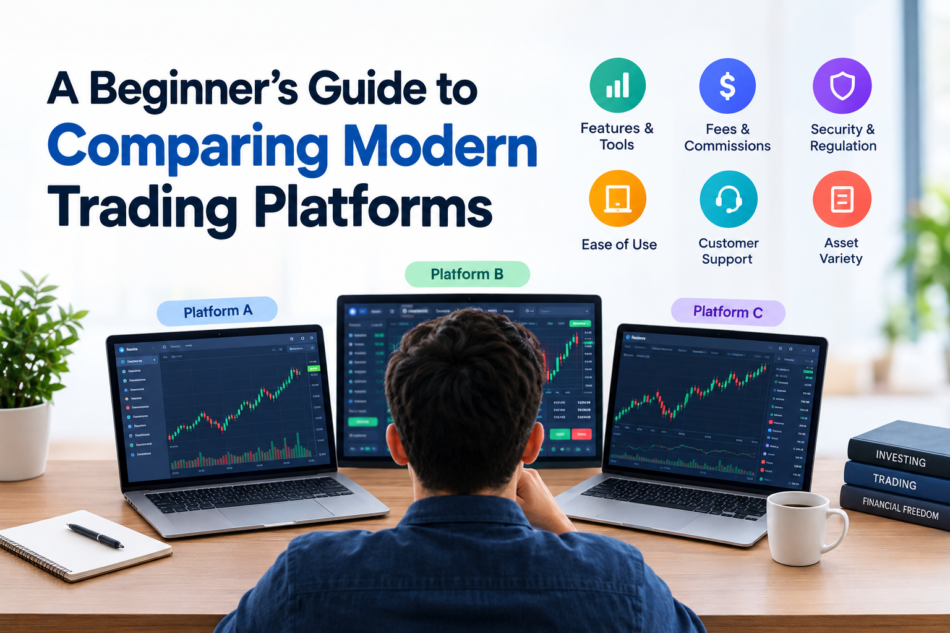
Choosing a suitable trading platform can be an important step for someone who is beginning to explore online financial markets. Different platforms may offer different tools, account types, educational resources, and ways to access market information.
A beginner should not select a platform simply because it looks easy to use. It is more useful to understand how the platform works, what markets it provides access to, and what costs or conditions may apply. Having a basic understanding of the forex market can also help beginners compare their options more carefully.
What Should Beginners Look for in a Trading Platform?
A trading platform is the software or online interface through which users can monitor markets, analyze price movements, and place trades. The platform should generally be understandable and provide the tools a user needs without making the process unnecessarily complicated.
Beginners may want to look at charting features, market information, order types, account management options, and customer support. A platform that is easy to navigate can make it easier to understand how different functions work.
It is also important to distinguish between the platform itself and the company providing access to the market. These are related but separate considerations.
Why Is Broker Selection Important?
Broker selection is another important part of comparing trading services. A broker can provide access to financial markets and may offer different account structures, trading conditions, and support services.
Before choosing a broker, users can research its background, available markets, account requirements, and policies. Looking beyond promotional claims can help create a more realistic understanding of the service.
Broker regulation is also worth checking. A regulated broker is generally subject to oversight from a relevant financial regulator, although the specific protections and rules can vary depending on the jurisdiction.
How Does Regulation Affect a Trading Service?
Broker regulation can provide information about the legal and supervisory framework under which a financial service operates. A financial regulator may establish rules concerning areas such as client funds, reporting, business conduct, and other operational requirements.
However, regulation should not be treated as a guarantee that trading will be profitable or free from risk. Beginners should understand what protections actually apply to them and which regulatory authority supervises the specific service they are considering.
Checking regulatory information through the relevant financial regulator can be a useful part of basic research.
What Are Currency Pairs?
The forex market involves the trading of currencies against one another. These are represented as currency pairs, where one currency is quoted in relation to another.
Understanding currency pairs is important because each pair reflects the relative value between two currencies. Beginners may encounter major, minor, and other currency pair categories depending on the market and broker.
Before opening an account, users should understand how currency prices are quoted and how changes in exchange rates can affect a trade.
What Is a Trading Account?
A trading account provides access to the services and markets offered by a broker. Account types can differ in areas such as minimum requirements, available instruments, fees, execution conditions, and other features.
Someone researching a forex trading account should first understand the account’s terms rather than focusing only on the registration process. It is useful to review the available markets, transaction costs, leverage conditions, and withdrawal or funding procedures.
The right account structure depends on an individual’s circumstances, experience, and understanding of financial risk.
How Should Trading Fees Be Compared?
Trading fees can affect the overall cost of using a financial service. Depending on the broker and account type, costs may include spreads, commissions, financing charges, or other applicable fees.
Spreads and commissions should therefore be reviewed together rather than considered separately. A platform with a particular fee structure may be suitable for one type of user but less suitable for another.
Users should read the broker’s fee schedule carefully and understand when each charge may apply.
What Is Leverage in Forex?
Leverage in forex allows traders to control a larger market position using a smaller amount of capital. While leverage can increase exposure to potential gains, it can also increase potential losses.
Beginners should therefore understand how leverage works before using it. The availability and limits of leverage can vary depending on the broker, jurisdiction, account type, and applicable regulations.
Understanding margin requirements is also important because a leveraged position may require additional funds if the market moves against it.
How Can Beginners Compare Different Apps?
People often search for the forex trading ke liye best app when they are starting to explore currency trading. Instead of focusing on a single feature, beginners can compare applications based on usability, available markets, security measures, regulatory information, trading tools, and account conditions.
A useful trading platform should provide clear information and allow users to understand what they are doing before placing an order. Demo or educational features may also help beginners become familiar with the interface before using real funds.
The forex trading ke liye best app for one person may not necessarily be appropriate for another. Individual experience, preferred features, risk tolerance, and market knowledge can all influence the choice.
What Should Beginners Understand About Risk?
Financial markets involve risk, and currency trading is no exception. Price movements can occur because of economic developments, interest-rate decisions, geopolitical events, market sentiment, and other factors.
Before opening a forex trading account, beginners should understand how much they can afford to lose and avoid making decisions based only on short-term price movements.
Learning about risk management, position sizing, margin, and stop-loss orders can help users understand some of the tools commonly associated with trading.
Frequently Asked Questions
What should I compare when choosing a trading platform?
Consider usability, available markets, analytical tools, account conditions, security features, customer support, and applicable trading fees.
Why is broker regulation important?
It helps identify the regulatory framework under which a broker operates. Users should verify the relevant regulator and understand what protections apply in their jurisdiction.
What are currency pairs?
Currency pairs show the value of one currency relative to another. They are the basic instruments used in foreign exchange trading.
Is leverage suitable for beginners?
Leverage can increase both market exposure and potential losses. Beginners should understand margin and leverage before using leveraged positions.
Should I compare spreads and commissions?
Yes. Both can affect trading costs, so users should understand the complete fee structure rather than focusing on only one charge.
Conclusion
Comparing trading platforms requires careful research rather than relying on a single feature or promotional message. Beginners can start by understanding the markets available, the broker’s regulatory position, account conditions, fees, and risk-management features.
Taking time to understand these factors can make the process of selecting a trading service more informed and help beginners approach financial markets with realistic expectations.
CTA
Before choosing a trading service, review its terms, regulatory information, costs, available tools, and risk conditions carefully. Understanding the platform before using it can help create a more structured approach to learning about online trading.


