 WhatsApp Us Now

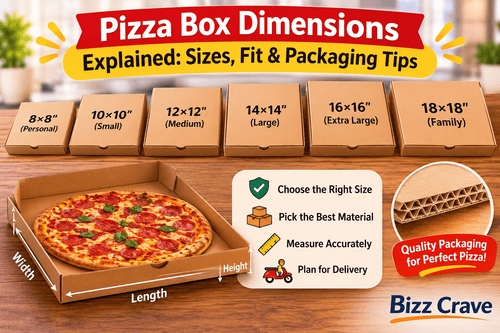
Choosing suitable packaging is an important part of running a successful pizza business. A good box should protect the pizza, make it easier to carry, and help maintain its presentation during delivery. Understanding the Pizza Box Dimensions can help restaurant owners, food businesses, and packaging buyers select boxes that match their products. From personal pizzas to large family orders, the right measurements can make packaging more practical and reliable.
Why Pizza Box Measurements Matter:
Pizza packaging does more than cover food. It helps protect the crust, toppings, and overall appearance while the order travels from the restaurant to the customer.
A box that is too small may press against the edges of the pizza or its toppings. On the other hand, a box that is much larger than necessary can allow the pizza to move around during transportation.
Correct measurements can help businesses:
- Protect pizzas during handling and delivery.
- Keep toppings and crusts in better condition.
- Organize packaging in storage areas.
- Select suitable boxes for different menu items.
- Reduce unnecessary packaging space.
For these reasons, businesses should consider the actual pizza size before ordering packaging in bulk.
Understanding Standard Pizza Box Sizes:
Pizza boxes are commonly square, although the pizza inside is usually round. Their length and width provide space for the pizza, while the height determines how much room is available above the crust and toppings.
The following table provides examples of commonly available sizes. These are approximate references, and suppliers may offer different measurements.
| Pizza category | Example box dimensions | Common use |
| Personal | 8 × 8 inches | Individual pizzas |
| Small | 10 × 10 inches | Small orders |
| Medium | 12 × 12 inches | Medium pizzas |
| Large | 14 × 14 inches | Family meals |
| Extra large | 16 × 16 inches | Sharing orders |
| Family | 18 × 18 inches | Parties and gatherings |
Many standard boxes have a height of around two inches, but deeper options are also available. Always confirm the internal measurements and height with the supplier before placing a large order.
How to Measure a Pizza Box Correctly:
Measuring a pizza box is easier when you understand its three main dimensions: length, width, and height.
Length: Measure one inside edge of the box from one side to the opposite side.
Width: Measure the inside distance across the other side of the base.
Height: Measure the usable space between the bottom and the closed lid.
Record the measurements in the correct order: length × width × height. For example, a box measuring 14 × 14 × 2 inches has a square base and a height of two inches.
It is also important to distinguish between internal and external measurements. Internal dimensions describe the usable space for the pizza, while external dimensions describe the overall size of the assembled box.
Factors That Affect the Right Box Size:
Not every pizza requires the same type of packaging. Several factors can influence the size and design a business should choose.
Pizza Diameter
The diameter of the finished pizza is the starting point when selecting a box. Measure the baked pizza from one outside edge of the crust to the opposite edge. Do not rely only on the size written on the menu.
Crust and Topping Height
Thin-crust pizzas may fit comfortably in a standard box. Thick-crust and heavily topped pizzas may need additional space between the pizza and the lid.
Packaging Material
Cardboard and corrugated materials are common choices for pizza packaging. The selected material can affect the box’s strength, thickness, and external measurements.
Delivery Requirements
A box should be convenient to carry and compatible with the restaurant’s delivery bags. Businesses should check both the assembled box size and the available storage space.
Choosing Between Different Pizza Box Materials:
The material is another important consideration when purchasing pizza packaging.
Regular cardboard boxes: These are commonly used for everyday takeaway and delivery orders. They are lightweight and easy to store.
Corrugated boxes: Their layered construction can provide additional structure and support. They may be suitable for businesses that need stronger packaging.
Kraft boxes: Kraft-style packaging has a natural brown appearance and can be used for simple branding designs.
Custom-printed boxes: These boxes allow businesses to display their logo, brand colors, and other useful information.
The best option depends on the food product, budget, storage needs, and packaging requirements.
How Bizz Crave Can Support Better Packaging Knowledge?
Learning about packaging is useful for business owners who want to make informed decisions about their products and presentation. Bizz Crave is a platform where readers can explore business-related information and useful content.
Understanding packaging measurements, materials, and product requirements can help businesses communicate more clearly with suppliers. Before selecting a packaging option, compare available choices and check whether the product meets your requirements.
Common Mistakes to Avoid When Ordering Pizza Boxes:
Ordering packaging without checking the measurements can create unnecessary problems. Here are some common mistakes businesses should avoid:
- Choosing a box only by its small, medium, or large label.
- Ignoring the height of the pizza and its toppings.
- Confusing internal dimensions with external dimensions.
- Ordering a large quantity without checking a sample.
- Forgetting to check whether boxes fit inside delivery bags.
- Selecting packaging without considering storage requirements.
A simple measurement check before ordering can help prevent many of these issues.
Practical Tips for Buying the Right Pizza Boxes:
Before purchasing packaging, prepare a list of the pizza sizes available on your menu. Measure a few finished pizzas and compare those measurements with the supplier’s box specifications.
Ask suppliers about material thickness, available heights, printing options, minimum order quantities, and sample availability. If possible, test a sample box with an actual pizza before making a bulk purchase.
It is also helpful to keep packaging measurements recorded for future orders. This makes it easier to reorder the correct products and maintain consistency across different menu sizes.
Final Thoughts:
Selecting suitable pizza packaging requires more than choosing a box by its size label. Businesses should consider the finished pizza diameter, crust height, material, internal measurements, and delivery requirements. By understanding Pizza Box Dimensions, restaurant owners can make more informed packaging decisions and provide a more consistent takeaway experience. Always compare supplier specifications and test a sample before placing a large order.
FAQ’s:
What are the most common pizza box sizes?
Common examples include 8, 10, 12, 14, 16, and 18-inch square boxes. Availability and exact measurements depend on the supplier.
How are pizza box dimensions measured?
They are generally recorded as length × width × height. Internal measurements are especially useful when checking whether a pizza will fit.
Are all pizza boxes two inches high?
No. Two inches is a common example, but suppliers may offer boxes with different heights for various pizza styles.
Why should businesses check box measurements before ordering?
Checking measurements helps businesses choose packaging that fits their pizzas, supports handling, and meets delivery requirements.
Can pizza boxes be customized?
Yes. Many packaging suppliers offer custom printing, different materials, and selected sizes depending on their production options.


