 WhatsApp Us Now

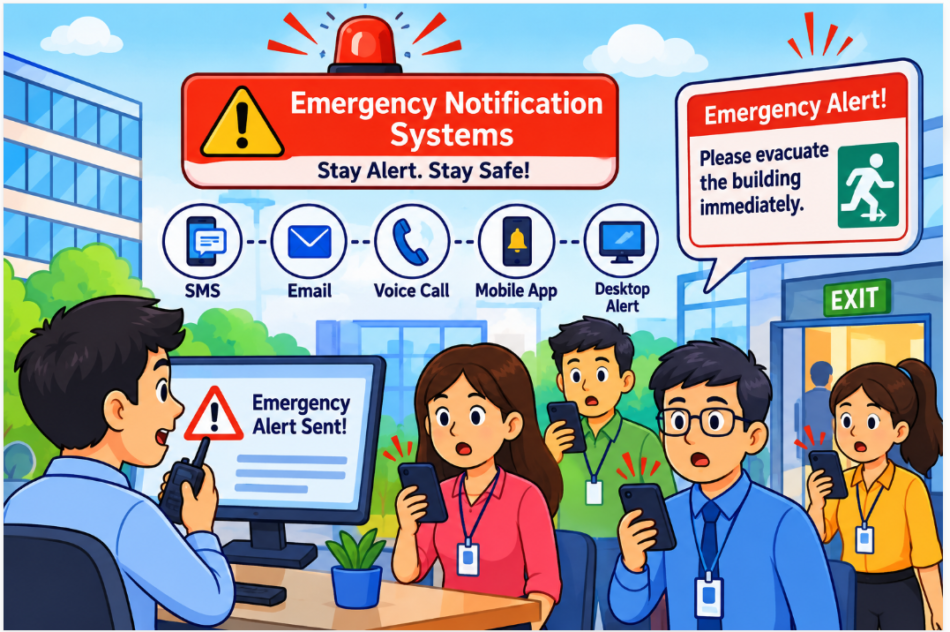
Emergencies can happen at any time, anywhere and without warning. Whether it’s fire, natural disaster, security threat, medical emergency or an unexpected incident in the workplace, a quick response is critical to protecting employees, visitors and business operations. Hence Emergency notification systems have become a key component in the management of modern day workplace safety and security.
Organizations require a dependable communication solution that can deliver urgent messages to the right people at the right time. A good corporate emergency notification system helps businesses to disseminate critical information, coordinate emergency responses and minimize confusion during unexpected situations.
An emergency alert system with advanced technology can instantly notify by SMS, email, mobile applications, voice calls, and other communication channels. Such solutions keep organizations prepared and help maintain a safer work environment.
What Are Emergency Notification Systems?
Emergency notification systems are communication solutions that are designed to distribute urgent alerts and safety information during critical situations. They help organizations communicate with employees, security teams, facility managers and other important stakeholders.
Automation notifications can also assist businesses in reaching large groups of people within seconds, rather than having to make phone calls or announcements the old-fashioned way.
For example, in case of fire in an office building, the system can immediately inform the employees about the incident and provide the evacuation instructions and notify the concerned safety personnel.
These systems make emergency communications more organized , more effective , and faster .
Why Does Every Business Need a Corporate Emergency Notification System?
Workplace emergencies require immediate attention and coordinated action. A corporate emergency notification system helps organizations manage unexpected situations with better communication and preparedness.
Here are some important reasons businesses should consider implementing one:
1. Faster Emergency Communication
During emergencies, every second matters. Instant notifications help businesses share important information without unnecessary delays. Employees can receive alerts simultaneously through multiple communication channels.
2. Improved Employee Safety
Employee safety should always be a priority. An efficient notification solution provides timely warnings and instructions, helping employees understand what actions they should take during emergencies.
3. Better Emergency Coordination
Emergency situations often require coordination between security teams, HR departments, facility managers, and management. A centralized communication platform ensures that everyone receives consistent information.
4. Reduced Communication Delays
Manual communication methods can create confusion, especially in large organizations. Automated alerts eliminate repetitive communication tasks and help deliver important updates quickly.
5. Business Continuity
Unexpected incidents can interrupt daily operations. A reliable emergency communication solution helps businesses communicate alternative arrangements, operational updates, and recovery instructions.
Key Features of a Modern Emergency Alert System
A powerful emergency alert system should offer features that support quick communication and effective emergency management.
Some essential features include:
Instant Mass Notifications
Send urgent messages to hundreds or thousands of employees simultaneously through multiple communication channels.
Multi-Channel Communication
Deliver alerts through SMS, email, voice calls, mobile applications, and desktop notifications to improve message reach.
Real-Time Updates
Share continuous updates as an emergency develops, ensuring employees receive the latest information.
Automated Alert Scheduling
Schedule safety reminders, emergency drills, and important preparedness announcements in advance.
Customizable Notifications
Create different notification groups based on departments, office locations, employee roles, or emergency categories.
Emergency Response Tracking
Monitor notification delivery and acknowledgements to understand who has received and responded to important alerts.
How Emergency Notification Systems Work
Modern Emergency notification systems simplify the entire emergency communication process through automation.
The process generally involves the following steps:
- Incident Identification: An emergency is identified by security personnel, facility managers, or authorized users.
- Alert Creation: The administrator prepares an emergency message with relevant information and instructions.
- Instant Distribution: The system sends notifications to selected employees through available communication channels.
- Employee Response: Employees receive the alert and follow the provided safety instructions.
- Response Monitoring: Authorized teams monitor message delivery and acknowledgements.
- Follow-Up Communication: Additional updates are shared until the situation is resolved.
This structured process helps organizations maintain clear communication throughout an emergency.
Industries That Benefit from Emergency Notification Systems
Emergency communication is important across different industries. These solutions can support:
- Corporate Offices: Communicate fire alarms, security threats, evacuation instructions, and workplace emergencies.
- Manufacturing Facilities: Alert workers about equipment failures, chemical hazards, and industrial accidents.
- Healthcare Organizations: Share urgent updates with medical teams, staff members, and facility management.
- Educational Institutions: Notify teachers, students, and administrators about campus emergencies.
- Residential Communities: Inform residents and security teams about safety threats, natural disasters, and urgent incidents.
- IT and Business Centers: Communicate infrastructure disruptions, system failures, and operational emergencies.
Regardless of industry, timely communication plays an important role in protecting people and property.
Benefits of Implementing a Smart Corporate Emergency Notification System
Investing in a modern corporate emergency notification system offers several long-term advantages.
- Faster communication during unexpected situations.
- Improved employee awareness and preparedness.
- Better coordination among emergency response teams.
- Reduced dependency on manual communication.
- More organized evacuation and safety procedures.
- Improved visibility into notification delivery and responses.
- Stronger business continuity planning.
By combining automation with real-time communication, organizations can build a more prepared and responsive workplace.
How to Choose the Right Emergency Notification Solution
Before selecting an emergency alert system, businesses should evaluate their communication requirements and workplace safety needs.
Consider the following factors:
- Scalability: Choose a platform that can support your current workforce and future business expansion.
- Ease of Use: The system should have a simple interface that allows authorized users to send alerts quickly.
- Multiple Communication Channels: Ensure the platform supports different notification methods.
- Customization: Look for options to create employee groups and location-based notifications.
- Security: Check whether the solution offers appropriate access controls and data protection.
- Reporting: Select a platform that provides delivery reports and response tracking.
- Integration: Consider compatibility with your existing workplace communication and security systems.
The right solution should make emergency communication simple, reliable, and efficient.
Future of Emergency Notification Systems
Technology continues to transform workplace safety. Modern Emergency notification systems are becoming smarter with automation, cloud-based communication, mobile connectivity, and intelligent monitoring.
Future solutions may increasingly use artificial intelligence, connected sensors, and automated incident detection to support faster emergency responses.
Organizations are also moving toward integrated safety platforms that connect visitor management, access control, facility monitoring, and emergency communication.
These developments will help businesses improve preparedness and create safer environments for everyone.
Conclusion
Workplace safety is more than just emergency plans and security equipment. Organizations also require a reliable communication strategy that guaranties important information is reaching everyone at the right time.
Modern Emergency notification systems help businesses to respond to unexpected events with instant alerts, automated communication and real-time updates. The right corporate emergency notification system can improve employee safety, help emergency coordination and support business continuity.
Investing in a trusted emergency alert system is not only a technology upgrade, but a crucial step toward creating a safer, more prepared organization.
Looking to improve workplace safety and emergency communication? Explore smart emergency notification solutions that help your organization stay connected, informed, and prepared.
Get in touch with our team today to discover how an advanced emergency communication solution can support your business safety requirements.
Frequently Asked Questions (FAQs)
1. What are Emergency notification systems used for?
They are used to send urgent alerts and safety instructions during emergencies such as fires, natural disasters, security threats, and workplace incidents.
2. How does a corporate emergency notification system help businesses?
A corporate emergency notification system helps businesses communicate quickly with employees, coordinate emergency responses, and improve workplace safety.
3. What communication channels are supported by an emergency alert system?
Depending on the platform, an emergency alert system can support SMS, email, voice calls, mobile app notifications, and desktop alerts.
4. Can emergency notifications reach multiple office locations?
Yes. Many modern solutions allow administrators to send targeted or organization-wide alerts across multiple locations and departments.
5. Are emergency notification solutions suitable for small businesses?
Yes. Small businesses can also benefit from automated alerts, employee safety notifications, and improved emergency preparedness.
6. Why is real-time emergency communication important?
Real-time communication helps people receive critical information quickly, understand potential risks, and take appropriate safety measures.


