 WhatsApp Us Now

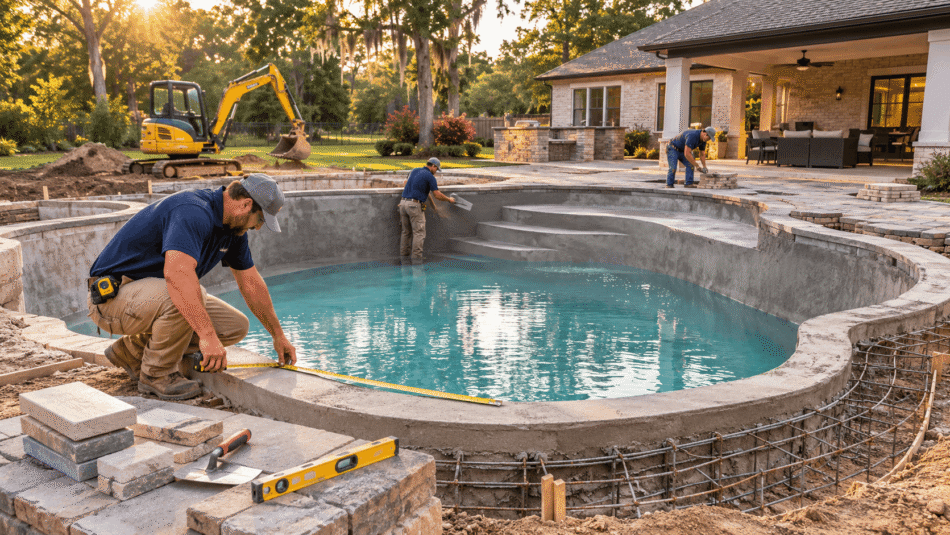
Every spring, the same scene plays out across South Georgia. The heat arrives early, the kids start asking about swimming, and homeowners look out at a flat backyard and wonder what it could become. For many families, that question leads to a search for a custom pool builder in Valdosta, GA.
A custom pool is more than a hole filled with water. It’s a long-term part of the home, shaped by the lot, the climate, and the way a family actually spends its time. Knowing how the process works before talking to anyone makes the whole project smoother and far less stressful.
This guide covers what custom pool building involves, what sets local projects apart, and how a pool often becomes the center of a larger outdoor living space.
What “Custom” Really Means in Pool Construction
The word “custom” gets used a lot, but in pool construction it has a specific meaning. A custom pool is designed around a particular property instead of being picked from a catalog of preset shapes and sizes.
Most custom pools are built with gunite or shotcrete. Both are concrete-based materials sprayed over a steel rebar frame. This approach lets designers create almost any shape, depth, or feature, from a simple rectangle to a freeform lagoon with a built-in spa.
Fiberglass and vinyl liner pools still have their place. They can be faster to install and sometimes cost less upfront. However, they offer fewer design options, which is why homeowners with unique lots or specific ideas often lean toward concrete.
The Design Phase Matters Most
Experienced builders often say the design phase decides whether a project succeeds. This is when sun exposure, drainage, privacy, and traffic flow get mapped out.
A good design answers practical questions early. Where will people sit in the afternoon shade? How far is the walk from the kitchen? Will the pool equipment be loud near a bedroom window? Small choices like these shape how much a family enjoys the space for years.
Why Local Conditions Shape Every Project
Building a pool in South Georgia isn’t quite the same as building one in Arizona or Ohio. The region’s climate and soil bring their own challenges, and local experience goes a long way.
Summers around Valdosta are long, hot, and humid. Afternoon thunderstorms can dump a lot of rain in a short time. This means drainage planning is essential, both around the pool deck and across the yard. Poor drainage can lead to standing water, erosion, or stress on the pool structure over time.
Soil is another factor. Much of the area has sandy soil, and some properties sit near a high water table. Builders familiar with these conditions know when extra steps are needed during excavation, such as dewatering or reinforcing the base.
Permits and Local Rules
Pools in the area typically require permits from the city or county, depending on where the property sits. Rules often cover fencing, barrier height, setbacks from property lines, and electrical safety.
A reputable builder usually handles the permit process or guides homeowners through it. Skipping this step can cause problems later, especially when selling the home.
The Benefits of Going Custom
The biggest advantage of a custom pool is fit. Instead of forcing a standard design into an odd-shaped yard, the pool is planned to work with the space. Sloped lots, narrow side yards, and mature trees become design opportunities instead of obstacles.
Custom pools also allow families to plan for how they’ll actually use them. A household with young children might want a large shallow area or a tanning ledge. Families who swim for exercise might choose a longer, straighter shape. Those who entertain often may want a swim-up bar or a connected spa.
Durability is another point in favor of concrete construction. With proper care, a well-built gunite pool can last for decades. Surfaces may need refinishing over time, but the structure itself is built for the long haul.
There’s also the question of home value. While a pool doesn’t guarantee a higher sale price in every market, a well-designed one in a warm climate is often seen as an attractive feature. In South Georgia, where swimming season can stretch from spring well into fall, that appeal tends to be stronger than in cooler regions.
How Pools Become Part of a Bigger Outdoor Space
Many homeowners start with a pool and quickly realize they want more. A pool deck naturally invites seating, shade, lighting, and sometimes an outdoor kitchen. Over time, the backyard turns into a full outdoor living area.
Fire features have become one of the most popular additions. Even in a warm climate, evenings in late fall and winter can get cool enough to make a fire welcome. A fire pit extends the use of the backyard well beyond swimming season.
Just up the road from Valdosta, interest in custom fire pit installation in Hahira, GA has grown alongside pool projects. Homeowners there and across Lowndes County often want a fire feature that matches their patio materials and fits the overall layout, rather than a portable metal bowl.
Gas vs. Wood-Burning Fire Pits
The first big choice is fuel. Wood-burning fire pits offer the classic crackle and smell of a campfire. They’re often simpler to build but require cleanup and produce smoke.
Gas fire pits, using natural gas or propane, light with the turn of a knob or flip of a switch. They’re cleaner and easier to control, though they need a gas line or tank and professional installation. Many families near pools prefer gas because there’s less ash and fewer embers drifting toward the water.
Placement also matters. Fire pits need safe clearance from the house, overhanging trees, and covered structures. Local codes and manufacturer guidelines usually set the minimum distances.
Real-World Scenarios Homeowners Face
Consider a family who just bought a home on a corner lot with a sloped backyard. A standard kit pool would require major regrading. A custom design, however, could use the slope to create a raised spa with a small spillover into the main pool, turning a challenge into a feature.
Or picture a retired couple who rarely swim laps but love hosting friends. Their priority might be a smaller plunge pool, a wide deck, and a gas fire pit with built-in seating. For them, the pool is less about swimming and more about creating a gathering spot.
Another common case involves families who build a pool first and add features later. Smart planning during the original build, such as running gas lines or electrical conduit under the deck, can make future projects like custom fire pit installation in Hahira, GA or nearby areas much easier and less disruptive.
Some local companies, such as Harbin’s Pools, work on both pools and related outdoor features. Homeowners often find it helpful when a single team understands how all the pieces connect, though it’s always wise to compare a few options before deciding.
What to Look for When Comparing Builders
When homeowners start talking to builders, a few qualities tend to separate the strong candidates from the rest.
- Local experience: Familiarity with regional soil, drainage, and permitting.
- Licensing and insurance: Proof of proper credentials and coverage.
- A clear portfolio: Photos and references from completed projects.
- Detailed written estimates: Itemized costs, timelines, and what’s included.
- Warranty terms: Clear coverage on structure, surfaces, and equipment.
It also helps to ask how the builder handles communication during construction. Pool projects can take several weeks or longer, and regular updates make a big difference in the overall experience.
Final Thoughts
A custom pool is one of the largest investments many families make in their homes. Taking time to understand materials, local conditions, and design options pays off in a backyard that truly fits the household’s lifestyle.
For anyone considering a custom pool builder in Valdosta, GA, the best starting point is a clear picture of how the space will be used. From there, talking with experienced local builders, reviewing past work, and planning for future additions like fire features can help turn a plain backyard into a space the whole family enjoys for years.
Frequently Asked Questions
How much does a custom pool cost in South Georgia?
Costs vary widely based on size, materials, and features. A basic concrete pool may start in the range of a mid-sized car, while designs with spas, water features, and extensive decking can cost much more.
How long does it take to build a custom pool?
Most custom concrete pools take roughly 8 to 12 weeks from excavation to completion. Weather, permitting, and design complexity can extend that timeline, especially during rainy months.
Is a gunite pool better than a fiberglass pool?
Neither is better in every case. Gunite offers more design flexibility and long-term durability, while fiberglass installs faster and has a smoother surface. The right choice depends on budget, lot shape, and personal preference.
Do I need a permit for a fire pit in Georgia?
It depends on the location and type of fire pit. Gas fire pits often require permits for the gas line, and some areas have rules about setbacks and open burning. Checking with the local city or county office is the safest approach.
What is the best time of year to build a pool in Valdosta, GA?
Many homeowners start planning in late fall or winter so the pool is ready by late spring. Off-season scheduling can also mean shorter wait times, though weather can still affect construction.


