 WhatsApp Us Now

Introduction
Industrial workplaces involve the operation of electrical equipment, manufacturing machinery, control panels and automated processes. During these activities, operators must remain aware of equipment conditions and respond when an abnormal situation occurs.
Effective warning communication is therefore an important part of industrial operations.
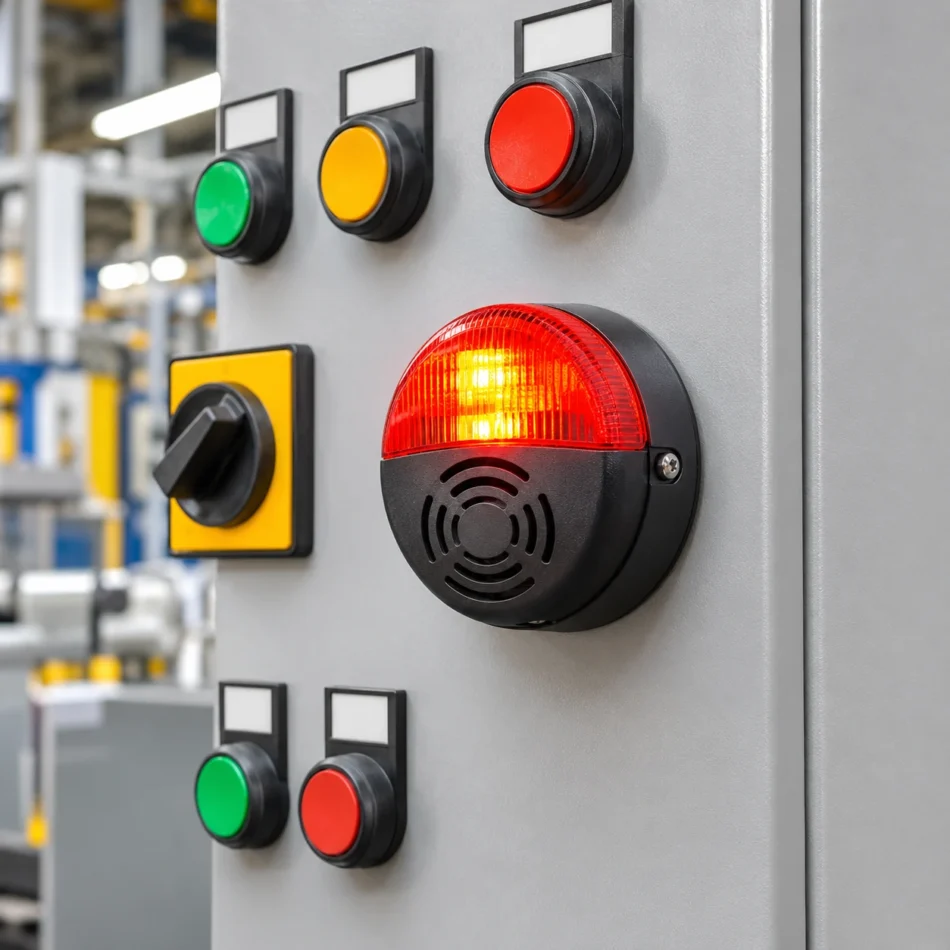
An LED flasher buzzer is a signalling device that combines a visual flashing indication with an audible warning. It can help communicate selected alarm conditions in industrial installations where operators need clear notifications.
Although warning devices do not replace safety procedures or protective equipment, they can support workplace awareness when incorporated into a properly designed control system.
Understanding the Importance of Industrial Warning Signals
Industrial environments often contain several machines operating simultaneously. Operators may be responsible for monitoring equipment, checking production activities and responding to different control conditions.
Without appropriate signalling arrangements, it may become difficult to recognise every abnormal condition immediately.
Warning devices help communicate selected events through visual or audible notifications.
For example, when a monitored electrical condition reaches a predefined alarm point, the control system may activate a warning circuit.
An LED flasher buzzer can then provide an additional indication to personnel working near the equipment.
How Combined Warning Signals Support Operator Awareness
A combined warning device uses two methods of communication.
Visual Alert Through LED Flashing
The flashing LED attracts attention through a visible signal. This can help personnel identify an active warning when they are looking towards the equipment or control panel.
Audible Alert Through the Buzzer
The audible warning provides another notification method. It can help alert personnel who are not directly facing the panel.
Dual Signalling Approach
When the two functions operate together, operators receive both visual and audible information.
This arrangement can be useful in workplaces where equipment noise, operator movement and multiple monitoring responsibilities make warning communication important.
Industrial Applications Where Warning Devices Are Used
1. Manufacturing Facilities
Production facilities use different machines and electrical systems. Warning devices can be incorporated into machine control panels to communicate selected operating conditions.
2. Electrical Control Rooms
Control rooms may contain several electrical panels and monitoring systems. Local warning indications can help personnel recognise which equipment requires attention.
3. Motor Control Centres
Motor control installations may use audible and visual warnings to indicate selected fault or trip conditions, depending on the control design.
4. Process Industries
Processing plants monitor different parameters throughout their operations. Suitable signalling devices can communicate conditions that require operator inspection.
5. Industrial Automation Equipment
Automated machinery may use controller-generated signals to activate warning devices when specific events occur.
Benefits of an LED Flasher Buzzer in Industrial Environments
Using an appropriate combined warning device can offer several practical advantages.
Improved alert recognition: Flashing light and sound provide two forms of notification.
Convenient installation: A combined device can provide both functions within one mounting unit.
Local warning indication: Operators can receive a notification near the equipment being monitored.
Support for monitoring systems: It can be integrated into suitable electrical control arrangements.
Better communication: A combined signal can help make selected abnormal conditions more noticeable.
It is important to remember that the effectiveness of any warning arrangement depends on correct installation, suitable positioning and clearly defined alarm conditions.
Role in Electrical and Equipment Monitoring
Modern industrial installations use sensors, controllers and monitoring circuits to evaluate equipment conditions.
These systems may detect:
- Abnormal voltage conditions.
- Motor-related faults.
- Machine interruptions.
- Process parameter deviations.
- Selected equipment alarms.
- Other predefined operational events.
When the control system identifies an assigned alarm condition, it may activate a connected LED flasher buzzer.
The warning helps communicate the event, but operators must still follow the established response procedure to investigate the underlying cause.
Selecting a Suitable Device for Workplace Conditions
Different industrial workplaces have different technical requirements. Therefore, selecting an appropriate warning device requires careful evaluation.
Voltage Compatibility
The rated supply voltage should match the intended electrical circuit.
Audible Performance
The buzzer output should be suitable for the background noise level and the distance between the device and personnel.
Visual Performance
The LED should provide adequate visibility from the intended operator position.
Environmental Protection
Check the manufacturer’s specifications for temperature limits, moisture protection and dust resistance.
Installation Requirements
Ensure that mounting dimensions, wiring terminals and panel arrangements are compatible.
Product Reliability
Review the technical documentation, operating limitations and manufacturer’s recommendations before making a selection.
Warning Devices and Workplace Safety Procedures
An LED flasher buzzer should be considered one part of a broader industrial safety arrangement.
It can communicate selected warnings, but it does not independently prevent electrical accidents or guarantee machinery safety.
For this reason, industrial facilities should also maintain appropriate safety measures, including:
- Clearly documented operating procedures.
- Regular equipment inspection.
- Electrical isolation procedures.
- Suitable protective equipment.
- Operator training.
- Emergency response arrangements.
- Periodic testing of warning systems.
Furthermore, operators should be trained to understand the meaning of each alarm and the correct action to take when it activates.
Maintenance Practices for Consistent Operation
A warning device should be inspected regularly to confirm that both signalling functions are working as intended.
Maintenance personnel should check the LED flashing function, audible output, mounting condition and electrical connections.
Any visible damage, unusual operation or wiring problem should be investigated by qualified personnel.
Testing should follow the manufacturer’s instructions and the facility’s approved electrical safety procedures.
Regular inspection helps identify potential issues before they affect the warning arrangement.
The Future of Industrial Signalling
Industrial facilities are increasingly adopting connected monitoring and automation technologies. However, local audible and visual warning devices remain useful because they provide straightforward communication near equipment.
An LED flasher buzzer can complement digital monitoring arrangements by giving operators a direct indication when a selected alarm condition occurs.
As industrial systems become more integrated, clear alarm identification and proper operator response will continue to be important.
Frequently Asked Questions
Q1. How does an LED flasher buzzer support industrial safety?
It provides audible and visual notifications that can help operators recognise selected abnormal conditions and follow the appropriate response procedure.
Q2. Can it be used near manufacturing machinery?
Yes, if the device is suitable for the electrical and environmental conditions of the installation.
Q3. Does it replace other industrial safety equipment?
No. It is a signalling component and should complement established safety systems and procedures.
Q4. Why are both visual and audible alerts useful?
They provide two different notification methods, which can help improve the visibility of selected warning conditions.
Q5. How often should warning devices be inspected?
Inspection frequency should follow the manufacturer’s recommendations and the facility’s maintenance schedule.
Conclusion
Clear warning communication is an important part of industrial equipment monitoring and workplace awareness. An LED flasher buzzer provides a combined audible and visual indication that can help operators recognise selected abnormal conditions.
When properly selected, installed and maintained, it can support the warning arrangements used in electrical panels, manufacturing machinery and industrial automation systems.
By combining suitable signalling equipment with operator training, maintenance procedures and established safety practices, industrial facilities can develop more effective warning communication systems.
