 WhatsApp Us Now


Harnessing the Power of Sun & Wind: Building a Sustainable Energy Future for India
India’s growing energy requirements have made renewable power an important part of its long-term development strategy. As industries expand, cities grow, and electricity consumption increases, the need for cleaner and more dependable energy sources continues to rise. Solar and wind energy are emerging as valuable alternatives to conventional power generation, offering opportunities to reduce carbon emissions while supporting economic growth. By harnessing natural resources, India can move toward a more balanced and environmentally responsible energy system.
Understanding the Importance of Solar and Wind Energy
The sun and wind are two abundant natural resources that can generate electricity without relying on conventional fossil fuels. Solar energy uses photovoltaic panels to convert sunlight into electricity, while wind turbines transform the movement of air into electrical power.
Both technologies contribute to India’s renewable energy capacity. Solar power is particularly useful in regions that receive substantial sunlight throughout the year, while wind energy offers significant potential in areas with favorable wind conditions. Together, they create opportunities for expanding clean electricity generation across different geographical locations.
The development of these technologies also supports India’s broader efforts to strengthen energy security, reduce dependence on imported fossil fuels, and encourage sustainable industrial growth.
Why Combining Solar and Wind Power Matters
Solar and wind energy have different generation patterns. Solar installations generally produce electricity during daylight hours, whereas wind turbines can generate power whenever suitable wind conditions are available, including at night.
Combining these resources through wind-solar hybrid projects can help create a more balanced electricity supply. When solar generation decreases, wind power may contribute additional electricity, depending on local weather conditions.
Hybrid renewable energy systems can also incorporate battery energy storage systems (BESS). These batteries store surplus electricity and release it when generation is lower or demand increases. Such arrangements can improve energy management, support grid stability, and make renewable electricity more flexible.
This integrated approach is becoming increasingly important as India expands its renewable energy infrastructure.
Key Advantages of Renewable Energy in India
The growing adoption of solar and wind power offers several environmental, economic, and operational benefits.
1. Reduced Carbon Emissions
Renewable energy generation produces electricity without the direct combustion of fossil fuels. This helps reduce greenhouse gas emissions and supports efforts to address climate change.
2. Better Utilization of Natural Resources
Sunlight and wind are naturally replenished resources. Using them for electricity generation provides an alternative to finite conventional energy sources.
3. Greater Energy Security
Expanding domestic renewable energy capacity can diversify India’s electricity supply and reduce exposure to fluctuations in international fossil fuel markets.
4. Support for Economic Development
Renewable energy projects create opportunities across engineering, construction, equipment manufacturing, project management, and operations and maintenance.
5. Long-Term Energy Sustainability
Solar and wind installations can contribute to long-term electricity generation while supporting India’s transition toward a lower-carbon economy.
The Role of Technology in Modern Renewable Energy Projects
Technology plays an essential role in improving the performance and efficiency of renewable energy installations. Modern solar panels can convert sunlight into electricity more effectively, while advanced wind turbines are designed to capture energy under different wind conditions.
Battery energy storage is another important development. It helps address the variable nature of renewable electricity by storing excess generation for later use. This becomes particularly valuable when electricity demand does not match the timing of solar or wind generation.
Digital monitoring systems, predictive maintenance, and improved power management technologies also help renewable energy developers monitor project performance and manage operations more efficiently.
These developments are strengthening the foundation for large-scale renewable energy adoption in India.
How Juniper Green Energy Contributes to India’s Renewable Energy Sector
Companies developing large-scale renewable energy infrastructure have an important role in supporting India’s clean energy transition. Juniper Green Energy is an independent renewable energy power producer focused on developing, constructing, and operating utility-scale solar, wind, hybrid, and Firm and Dispatchable Renewable Energy (FDRE) projects.
Its activities cover different stages of renewable energy development, including project planning, engineering, construction, operations, and maintenance. This integrated approach supports the development and management of renewable energy assets across multiple locations in India.
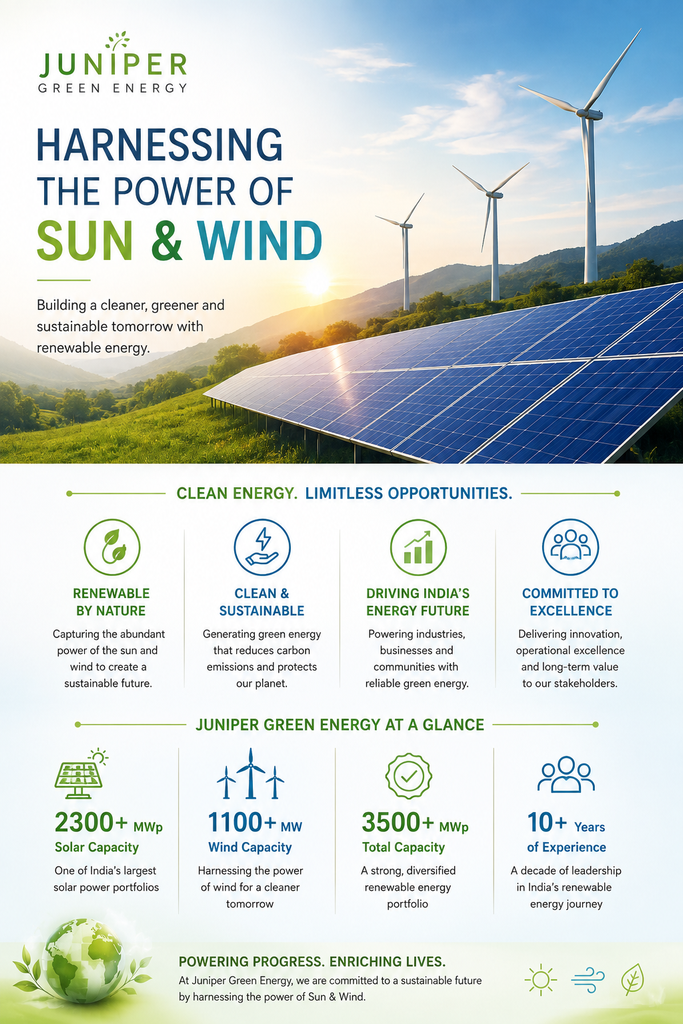
Through its renewable energy initiatives, Harnessing the power of Sun & Wind represents an important direction for expanding clean electricity generation and supporting a more sustainable energy landscape.
The company’s portfolio includes solar, wind-solar hybrid, and energy storage projects. These technologies address different aspects of electricity generation and supply, helping create opportunities for more flexible renewable energy infrastructure.
Wind-Solar Hybrid Projects and Battery Storage
One of the important developments in the renewable energy industry is the integration of multiple power generation technologies. Wind-solar hybrid projects combine two renewable resources within an integrated system, helping improve the overall generation profile.
Battery energy storage systems further strengthen these arrangements by storing electricity when generation exceeds immediate demand. The stored power can then be supplied when renewable generation decreases or consumption rises.
Firm and Dispatchable Renewable Energy projects also aim to provide electricity according to defined supply requirements by combining renewable generation, storage, and appropriate energy management arrangements.
These solutions can support industrial consumers, electricity distribution companies, and the broader power network as renewable energy adoption increases.
India’s Renewable Energy Future
India’s renewable energy sector is expected to remain an important part of its economic and environmental development. Government initiatives, technological improvements, private-sector participation, and growing demand for cleaner electricity are contributing to the expansion of this industry.
However, challenges such as land availability, transmission infrastructure, project financing, and the variable nature of renewable generation require continued attention. Investments in energy storage, grid modernization, and efficient project execution will be essential for addressing these challenges.
Renewable energy developers such as Juniper Green Energy contribute to this evolving sector through investments in utility-scale solar, wind, hybrid, and storage infrastructure. Its renewable energy projects in India reflect the growing importance of integrated clean power solutions.
Conclusion
Harnessing solar and wind power is an important step toward creating a cleaner and more sustainable energy future. Both resources offer valuable opportunities to reduce dependence on conventional energy sources, support economic development, and strengthen India’s electricity infrastructure.
With continued investment in renewable technologies, hybrid power generation, and battery storage, India can build a more diversified and resilient energy system. The combined efforts of technology providers, renewable energy developers, policymakers, and industries will help accelerate this transition and make clean electricity an increasingly important part of everyday life.


