 WhatsApp Us Now

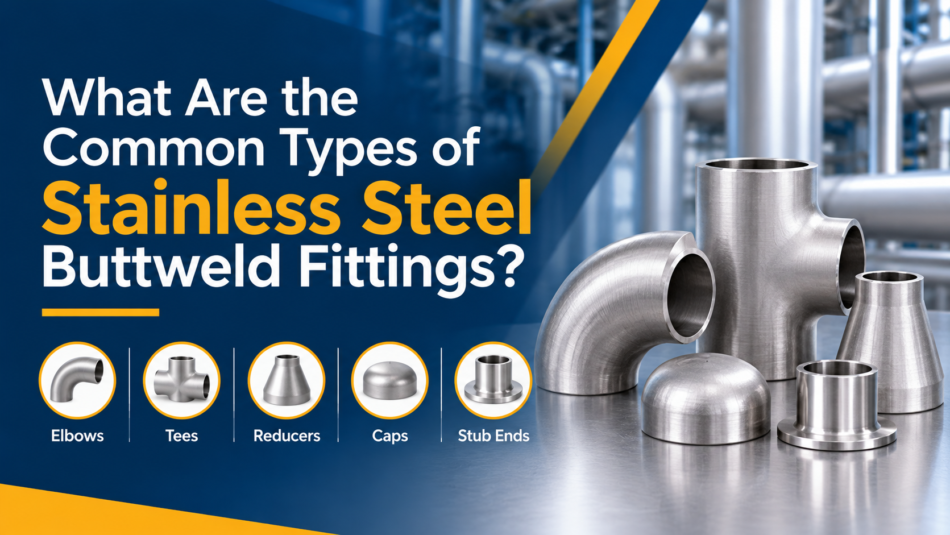
Stainless steel buttweld fittings are industrial components used to build and manage piping networks. Their main function is to connect different sections of pipe. They also handle redirecting fluid flow, branching off into new lines, or terminating the piping system entirely. Engineers rely on these components to shape the physical layout of industrial pipelines. Different fitting types are selected based on the specific piping layout you need and the application requirements of the facility. You look at the physical space and the flow demands to pick the fitting that matches the structural need. This article focuses strictly on the common types of stainless steel buttweld fittings. We will look at how they function in a standard industrial setup. We will cover elbows, tees, reducers, and other standard connections. The choice always comes down to what the pipeline needs to do next. If the pipe needs to turn, use an elbow. If it needs to split, use a tee. Industrial contractors keep these standard shapes in stock to assemble complex systems on site.
What Are Stainless Steel Buttweld Fittings?
Stainless steel buttweld fittings are pipe connectors that are welded directly to the ends of pipes. The ends of the fitting are usually beveled. You place the beveled end against a matching beveled pipe end and weld them together. This process creates a continuous metal structure. The resulting joint is highly robust. Welding the fitting directly to the pipe creates strong joints that can handle heavy industrial stress. You also get good leak resistance because there are no threads to wear out or gaskets to fail. These components have high durability. They are suitable for demanding applications involving high pressures or corrosive fluids. Industrial buyers specify these components when they cannot risk a leak or a structural failure in the line. The metal composition of the stainless steel provides the baseline corrosion protection. The buttweld design provides the mechanical strength.
Common Types of Stainless Steel Buttweld Fittings
Industrial piping requires specific shapes to route fluids. The following sections outline the standard configurations used to build these systems. These are the standard types of stainless steel buttweld fittings.
Stainless Steel Buttweld Elbows
Elbows change the pipe direction. Standard configurations are 45 degree and 90 degree angles. Contractors use them where controlled flow direction is required.
Stainless Steel Buttweld Tees
Tees create a branch connection in the line. Equal tees match the main pipe size, while reducing tees drop the diameter for branching pipelines.
Stainless Steel Buttweld Reducers
Reducers connect pipes of different diameters. Concentric types keep center lines aligned for vertical runs. Eccentric types keep the bottom flat horizontally for liquid drainage.
Stainless Steel Buttweld Crosses
Crosses feature a four-way connection design for intersecting lines. Engineers use them where multiple pipeline branches are required in a very tight physical space.
Stainless Steel Buttweld Caps
Caps close or terminate the end of a pipe securely. Their role is to prevent leakage and protect the pipeline end from harsh environmental exposure.
Stainless Steel Buttweld Stub Ends
Stub ends are used with lap joint flanges. They are very useful where frequent dismantling of piping is required for maintenance or internal inspection.
How to Select the Right Stainless Steel Buttweld Fitting?
Choosing the correct part requires evaluating the pipeline constraints before purchasing components.
- Pipe size and dimensions: You must match the outside diameter and the wall thickness of the fitting exactly to the connecting pipe.
- Fitting type and connection requirement: The physical shape must match the flow path, meaning you pick a tee for splitting flow and an elbow for turning it.
- Pressure and temperature conditions: The wall thickness must be capable of handling the internal force and the heat of the fluid running through the system.
- Stainless steel grade: You must select a material grade like 304 or 316 that matches the existing piping and the environmental conditions.
- Corrosion resistance requirements: The chemical composition of the fluid dictates the specific alloy needed to prevent the metal from degrading over time.
- Applicable standards and specifications: The dimensions and manufacturing tolerances must align with ASME or ASTM standards required by the project engineers.
- Piping system design: The overall layout determines whether you have physical clearance for specific types of stainless steel buttweld fittings to be welded in place.
Applications of Stainless Steel Buttweld Fittings
These fittings handle difficult fluids safely. They support reliable piping connections in these specific commercial applications.
Chemical Processing
Chemical plants move aggressive acids and solvents. Buttweld fittings provide the permanent, leak-proof joints required to handle these dangerous fluids safely.
Petrochemical Plants
Petrochemical facilities process hydrocarbons under extreme stress. Welded stainless connections prevent volatile gases and liquids from escaping the high-pressure pipeline systems.
Oil and Gas
Oil extraction and refining involve high pressures and corrosive crude. These fittings give the structural integrity needed for long-distance heavy transport lines.
Food and Beverage Processing
Food production requires sanitary conditions. Welded stainless joints leave no internal crevices for bacteria to hide, keeping the processing lines perfectly clean.
Pharmaceutical Industries
Pharmaceutical manufacturing demands absolute purity in fluid transfer. The welded connections ensure that no external contaminants can enter the sterile piping environment.
Power Generation
Power plants move high-temperature steam constantly. Buttweld fittings maintain their structural strength under extreme heat and thermal cycling without failing.
Water Treatment
Desalination and wastewater plants handle corrosive elements. The stainless material resists rust, while the welded joints stop treated water from leaking out.
Conclusion
The construction of industrial pipelines relies on basic shapes. The main types include elbows, tees, reducers, crosses, caps, and stub ends. Each part has a specific mechanical job. The elbows turn the flow. The tees and crosses split the fluid. The reducers change the flow volume. The caps stop the line. Fitting selection depends strictly on pipe configuration, dimensions, material grade, and operating conditions. You have to match the metal to the fluid and the thickness to the pressure. Selecting fittings that match the piping system requirements ensures the plant operates safely. Poor selection leads to leaks or burst pipes. Engineers must review the flow demands and pick the right types of stainless steel buttweld fittings to complete the physical structure. The welded joint will only hold if the fitting is correct for the job. You cannot guess the dimensions. The contractor must measure the pipe and buy the exact matching component.


