 WhatsApp Us Now

Digital payment technology has changed how online businesses manage financial transactions. From traditional payment gateways to blockchain-based systems, companies now have several options when building their payment infrastructure.
The online gaming industry is also exploring these developments. Businesses operating digital gaming platforms need payment systems that support operational requirements while maintaining transaction security, transparency, and regulatory compliance.
Understanding Cryptocurrency Payment Infrastructure
Cryptocurrency payment infrastructure involves the technology required to accept, process, and monitor transactions made through digital currencies.
Unlike conventional payment systems, cryptocurrency transactions operate through blockchain networks. Each transaction is recorded on a distributed ledger, allowing network participants to verify transaction information.
For businesses considering this payment method, several technical factors require attention, including wallet management, transaction confirmations, network fees, and supported digital currencies.
Why Payment Flexibility Matters for Digital Platforms
Payment flexibility is an important consideration for businesses operating across different markets. Customer preferences, available payment methods, and financial regulations can vary significantly by region.
A platform with suitable payment integrations can organize different transaction methods within its operational infrastructure.
However, businesses should evaluate payment providers carefully. Transaction reliability, security procedures, settlement arrangements, and regulatory requirements should all be considered before implementation.
The Role of Crypto Casino Software
Online gaming platforms require specialized technology to coordinate gaming content, payment processing, player accounts, and administrative operations.
Crypto casino software is designed to support online casino operations with cryptocurrency-related payment capabilities, depending on the provider and supported integrations.
When evaluating these solutions, businesses should examine:
- Cryptocurrency and payment gateway compatibility
- Wallet integration and transaction verification
- Player Account Management (PAM)
- Casino game integrations
- Administrative and reporting tools
- Security and compliance features
The actual capabilities of a platform depend on its technical configuration and the services offered by the software provider.
How PieGaming Approaches iGaming Technology
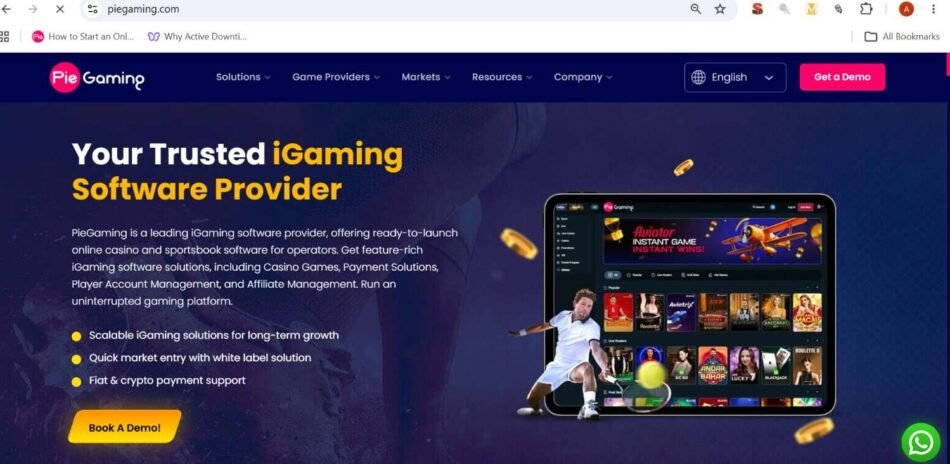
PieGaming is an iGaming software provider offering online casino and sportsbook technology solutions.
Its software ecosystem includes casino game integrations, payment solutions, Player Account Management, and affiliate management functionality. The company also provides solutions designed to support cryptocurrency-related gaming platform requirements.
For businesses comparing providers, it is important to assess software flexibility, integration options, technical support, and compatibility with the regulatory requirements of their intended markets.
Security Considerations for Cryptocurrency Transactions
Security is particularly important when digital currencies are involved. Cryptocurrency transfers may be irreversible, making transaction verification and wallet protection essential.
Businesses should consider several protective measures:
Wallet Security: Appropriate access controls and secure wallet management help protect digital assets.
Transaction Monitoring: Monitoring processes can help identify unusual transaction activity.
Account Verification: Suitable verification procedures support account protection and regulatory obligations.
Data Protection: Personal information and account credentials should be protected through appropriate technical safeguards.
Security policies should be reviewed regularly as technology and potential risks change.
Regulatory Compliance and Responsible Operations
Cryptocurrency and online gaming regulations differ across jurisdictions. Businesses must understand the legal requirements applicable to their operations before introducing digital currency payment options.
Depending on the market, requirements may cover licensing, customer verification, anti-money laundering procedures, data protection, and responsible gaming.
Selecting technology that supports appropriate compliance processes can help businesses manage these operational responsibilities.
What Businesses Should Evaluate Before Selecting a Provider
Choosing a software provider requires more than comparing the number of available features.
Businesses should review the provider’s technical capabilities, integration documentation, scalability, customer support arrangements, security practices, and regulatory compatibility.
It is also useful to understand how software updates, payment integrations, and ongoing maintenance are handled.
A well-evaluated technology foundation can help businesses organize their operations and prepare for future requirements.
Conclusion
Cryptocurrency payment infrastructure is becoming an important consideration for businesses exploring digital financial technologies. In the online gaming sector, its implementation requires coordination between payment systems, software architecture, account management, and security procedures.
Companies such as PieGaming operate within this specialized software ecosystem, providing technology solutions for online casino and sportsbook businesses.
Ultimately, successful implementation depends on selecting appropriate technology, understanding local regulations, and maintaining reliable security and operational standards.


