 WhatsApp Us Now

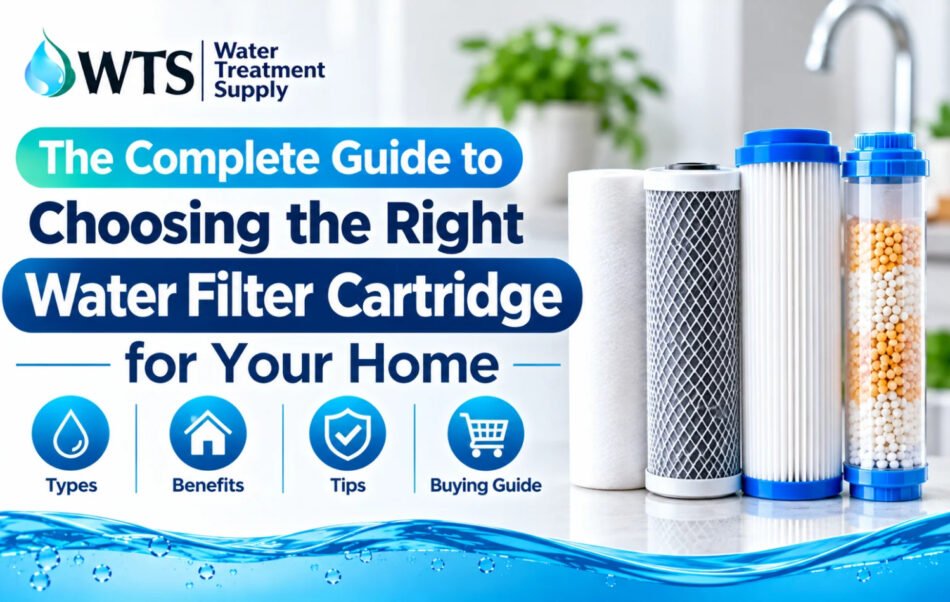
When I first started looking at home water filtration, I thought choosing a Water Filter Cartridge would be easy. Find the right size, put it into the housing, and the job is done.
I quickly learned that size is only one part of the decision.
The cartridge has to match the water coming into the home, the amount of water being used, and what I actually want the filtration system to remove. Once I understood those basics, choosing a cartridge became much less confusing.
Start by Understanding Your Water
Before buying a cartridge water filter, I would first look at the quality of the incoming water.
If the main concern is visible sediment, dirt, sand, or rust particles, a sediment cartridge may be the logical starting point. If chlorine, taste, or odor is the concern, a carbon-based option may be more appropriate.
This is why I wouldn’t choose a water filter cartridge simply because it has the smallest micron rating or the most impressive description.
The right cartridge depends on the actual water problem.
What Does Micron Rating Mean?
Micron rating is one of the specifications I pay close attention to.
In simple terms, it indicates the approximate size of particles a filter is designed to capture. A finer rating can target smaller particles, but that doesn’t automatically make it the best choice for a home.
If the incoming water contains a lot of sediment, an overly fine cartridge may load faster and restrict flow sooner.
For a House Water Filter Cartridge, I would therefore consider filtration requirements together with expected water usage rather than focusing on micron rating alone.
Don’t Forget Flow Rate
This was another lesson I learned while comparing filtration systems.
A filter needs to handle the amount of water your household actually uses. If several taps, showers, or appliances may operate at the same time, the cartridge and housing need enough capacity to support that demand.
For a whole house water filter cartridge, flow is particularly important because the filter isn’t serving just one faucet. It may be supplying water throughout the entire property.
Match the Cartridge to the Housing
One of the easiest mistakes is buying a water filter replacement cartridge based only on a photograph or general description.
Before ordering a replacement water filter cartridge, I would check the cartridge length, diameter, end configuration, housing compatibility, and required flow rate.
Even cartridges that look almost identical may not fit the same filter housing.
This small check can save a lot of frustration during replacement.
Think About Cartridge Material
Different cartridge constructions are suited to different filtration jobs.
Pleated cartridges can provide a large filtration surface for particulate removal, while wound cartridges are commonly used for sediment filtration. Carbon cartridges are designed for applications where carbon filtration is appropriate.
Water Treatment Supply’s filtration range includes different cartridge styles and micron ratings for residential and other water-treatment applications, which reinforces the point that there isn’t one universal cartridge for every home.
Know When Replacement Is Needed
I also wouldn’t replace a cartridge purely because a certain number of months have passed.
Reduced water flow, increasing pressure drop, visible loading, or a noticeable change in water quality can indicate that the cartridge needs attention. Actual service life depends heavily on incoming water quality and household usage.
Keeping a simple record of when the cartridge was installed can help establish a useful replacement pattern over time.
My Final Advice
If I were choosing a home Water Filter Cartridge today, I’d work through five questions:
What am I trying to remove? What micron rating makes sense? How much water do I need? Does the cartridge fit my housing? How will I know when it needs replacement?
Those questions are more useful than simply searching for the “best” cartridge.
While researching home filtration options, I found Water Treatment Supply helpful for comparing different cartridge types, housings, and filtration applications in one place. But the biggest lesson I took away is simple: choose the cartridge for your home’s water and usage—not just for its size or price.


