 WhatsApp Us Now

Djibouti may be a small country in East Africa, but its culture has a fascinating story to tell. From traditional songs and colorful clothing to local food and centuries-old customs, Djibouti offers much more than beautiful beaches and desert landscapes.
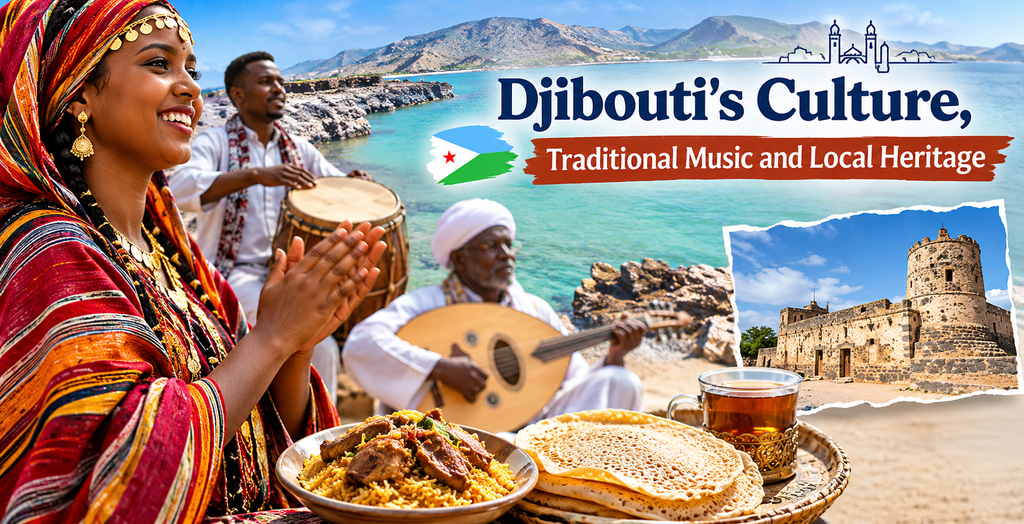
Located in the Horn of Africa, the country has been influenced by African and Arabian traditions. For travelers interested in discovering something different, exploring Djibouti’s culture and local heritage can be a memorable part of their journey.
The Cultural Traditions of Djibouti
Djibouti’s cultural identity is mainly shaped by the Somali and Afar communities. Both groups have their own languages, customs, music, and storytelling traditions.
Family relationships and hospitality are important parts of everyday life. Visitors may notice how people gather to share meals, drink tea, and enjoy conversations.
French and Arabic are the country’s official languages, while Somali and Afar are widely spoken.
Traditional Music of Djibouti
Music plays an important role in Djiboutian celebrations and community gatherings. Traditional songs often tell stories about love, family, daily struggles, and historical events.
Somali musical traditions include Balwo, a style known for its short, emotional love lyrics. Afar music also has a strong connection with oral storytelling and community life.
Singing, rhythmic clapping, and traditional dances often accompany cultural performances. These traditions help younger generations stay connected with their heritage.
Traditional Dances and Local Celebrations
Dance is another beautiful part of Djibouti’s cultural heritage. Different communities have developed their own dance styles, which are performed during weddings, festivals, and other special occasions.
Traditional Somali dances, including Daanto, are known for coordinated movements and rhythmic performances.
These gatherings are not simply entertainment. They bring families together and give communities an opportunity to celebrate their shared identity.
Planning a Cultural Trip to Djibouti
Travelers interested in local traditions can explore markets, visit cultural attractions, and discover everyday life in Djibouti City.
Before traveling, international visitors should check the entry requirements for their nationality. Eligible travelers can learn about the application process, required documents, and entry conditions through the Djibouti Tourism eVisa information page.
The online service offers mobile-friendly applications, document submission assistance, application tracking, and customer support. It advertises processing within 4–7 working days, although actual processing and approval depend on the relevant authorities.
Traditional Clothing and Handicrafts
Traditional clothing reflects Djibouti’s climate and cultural background. Women often wear colorful dresses and scarves, while men may wear traditional garments suited to the warm weather.
Local markets offer an opportunity to discover textiles, jewelry, woven products, and other handmade items.
Buying directly from local artisans can also help support traditional craftsmanship.
Local Food and Hospitality
Djiboutian cuisine combines influences from East Africa, the Arabian Peninsula, and neighboring countries.
Popular foods include Skoudehkaris, a flavorful rice and meat dish, and Lahoh, a soft, pancake-like bread commonly enjoyed with meals.
Spiced tea is also popular, and sharing food remains an important part of social life.
For visitors, trying local dishes is one of the simplest ways to experience Djibouti’s hospitality.
Preserving Djibouti’s Cultural Heritage
Storytelling and poetry have helped preserve Djibouti’s history for generations. Before many stories were written down, community elders passed knowledge through spoken words, songs, and traditional performances.
In 2024, UNESCO inscribed Xeer Ciise, the customary laws of Somali-Issa communities in Djibouti, Ethiopia, and Somalia, on its Representative List of the Intangible Cultural Heritage of Humanity.
This recognition highlights the importance of protecting cultural knowledge and passing it to future generations.
Final Thoughts
Exploring Djibouti’s traditional music, local customs, and cultural heritage gives travelers a deeper understanding of the country.
Whether listening to traditional songs, tasting local food, or exploring lively markets, visitors can discover a welcoming culture shaped by history and community traditions.
For travelers seeking meaningful cultural experiences, Djibouti is a destination worth discovering.


