 WhatsApp Us Now

The United Kingdom is a country where centuries-old traditions are still part of everyday life. From royal ceremonies outside Buckingham Palace to colourful street festivals, British culture offers visitors plenty to discover. Each part of the UK—England, Scotland, Wales and Northern Ireland—has its own customs, food, music and celebrations.
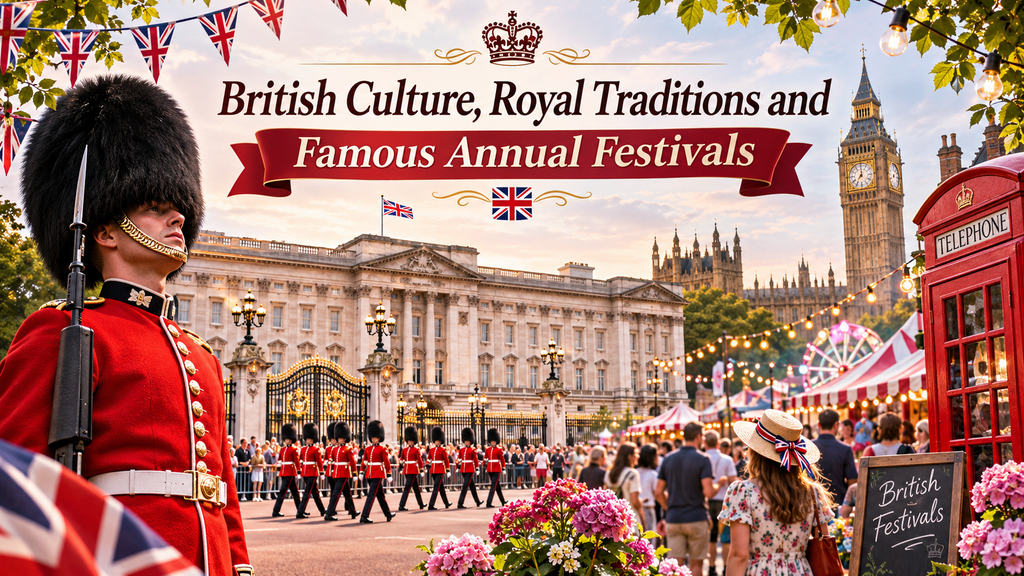
If you are planning a holiday, learning about British traditions and festivals can make your journey more interesting and memorable.
Understanding British Culture and Everyday Traditions
British people are often associated with politeness, punctuality and a love of tea. Saying “please,” “thank you” and “sorry” is common in everyday conversations. Waiting patiently in queues is another well-known British habit.
Afternoon tea remains a popular tradition, especially in hotels and tearooms. It usually includes tea, small sandwiches, scones and cakes.
Sunday roast is another favourite. Many families and pubs serve roasted meat, potatoes, vegetables and Yorkshire pudding, particularly on Sundays.
Famous Royal Traditions in the United Kingdom
The British Royal Family plays an important ceremonial role in the country’s history and national celebrations. Visitors can experience several royal traditions, particularly in London.
Changing of the Guard at Buckingham Palace
The Changing of the Guard is one of London’s best-known royal ceremonies. It involves soldiers in traditional uniforms exchanging guard duties, accompanied by military music on selected days.
Visitors can watch the ceremony near Buckingham Palace, although schedules may change because of weather or official events.
Trooping the Colour: The King’s Birthday Parade
Trooping the Colour takes place in June to celebrate the monarch’s official birthday. The event features marching soldiers, military bands, horses and a royal procession.
The ceremony traditionally includes an appearance by members of the Royal Family at Buckingham Palace.
Royal Palaces and Historic Castles
Buckingham Palace, Windsor Castle and the Tower of London attract visitors interested in British royal history.
These historic landmarks offer opportunities to discover royal collections, centuries-old architecture and stories about former kings and queens.
Famous Annual Festivals Celebrated Across Britain
British festivals bring together music, history, food and local communities. Some events are celebrated nationwide, while others reflect regional traditions.
Edinburgh Festival Fringe – August
The Edinburgh Festival Fringe in Scotland is one of the world’s most famous performing arts festivals. Every August, comedians, musicians, actors and street performers entertain visitors across the city.
Notting Hill Carnival – August
Held in London during the August bank holiday weekend, Notting Hill Carnival celebrates Caribbean culture through colourful costumes, dancing, steel bands and delicious street food.
Bonfire Night – 5 November
Bonfire Night remembers the failed Gunpowder Plot of 1605. Communities across Britain organise fireworks displays and bonfires, making early November an exciting time to visit.
Christmas and New Year Celebrations
Christmas markets, decorated streets and festive lights transform British towns during December.
Edinburgh’s Hogmanay celebrations are especially famous for welcoming the New Year with music, entertainment and Scottish traditions.
Planning Your Visit to Experience British Festivals
Travellers hoping to attend popular festivals should book accommodation early because hotels can become busy during major celebrations.
Before travelling, check the UK’s latest entry requirements. Depending on your nationality and immigration status, you may need a visa or Electronic Travel Authorisation (ETA).
Eligible travellers looking for application assistance can visit Apply for United Kingdom ETA Online to learn about the application process and available support services. Always confirm your eligibility through the official UK government website.
Best Time to Experience British Culture
Summer, particularly June through August, is ideal for outdoor festivals, royal ceremonies and cultural events.
Autumn offers seasonal celebrations, while winter brings Christmas markets and festive activities. Spring is excellent for exploring historic gardens, castles and traditional British towns.
Final Thoughts
British culture is much more than royal palaces and famous landmarks. It is found in everyday customs, neighbourhood celebrations, traditional meals and lively festivals.
Whether you watch a royal parade in London, enjoy street performances in Edinburgh or celebrate Bonfire Night with locals, these experiences offer a wonderful introduction to Britain’s rich cultural heritage.
