 WhatsApp Us Now

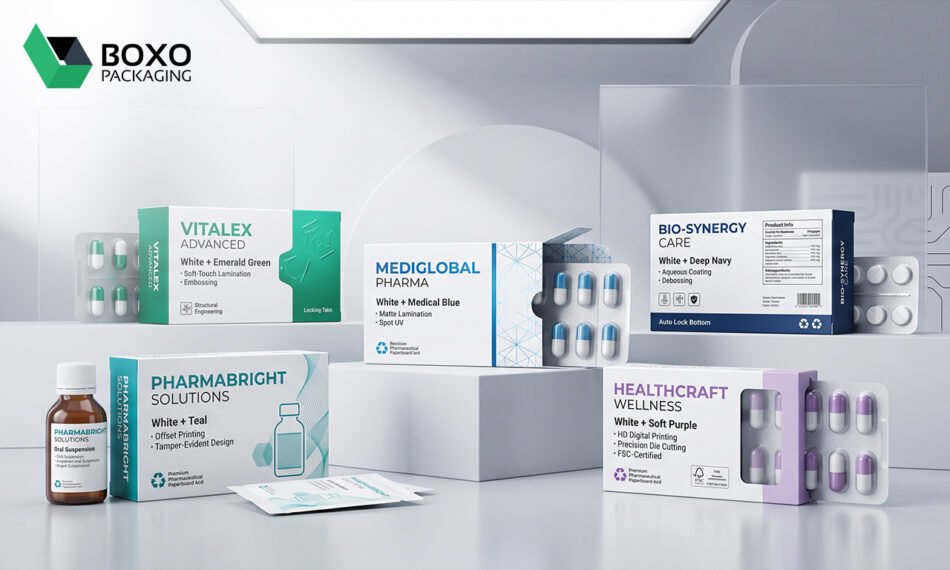
A stock carton makes the contents fit the box; a made-to-order one fits the contents. With custom healthcare boxes, the dividers, the label panel, and the way the pack opens are all designed around what a clinic, a care facility, or a household actually keeps inside. The difference shows up every time someone reaches for the box in a hurry.
Kits are where the gap is most visible. A home test kit, a first aid refill, or a physiotherapy set usually contains items of very different shapes that need to stay put and stay identifiable. Generic packaging leaves them sliding and unlabeled, which turns a two-second lookup into a small search.
The stakes differ from ordinary retail as well. A missing instruction leaflet in a snack box is an inconvenience; the same omission in a care kit is a phone call to a pharmacist. Boxes in this category get designed for the worst rushed minute, not the average calm one.
What a well-built healthcare box has to manage:
- Identification, meaning names, sizes, and lot details readable at arm’s length
- Separation, with inserts that stop vials and instruments from sliding into each other
- Clean handling, a surface that wipes down and stores safely near care areas
- Guidance, or space for usage steps that does not crowd out the brand
Hygiene Habits That Start at the Supplier
Cartons that arrive flat and get folded where they will be filled pass through fewer hands than pre-assembled boxes shipped bulging. That is one reason folding cartons dominate medical and personal care packaging: the flat stack ships clean, stores dry, and each box is touched for the first time at the moment that matters.
It is reasonable to ask a supplier how stock is wrapped and stored before it ships. Poly-wrapped bundles, dry storage, and a clean folding environment are fair questions for anything that will sit near care supplies or hold items headed for a clinical setting.
Storage behavior belongs in the conversation too. Boxes destined for a treatment room get opened with one hand, dragged across a trolley, and stacked under other supplies. A design that assumed a gentle shelf life will show the strain quickly in that environment.
Room for Instructions, Inserts, and Expiry Dates
Layout is a safety feature in this field. Dosage steps, warnings, and usage guidance need generous type and a predictable location, not a leftover corner. On custom healthcare boxes, a flat printed panel reserved for lot numbers and expiry dates keeps them legible for stamping and away from folds where type distorts.
Custom inserts do quiet work here. A cut or molded insert stops vials, instruments, and sample tubes from colliding, and a sleeve box can hold a refill pack together with its instruction card. Medicine cartons handle the single-item end of this spectrum, while larger kits need the roomier formats.
Custom Packaging as a System, Not a Single Box
With the product, not the artwork. A workable custom packaging brief lists the item’s weight, dimensions, and fragility, how it ships, and who opens it. Design that starts anywhere else tends to produce a beautiful box built on the wrong assumptions. A supplier like Boxo Packaging will usually ask for the product itself before discussing print, which is the correct order of operations.
The brief should also say what happens after opening. A box that lives on a shelf for months, like a monthly organizer or a refill kit, has different structural demands from one that is discarded at unboxing. The answer changes board weight, closure choice, and finish.
A useful habit is to audit the existing packaging before replacing any of it. Weigh each current box, note where damage occurs, and record what customers actually do with the pack after opening. What that audit turns up often contradicts assumptions held for years.
How Many Prototype Rounds Are Enough?
Enough to answer every open question, and no more. A structural sample in plain board settles fit and assembly. A printed proof settles color and layout. Unusual shapes, heavy contents, or a difficult shipping route can justify one more round, but a project that keeps circling usually has an unsettled brief rather than a bad prototype.
A realistic project sequence looks like this:
- A written brief covering contents, weight, shipping route, and opening behavior
- A dieline showing every fold, flap, and glue tab at true scale
- A structural sample checked with the real product inside
- A printed proof approved before the production run begins
Test with the real contents, the real filler if any, and the actual tape or label that will seal the pack. A prototype approved empty has a way of embarrassing everyone later.
One Design Language Across a Whole Line
A product line reads as a family when the pieces agree: same board family, same corner radius, same type placement, same finish. Tuck boxes for the single items, display boxes for the shelf tray, and a larger product box for the bundle set can all carry one identity when they are planned together.
That is the real argument for treating custom packaging as a system. Consistency across formats is cheap when it is designed in from the start and expensive to retrofit once each piece has been tooled separately.
There is a budgeting angle as well. Tooling one dieline that works across several product sizes, or sharing a print layout across variants, reduces the number of separate projects the line requires. Fewer projects mean fewer proofing cycles and fewer chances for inconsistency to creep in.


