 WhatsApp Us Now

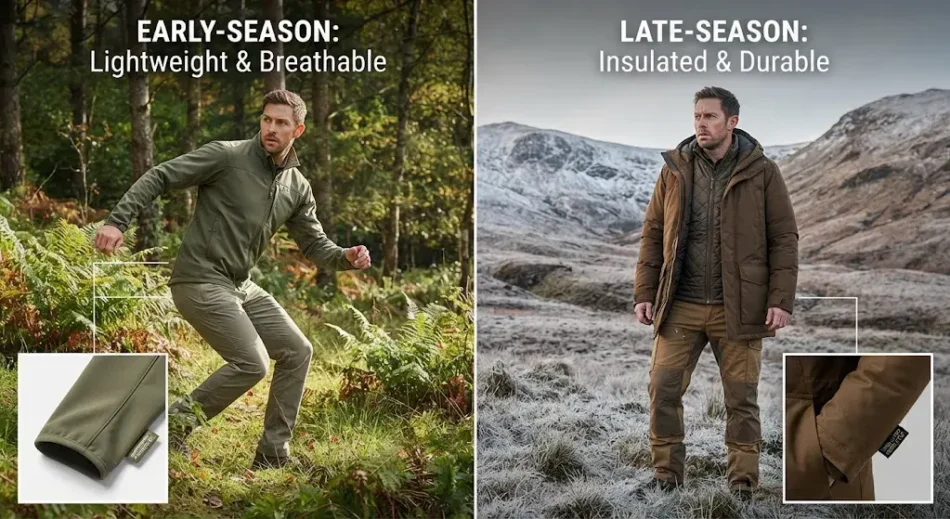
Choosing the right material for outdoor clothing is often less about fashion and more about timing, weather, and how the season develops. Early-season conditions can feel mild and changeable, while late-season outings usually demand tougher insulation, better wind resistance, and more durable construction. Knowing where to spot these differences helps you make better decisions before you buy, whether you are preparing for a stalk in damp grassland, a day on exposed hill ground, or a long wait in still, cold weather. If you are comparing ranges and want a practical starting point, browsing hunting clothing new arrivals can be useful because new stock often reflects the latest fabric updates and seasonal design changes.
In the UK, seasonal shifts can be subtle but important. A September morning in the Highlands may feel very different from an October afternoon in the Midlands, and those differences affect what materials perform best. This article explains how to recognise early-season and late-season material choices, what to look for in fabric labels and garment construction, and how to match clothing to changing conditions without overbuying or choosing the wrong type of kit.
Key points
- Early-season materials tend to prioritise breathability, lighter weight, and quiet movement.
- Late-season materials usually focus on insulation, wind blocking, weather protection, and durability.
- Fabric weight, lining, membrane type, and stitching details are often better indicators than the marketing description.
- Layering is important throughout the season, but the base fabric should match the conditions you expect most often.
- Checking seams, treatment finishes, and pocket design can reveal whether a garment suits warmer or colder parts of the season.
Understanding the difference between early-season and late-season materials
Early-season clothing is designed for conditions that are often cool in the morning, warmer by midday, and occasionally wet. The priority is usually comfort during movement. Fabrics that allow moisture to escape and prevent overheating are more useful at this time of year. These garments are often lighter, less bulky, and made for active use.
Late-season clothing is built for colder, wetter, and windier conditions. The materials are generally denser, thicker, or layered to hold in warmth. At this stage of the season, standing still for longer periods becomes more common, so insulation and protection begin to matter more than breathability alone.
The challenge is that many garments are marketed for “all season” use. In practice, the best way to judge them is by looking at the details. Fabric composition, garment weight, inner lining, outer finish, and construction quality often tell you more than the label itself.
Where to spot early-season material choices
Lightweight and breathable fabrics
Early-season garments often use lighter synthetic blends or thin natural fibres that allow air to circulate. These materials are easier to wear during active movement and are less likely to feel stifling when temperatures rise. Cotton blends, lightweight polyester, and softshell fabrics are commonly used in this category, though the exact performance varies by garment.
When inspecting clothing, check whether the fabric feels thin but not fragile. A good early-season material should feel flexible and quiet, especially if it will be used in situations where noise matters. Stiff or heavily coated fabrics may be less suitable for the start of the season unless the weather is particularly unsettled.
Minimal insulation
Another sign of an early-season choice is limited insulation. You may see thin brushed linings or simple single-layer construction rather than thick fleece or quilted interiors. This helps keep body temperature balanced when the weather is mild. Garments with too much insulation can cause overheating during walking, climbing, or carrying equipment.
If a jacket or trouser has a soft inner surface but no substantial padding, it is more likely aimed at early-season conditions. That does not make it unsuitable for cooler days, but it does suggest it is designed with mobility and ventilation in mind.
Ventilation features
Early-season materials are often paired with practical ventilation features such as mesh pockets, underarm zips, or open-weave sections in less exposed areas. These details are especially useful in the British countryside, where weather can shift quickly and a mild spell can turn into a warm, humid afternoon.
Ventilation is a useful clue because late-season kit tends to close these gaps in favour of retaining heat. If a garment seems built to let excess warmth escape, it is usually better suited to the earlier part of the season.
Where to spot late-season material choices
Heavier weaves and denser construction
Late-season garments often feel more substantial in the hand. They may use tightly woven outer fabrics that help resist wind and abrasion. A denser weave is not always the same as a waterproof membrane, but it does suggest a stronger emphasis on weather protection. This is important when conditions are cold enough that a wind chill can quickly become uncomfortable.
You may also notice reinforced panels on the shoulders, elbows, knees, or seat. These additions are common in late-season clothing because they improve durability when kit is used more intensively and in harsher ground conditions.
Insulating linings and layered interiors
Late-season materials often include fleece linings, quilted insulation, or bonded layers. These help trap warmth and reduce heat loss. In practical terms, this means the garment performs better when you are less active or when you need to stay comfortable for longer periods without constant movement.
Look at the inside of the garment as well as the outer shell. A late-season piece may appear similar from the outside to a lighter jacket, but the inner structure will often be noticeably thicker, softer, or more complex. This is one of the clearest ways to distinguish colder-weather kit from early-season clothing.
Weather-resistant finishes
Water-repellent coatings, taped seams, and storm flaps are common in late-season material choices. These features help keep out persistent drizzle and wind-driven rain, which are frequent concerns in the UK during the latter part of the year. A fabric may feel dry to the touch but still perform differently once exposed to prolonged damp conditions, so finish and construction matter just as much as the base material.
Pay attention to zips, cuffs, collars, and hems. Late-season garments often have tighter closures or adjustable components that reduce heat loss and stop draughts from getting in. These design choices are often more useful in cold, exposed settings than in milder early-season weather.
How to read fabric labels and product details
Material choices are not always obvious at first glance, so labels and specifications are worth checking closely. Look for fabric weight if it is provided, as heavier materials usually indicate better insulation or durability. Fibre content also helps. Polyester and nylon often suggest strength and weather resistance, while wool blends may indicate warmth and natural temperature regulation.
If a garment lists membrane technology or waterproof ratings, it is more likely to suit late-season use, especially in wet regions. However, a high waterproof rating does not automatically mean the garment will be comfortable for active early-season wear. Breathability remains just as important when temperatures are still relatively mild.
It is also useful to examine care instructions. Some advanced materials require specific washing methods or reproofing. If a product needs more maintenance, that is often because it has been designed with stronger weather protection in mind.
Practical examples of seasonal material selection
For early-season use, a lightweight softshell jacket, a breathable long-sleeve top, and trousers with a bit of stretch are often a good match. These items support movement, reduce overheating, and cope well with mixed conditions. They are especially useful for active days when the weather may change but extreme cold is unlikely.
For late-season use, a lined jacket, insulated mid-layer, and trousers with reinforced, wind-resistant fabric are usually more appropriate. These materials help maintain comfort during longer periods outdoors, particularly when the temperature drops and the ground becomes wetter or frostier.
The best choice depends not only on the calendar but also on how you use the clothing. A person moving constantly will need different materials from someone who spends long periods stationary. That is why the same month can call for very different kit depending on the activity and location.
Common mistakes to avoid
One common mistake is choosing thick clothing too early in the season. This can cause overheating and reduce comfort, especially during active use. Another is relying on lightweight garments too far into colder months, which can leave you underprotected when wind and rain increase.
It is also easy to focus on one feature, such as waterproofing, while overlooking breathability or fit. Good seasonal clothing works as a system, not a single feature. A well-chosen material should support the way you move, the weather you expect, and the time you spend outdoors.
Finally, do not assume that all synthetic fabrics behave the same. Two jackets may both be polyester-based, yet one may be designed for ventilation and the other for insulation. The construction and finishing details matter just as much as the main fibre.
Conclusion
Spotting early-season versus late-season material choices comes down to reading the garment carefully and matching it to real conditions. Early-season kit is usually lighter, quieter, and more breathable, while late-season clothing is denser, warmer, and better protected against wind and wet weather. By looking at fabric weight, lining, seam construction, and practical design features, you can make more informed choices and avoid buying clothing that feels right on paper but performs poorly in the field.
The best approach is to think in terms of function rather than labels. Ask whether the material supports movement, warmth, ventilation, or protection, then compare that with the conditions you are most likely to face. That simple habit makes seasonal clothing choices much easier and far more effective.
FAQ
What is the main difference between early-season and late-season materials?
Early-season materials are usually lighter and more breathable, while late-season materials are generally warmer, denser, and more weather resistant.
Can one garment work for both early and late season?
Yes, but only if it is versatile enough to layer effectively. A mid-layer or softshell can work well across seasons, but it may not be ideal in very cold or very mild conditions without adjustment.
How do I tell if a jacket is better for late-season use?
Look for insulating linings, tighter weaves, wind-resistant finishes, reinforced panels, and features that reduce heat loss, such as adjustable cuffs and storm flaps.
Is breathability still important in colder months?
Yes. Even in late-season weather, breathability matters because moisture build-up can make clothing feel cold and uncomfortable once activity levels change.
What should I prioritise for early-season clothing?
Prioritise breathability, comfort during movement, quiet fabrics, and enough protection for light rain or cool mornings without unnecessary bulk.

