 WhatsApp Us Now

Togo is a beautiful West African country known for its colorful festivals, traditional music, historic villages, and welcoming communities. Although Togo is small in size, it offers a rich cultural experience. Different ethnic groups have preserved their customs, languages, and celebrations for generations.
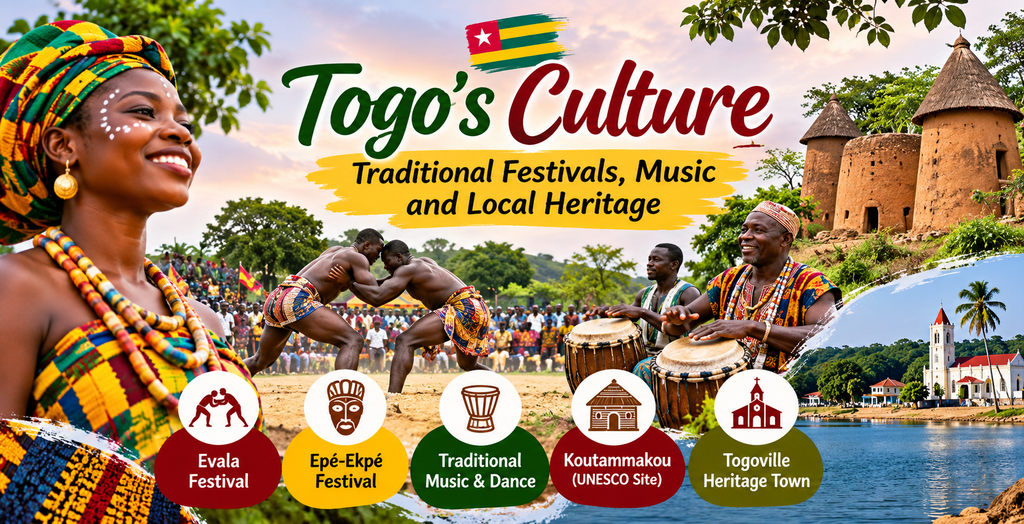
From traditional wrestling ceremonies to lively drum performances, exploring Togo’s culture and heritage helps visitors understand the country’s history and everyday life.
Traditional Festivals in Togo
Festivals are an important part of Togolese culture. They bring families and communities together to celebrate history, spiritual beliefs, and agricultural traditions.
Evala Festival – Traditional Wrestling
The Evala Festival is one of Togo’s most famous cultural celebrations. It takes place in the Kara region, usually in July.
During this festival, young Kabye men participate in traditional wrestling matches as part of their initiation into adulthood. The celebrations also include singing, dancing, and community gatherings.
Epé-Ekpé Festival – Guin New Year
The Epé-Ekpé Festival is celebrated in Glidji, near Aného, generally in September. It marks the traditional New Year of the Guin people.
An important part of this celebration is the sacred stone ceremony, known as Kpessosso. Traditional religious leaders interpret the stone’s color as a message about the coming year.
Gadao-Adossa Festival
Gadao-Adossa is associated with the Tem community around Sokodé. The celebration includes traditional dances, music, and ceremonies.
The Adossa knife dance is especially well known. It reflects cultural identity and traditions passed down through generations.
Traditional Music and Dance in Togo
Music plays an important role in daily life throughout Togo. Traditional performances often include drums, singing, handclapping, and energetic dancing.
Different communities have their own musical styles. The Ewe people, for example, are known for rhythmic drumming and group dances.
Traditional music is commonly performed during weddings, festivals, religious ceremonies, and family celebrations. Modern Togolese musicians also combine local rhythms with Afrobeats, hip-hop, and other contemporary styles.
Explore Togo with a Tourist eVisa
Visitors interested in experiencing local festivals and cultural attractions should prepare their travel documents before departure.
Eligible international travelers can review the requirements and Apply for Togo Tourist eVisa Online through an online application assistance service.
The service offers application guidance, document assistance, secure online submission, and customer support. Expedited processing options may also be available. However, approval depends on the relevant immigration authorities.
Travelers should confirm their eligibility and current entry requirements before making travel arrangements.
Famous Cultural Heritage Sites in Togo
Koutammakou – UNESCO World Heritage Site
Koutammakou is one of Togo’s most remarkable cultural destinations. Located in northern Togo, this UNESCO World Heritage landscape is famous for the traditional mud tower-houses built by the Batammariba people.
These buildings, known as takienta, reflect local architecture, family life, and connections with nature.
Togoville – A Historic Town
Togoville, situated near Lake Togo, is known for its historical significance and religious traditions.
Visitors can discover local customs and learn about the area’s cultural history through guided visits.
Traditional Food and Local Markets
Food is another wonderful way to experience Togolese culture. Popular dishes include fufu, pâte, grilled fish, and meals served with flavorful sauces.
Local markets offer colorful fabrics, handmade crafts, fresh produce, and traditional household items.
Exploring these markets gives visitors an opportunity to observe everyday life and support local businesses.
Conclusion
Togo’s traditional festivals, music, historic villages, and cultural landmarks make it an interesting destination for travelers seeking authentic experiences.
Whether watching Evala wrestling, exploring Koutammakou, or enjoying traditional music, visitors can discover a country where cultural heritage remains an important part of everyday life.


