 WhatsApp Us Now

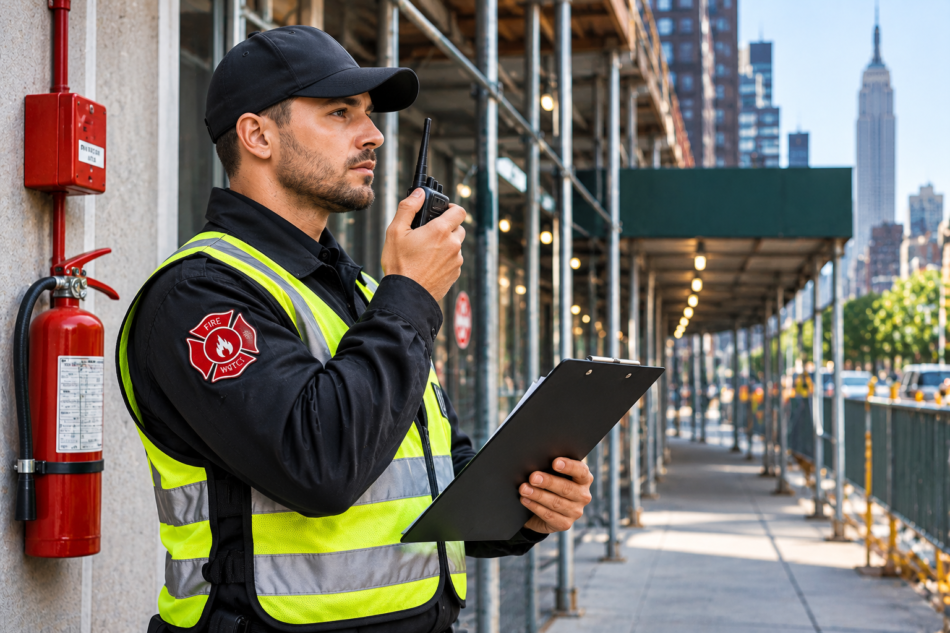
New York City packs millions of people into dense towers, aging walk-ups, theaters, and construction sites, so fire safety rules here are strict and closely enforced. When a sprinkler line is shut down for repairs, an alarm panel fails, or a crowded venue opens its doors, someone must physically watch for danger until normal protection returns. That is where fire guard in NYC requirements enter the picture for owners, managers, and event organizers. A fire guard is a trained person who patrols a defined area, looks for hazards, and signals an emergency if one begins. Misunderstanding the rules can lead to violations, stalled projects, and real risk to occupants. This article explains what the role involves, which situations commonly call for it, and how a property can prepare ahead of time.
Understanding the Role of a Fire Guard
A fire guard, often called a fire watch, serves as the human backup when automated protection is unavailable. The person is expected to stay alert, move through assigned areas at set intervals, and record each patrol in a log. Typical duties include checking exits for obstructions, watching for smoke, sparks, or unusual heat, confirming that extinguishers remain accessible, and calling emergency services without delay. In the city, the Fire Department sets the standards, and the individual usually must hold a valid certificate of fitness issued after training and an exam. Anyone arranging coverage through a fire guard in NYC should confirm that the assigned person carries current credentials, because an uncertified watcher may not satisfy inspectors. Fire guards are not meant to fight large fires. Their job is early detection, alerting occupants, and guiding people toward safe exits. They also keep written records, since inspectors may ask to review logs showing times, locations, and observations. Equipment such as a flashlight, a communication device, and a copy of the building’s evacuation plan helps the guard act quickly. Clear instructions from the building owner about who to call and where to meet responders prevent confusion during a real event.
Common Situations That Call for Fire Watch
Several circumstances commonly trigger the need for a watch. The most frequent is an impairment, which means a sprinkler, standpipe, or alarm system is out of service for maintenance or repair. Until it is restored, a qualified person may need to patrol continuously. Construction and demolition sites present another case, particularly during hot work such as welding, cutting, or torching, where sparks can ignite materials far from the work area. Public gatherings, including concerts, exhibitions, and crowded events, may also require trained personnel to be present. Buildings under renovation often have temporarily blocked stairwells or disabled detection, which adds risk. Whenever a property needs fire guard in NYC support, the first step is to identify the exact condition that created the requirement and how long it will last. Some situations call for a watch only during work hours, while others demand round-the-clock coverage until inspectors approve the repair. Owners should also notify the right parties, which can include insurers and the fire department, depending on the type of impairment. Planning for shifts matters, since a single person cannot patrol for days without rest. Coverage gaps, even brief ones, can invalidate the arrangement. Because rules and thresholds change, checking current Fire Department guidance before starting work is the safest approach.
Conclusion
Preparation reduces the cost and stress of any fire watch situation. Property managers can keep a list of qualified providers, maintain up-to-date evacuation plans, and schedule system maintenance during periods when disruption is lowest. Many buildings also combine fire watch duties with access control, and some pair them with on site security guards who already monitor entrances, cameras, and visitor flow, though each role has distinct training and legal requirements. Staff should know where extinguishers, panels, and exits are located, and drills should be practiced regularly. Documentation of inspections, repairs, and patrol logs should be stored where it can be retrieved quickly. Treating fire guard in NYC obligations as part of everyday risk management, instead of a last-minute scramble, protects occupants, avoids penalties, and keeps operations running smoothly.


