 WhatsApp Us Now

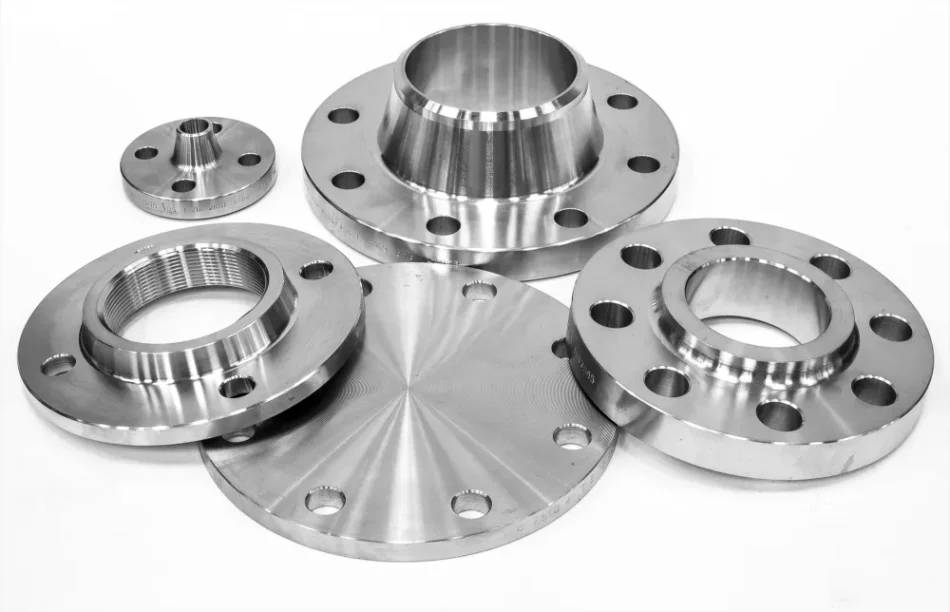
Choosing the right stainless steel flange means matching grade, pressure class, facing and dimensions to the fluid and operating conditions of the piping system. Flanges join pipes, valves, pumps and vessels into a bolted assembly that holds pressure yet opens for service. Corrosion resistance, tensile strength and long service life suit them to demanding plants. Chemical processing, food processing, pharmaceuticals, oil and gas and water treatment rely on them daily.
What Is a Stainless Steel Flange?
A stainless steel flange is a forged collar fixed to a pipe end and bolted against a matching flange to form a demountable joint. A proper gasket fits between the two connecting surfaces. Bolts tightened to the correct torque compress that gasket and seal the joint, while still allowing crews to open the line for inspection, maintenance or replacement. SS Flanges resist oxidation and survive repeated dismantling. Dimensions, facing type and pressure class govern whether two components mate correctly. Carbon steel costs less, but it corrodes far faster in wet or chemical service.
Common Types of Stainless Steel Flanges
Flange type decides how the pipe connects, how stress travels through the joint and how easily crews install it.
Weld Neck Flanges
Weld neck flanges carry a tapered hub that is butt-welded to the pipe. The taper spreads stress across the joint, which suits high-pressure and cyclic thermal service.
Slip-On Flanges
Slip-on flanges slide over the pipe’s outside diameter and are held by two fillet welds. Fabricators select them for moderate-pressure lines where alignment tolerance outweighs peak joint strength.
Blind Flanges
Blind flanges are solid discs that close pipe ends, valve ports and vessel openings. Maintenance teams fit them to isolate a section, pressure test a line or open equipment.
Socket Weld Flanges
Socket weld flanges accept the pipe into a machined recess, then secure it with a fillet weld around the outside. Small-bore lines of 2 inches and below use them most.
Threaded Flanges
Threaded flanges carry internal tapered threads that screw onto matching male pipe threads. No welding is involved, which helps with utility lines and where hot work permits stay restricted.
Lap Joint Flanges
Lap joint flanges sit loose over a matching stub end and rotate freely around the pipe. That rotation aligns bolt holes quickly on frequently dismantled joints.
Piping layout, operating conditions, connection method and the governing standard decide which type belongs in the design.
Factors to Consider When Choosing a Stainless Steel Flange
Six technical checks separate a flange that performs for decades from one that fails early in service.
- Grade selection follows the fluid, with 304 and 304L suiting mild service while 316 and 316L flanges handle chlorides and acids.
- The pressure class must match the system design pressure and temperature, since allowable ratings drop as operating temperature climbs.
- Nominal pipe size, flange thickness, facing style and bolt hole arrangement all have to match the mating component exactly.
- Moisture, chlorides, process chemicals and coastal air push the choice towards molybdenum-bearing grades with stronger pitting resistance.
- Welded, threaded and lap joint connections each change installation time, weld inspection scope and dismantling effort.
- Buyers should check dimensional standards, material specifications and test certificates before approving Stainless Steel Flange Fittings.
Industrial Applications of Stainless Steel Flanges
Industrial Stainless Steel Flanges appear wherever piping must hold pressure, resist corrosion and open quickly for cleaning or repair.
Chemical Processing
Chemical plants bolt flanges into reactors, transfer and dosing lines carrying acids, solvents and caustic solutions. The grade follows the chemical, its concentration and the working temperature.
Food and Beverage
Dairies, breweries and food plants need joints that strip down for cleaning without leaving crevices. Smooth faces and low-carbon grades keep product contact areas hygienic.
Pharmaceuticals
Pharmaceutical lines demand documented traceability and controlled surface finishes. Flanges join purified water, clean steam and formulation systems where contamination control governs every material decision.
Oil and Gas
Refineries and gas processing units flange together the separator, utility and transfer piping. Higher pressure classes and weld neck designs dominate because the service combines pressure, heat and hydrocarbons.
Water Treatment
Water and effluent plants connect pumps, valves, filters and membrane skids through flanged joints. Constant moisture and chlorine dosing favour stainless steel pipe fittings over coated alternatives.
Marine Applications
Shipboard ballast, cooling and fire main systems face salt spray continuously. Molybdenum-alloyed grades resist chloride pitting far better than 304 across splash zones and seawater service.
The required grade follows the fluid handled, the surrounding environment and the project specification.
Common Mistakes to Avoid When Selecting Stainless Steel Flanges
Most flange failures trace back to selection errors made long before the joint reached the site.
- Specifying 304 for chloride-rich service invites pitting, and damage often shows within the first year.
- Ignoring pressure and temperature ratings produces joints that leak once the line reaches full operating heat.
- Ordering the wrong facing or bolt circle leaves crews with components that will not mate on site.
- Gasket material and bolt grade must suit the same service, yet buyers often treat both as afterthoughts.
- Skipping material test certificates removes any proof that the delivered grade matches the design.
- Treating all austenitic grades as equal ignores how differently they behave in acids and chlorides.
Verify every technical requirement against the line specification before releasing the purchase order.
Tips for Buying Stainless Steel Flanges
Procurement decisions carry as much weight as design decisions. A flange that arrives with the wrong rating or without documentation stalls an entire installation. The five checks below help engineers and buying teams confirm that an order matches the piping specification.
- Confirm the flange type, grade, nominal size and pressure class against the line list.
- Verify compliance with applicable standards such as ASME B16.5 and ASTM A182.
- Request material test certificates and mill traceability for every heat supplied.
- Check surface finish, dimensional accuracy, stock availability and realistic delivery dates.
- Choose a supplier who can meet the specification and support the documentation trail.
Conclusion
Selection of the right Stainless Steel Flange rests on grade, corrosion exposure, pressure rating, dimensions, connection type and the governing standard. Get those six right and the piping system holds pressure, stays serviceable and lasts. Installation quality and routine maintenance carry that result forward. Confirm the project specification before sourcing any flange fittings.


