 WhatsApp Us Now


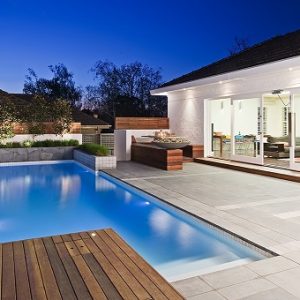
A well-planned pool area can become the favourite spot in a home. The deck sets the scene, welcomes bare feet and stands up to water, sun and chemicals. Natural stone handles all of this beautifully. Many homeowners start with stone pavers for the surrounding deck, then match the edge of the pool to the same material.
Choosing Stone Pavers for Outdoor Areas
Pavers made from natural stones are strong and long-lasting. Each piece carries its own colour and markings, so a finished area never looks mass-produced. Stone also ages well. Surfaces soften and weather rather than peeling or fading like some manufactured products.
Several factors guide the choice of stone. Slip resistance comes first, especially near water. A textured or flamed finish gives more grip than a polished one. Colour is the next consideration. Light stone reflects heat and stays cooler underfoot, while dark stone can feel warm in strong sun. Thickness and size matter, as larger and thicker pieces handle heavier loads such as driveways.
The surrounding landscape also plays a part. Stone should suit the house, the garden, and any existing paving. Viewing a sample outdoors, in both sun and shade, shows how the colour will look throughout the day.
Why Bluestone Suits Pool Edges
Bluestone is a dense volcanic stone with a fine grain and a cool blue-grey tone. It has long been popular in Australian landscaping because it looks refined and wears well. The tone pairs naturally with water and works with both modern and traditional homes.
The edge of a pool faces more demand than the deck around it. People step on it, sit on it, and constantly splash it. Bluestone pool coping suits this role because the stone is hard and holds a clean edge. Rounded and square profiles are both common. A rounded edge feels gentler underfoot, while a square edge gives a sharper line.
A non-slip finish is the safer choice for this area. Honed surfaces look smooth but can be slippery when wet, so most pool edges use a textured finish. Dark stone can also become warm in direct sun, so it helps to check how the surface feels on a hot afternoon.
Installation and Care
Good results depend on the good preparation. Stone pavers need a firm, level base with a slight fall so that water runs away from the house. Coping must be set securely along the pool shell, with gaps left for drainage and movement. A qualified installer understands these details and can avoid problems such as lifting, cracking or pooling water.
Care is straightforward. Regular sweeping removes leaves and grit, and a gentle rinse lifts dirt and sunscreen residue. Some stone benefits from sealing, depending on the finish and the type of pool water treatment. Follow the supplier’s advice, as harsh cleaners can mark natural stone.
A little planning at the start gives a pool area that looks refined, feels safe and holds up for many years.


