 WhatsApp Us Now

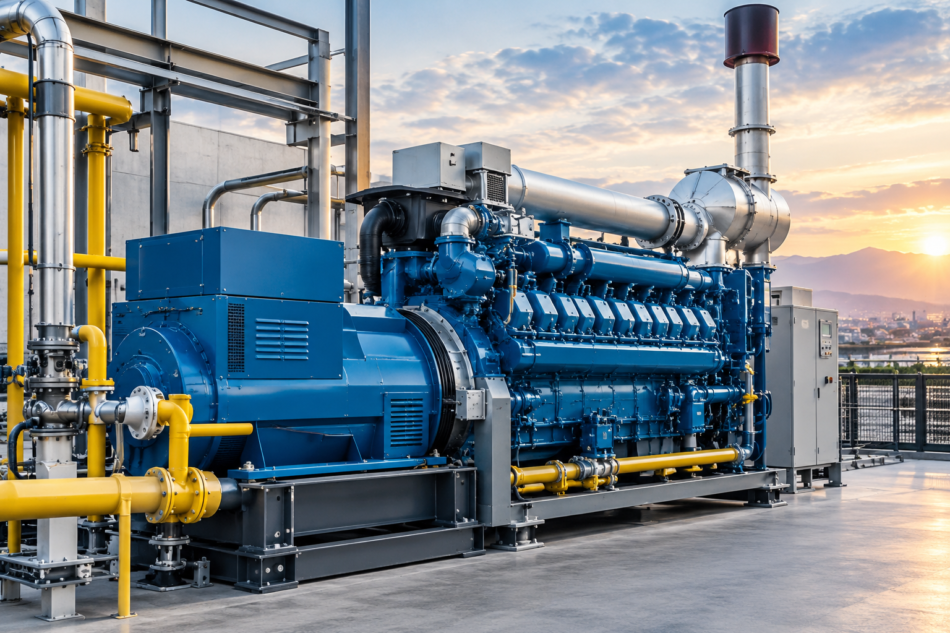
Pakistan’s industrial sector depends on a reliable energy supply to maintain productivity, control operating expenses, and meet production targets. From manufacturing plants and textile mills to food processing facilities and large commercial operations, uninterrupted power is essential for daily business activities. However, electricity interruptions, rising energy costs, and the need for better operational efficiency have encouraged industries to explore alternative power generation technologies.
Industrial gas engines offer a practical option for businesses that need dependable on-site electricity and, in suitable applications, useful heat for industrial processes. When properly selected, installed, and maintained, these systems can support more efficient energy use and help facilities manage their long-term operating costs.
Understanding how Industrial Gas Engines Pakistan solutions can support industrial operations is an important step for businesses planning to improve energy performance and strengthen their power infrastructure.
Understanding Industrial Gas Engines and How They Work
Industrial gas engines are internal combustion engines designed to generate mechanical power by burning gaseous fuels, such as natural gas or biogas, depending on the engine’s specifications. The engine converts the energy contained in the fuel into mechanical motion, which drives an alternator to produce electricity.
These systems are commonly used in industrial power plants, manufacturing facilities, commercial buildings, and combined heat and power installations.
Unlike equipment designed primarily for transportation, industrial gas engines are engineered for stationary applications and can be configured to operate continuously or according to a facility’s electricity requirements.
Their performance depends on several factors, including fuel quality, engine design, operating conditions, installation standards, and maintenance practices. Choosing the right configuration helps businesses match power generation capacity with actual demand.
Why Pakistani Industries Are Exploring Gas Engine Technology
Energy planning is a major consideration for industrial businesses in Pakistan. Manufacturers must balance production requirements with electricity costs, fuel availability, equipment reliability, and future expansion plans.
Gas engine technology can provide several advantages when local conditions support its use.
1. More Control Over Power Generation
On-site power generation allows businesses to produce electricity at their facilities rather than relying exclusively on the external grid. Depending on the installation, an engine can supply a significant portion of a facility’s electrical demand or operate as part of a broader power system.
This can be particularly useful for operations that require a consistent power supply to protect sensitive machinery, maintain production schedules, and reduce the effects of unexpected interruptions.
However, the actual level of reliability depends on system design, fuel availability, maintenance, and the provision of backup equipment.
2. Better Energy Management
Modern industrial gas engines can be integrated with monitoring and control systems that track operating conditions, fuel consumption, output, and maintenance requirements.
These capabilities help operators identify performance changes and make informed decisions about energy use. Businesses can also compare engine performance with grid electricity, alternative fuels, and other generation technologies before choosing the most suitable solution.
The financial benefits depend on the complete operating cost, including fuel, maintenance, equipment investment, and downtime.
3. Support for Continuous Industrial Operations
Industries such as textiles, chemicals, food processing, and manufacturing often depend on stable operating conditions. Unexpected interruptions can affect production quality, damage work in progress, or delay deliveries.
A correctly designed gas engine installation can contribute to a more resilient power strategy. Depending on the facility’s requirements, it may operate as the primary power source, provide supplementary electricity, or form part of a hybrid energy system.
Improving Efficiency Through Combined Heat and Power
One of the most valuable applications of industrial gas engines is combined heat and power, commonly known as CHP or cogeneration.
In a conventional electricity-only installation, some of the energy contained in fuel is released as waste heat. A CHP system captures suitable heat from the engine and uses it for processes such as water heating, steam production, or other compatible industrial requirements.
This approach can increase the total useful energy obtained from the same fuel input when there is a consistent demand for both electricity and heat.
For example, a food processing facility may need electricity to operate production equipment and hot water for cleaning or processing. A properly designed CHP installation may help meet both requirements.
Nevertheless, CHP is not automatically the best choice for every business. Its value depends on the facility’s heat demand, operating schedule, system design, and the cost of recovering and distributing heat.
Choosing the Right Industrial Gas Engine for Your Facility
Selecting an engine requires more than comparing the rated power output of different models. Businesses should assess their actual operating requirements and the conditions in which the equipment will run.
Important considerations include:
Power demand: Calculate the facility’s average and peak electricity requirements, including starting loads from large motors and other equipment.
Fuel availability: Confirm whether the required fuel is available consistently and whether its composition meets the engine manufacturer’s specifications.
Operating hours: Determine whether the engine will run continuously, during peak demand, or only when backup generation is required.
Environmental conditions: Consider ambient temperature, ventilation, altitude where relevant, and the installation environment.
Maintenance support: Review service availability, spare parts, technical expertise, and the recommended maintenance schedule.
Future expansion: Select a configuration that meets current requirements while allowing for realistic changes in production demand.
A professional engineering assessment can help determine the appropriate engine capacity, configuration, and operating strategy.
The Importance of Reliable Installation and Maintenance
Even a high-quality engine can experience reduced performance when it is incorrectly installed or poorly maintained. Proper commissioning and routine servicing are therefore essential for long-term reliability.
Preventive maintenance typically includes inspecting lubrication systems, checking filters, monitoring cooling performance, evaluating ignition components where applicable, and reviewing engine operating data according to the manufacturer’s instructions.
Operators should also monitor vibration, temperature, pressure, fuel consumption, and other indicators relevant to their equipment.
Predictive maintenance tools can help identify developing problems before they lead to unexpected shutdowns. However, monitoring systems work best when combined with trained personnel, documented maintenance procedures, and timely access to replacement parts.
For businesses evaluating Industrial Gas Engines Pakistan suppliers, after-sales support deserves as much attention as equipment specifications. A supplier with appropriate technical capabilities can assist with installation planning, commissioning, troubleshooting, and scheduled servicing.
Environmental Considerations and Responsible Fuel Use
Natural gas engines can produce lower carbon dioxide emissions per unit of electricity than some coal- or oil-based generation systems, depending on efficiency and operating conditions. However, they still emit greenhouse gases and other pollutants.
Methane leakage throughout the fuel supply chain can also affect the overall climate impact of natural gas. For this reason, businesses should evaluate total emissions rather than relying on fuel type alone.
Where suitable fuel and equipment are available, biogas may offer another option for certain industrial applications. Its feasibility depends on fuel quality, consistent supply, treatment requirements, and compatibility with the selected engine.
Facilities should also review applicable environmental regulations, emissions limits, noise requirements, and ventilation standards before installation.
Understanding the Total Cost of Ownership
The purchase price is only one part of an industrial gas engine investment. A realistic financial assessment should include installation, fuel infrastructure, electrical integration, maintenance, spare parts, financing, and eventual replacement costs.
Businesses should compare the cost per unit of electricity generated with the alternatives available to them. This comparison should use realistic fuel prices, expected operating hours, actual efficiency at the intended load, and a reasonable estimate of maintenance expenses.
Engine performance at partial load can differ from its performance at rated capacity. Therefore, choosing a system that closely matches the facility’s operating profile can be important for financial results.
A detailed feasibility study can also examine whether CHP, grid integration, or a combination of different power sources would offer better long-term value.
The Future of Industrial Gas Engines in Pakistan
Industrial power requirements are changing as manufacturers modernize equipment, improve energy monitoring, and seek more resilient operating models. Gas engines can form part of this transition where fuel supply, economics, and technical requirements make them suitable.
Digital monitoring, automated controls, improved maintenance planning, and integration with other generation sources can help facilities manage their energy systems more effectively.
At the same time, businesses must account for changing fuel availability, electricity tariffs, environmental requirements, and the growing role of renewable energy. A flexible energy strategy should consider not only immediate power requirements but also the facility’s long-term business objectives.
For industrial operators, the goal is not simply to install a new engine. It is to develop a reliable, economically sound, and appropriately maintained power solution that supports production over time.
Conclusion
Industrial gas engines can play an important role in Pakistan’s industrial energy landscape by supporting on-site electricity generation, operational resilience, and more effective use of fuel. When combined with suitable engineering, professional installation, and preventive maintenance, these systems can help businesses meet their power requirements while managing long-term operating expenses.
Before investing, companies should evaluate fuel availability, energy demand, maintenance support, environmental obligations, and total cost of ownership. A carefully planned solution will be better positioned to deliver dependable performance and support sustainable industrial growth.
For businesses researching Industrial Gas Engines Pakistan solutions, a thorough technical and financial assessment is the best starting point for making an informed investment decision.
Frequently Asked Questions
1. What are industrial gas engines used for?
Industrial gas engines generate mechanical power that can be used to produce electricity. They are used in manufacturing plants, industrial facilities, commercial buildings, and combined heat and power systems.
2. Are industrial gas engines suitable for Pakistani industries?
They can be suitable for facilities with compatible fuel supplies, appropriate power requirements, and access to technical support. A feasibility study should assess local fuel availability, operating costs, and maintenance requirements.
3. What is the difference between a gas engine and a diesel generator?
A gas engine is designed to operate on gaseous fuels, while a conventional diesel generator uses diesel fuel. Their costs, efficiency, emissions, and operating characteristics vary according to the equipment and application.
4. Can industrial gas engines reduce energy costs?
They may reduce electricity costs in suitable applications, but savings are not guaranteed. Fuel prices, engine efficiency, maintenance, installation costs, and operating hours all influence the final result.
5. How can businesses improve the lifespan of an industrial gas engine?
Following the manufacturer’s maintenance schedule, using suitable lubricants and approved fuel, monitoring operating conditions, and arranging timely inspections can help maintain performance and reduce avoidable wear.


