 WhatsApp Us Now

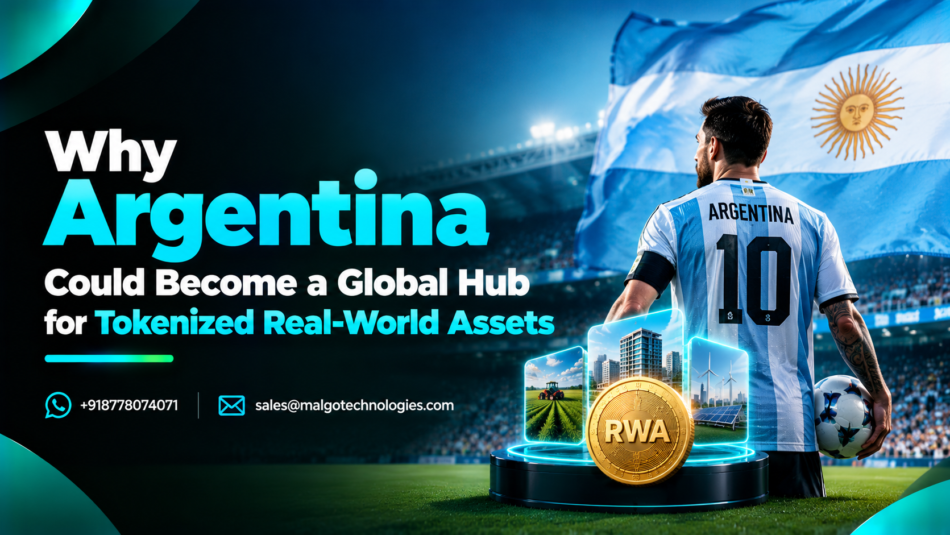
Argentina is gaining attention in the real-world asset (RWA) tokenization market because it brings together productive industries, blockchain talent, fintech adoption, and a growing regulatory foundation. The country’s strong agricultural economy also creates a large base of physical assets that can potentially be represented through blockchain-based infrastructure.
For businesses exploring RWA tokenization in Argentina, the opportunity is not limited to creating digital tokens. The larger opportunity is building reliable platforms that connect physical assets, investors, financial workflows, and blockchain technology.
Why Is Argentina Well Positioned for RWA Tokenization?
Argentina has several conditions that can support the growth of tokenized assets. Its agricultural sector operates at a significant scale, while the country has a strong technology and software development community.
The combination creates an interesting environment for tokenization. Businesses can explore blockchain-based models for assets connected to agriculture, commodities, real estate, private markets, and other eligible sectors.
Argentina’s experience with digital finance also supports market adoption. Businesses and consumers have already shown interest in financial technology as a way to manage payments, savings, investment, and liquidity.
How Can Argentina’s Agricultural Sector Benefit From Asset Tokenization?
Agriculture is one of the clearest areas where RWA tokenization can connect blockchain technology with an established physical economy.
Eligible agricultural assets, commodities, receivables, and investment interests can potentially be represented through digital tokens, subject to the applicable legal structure and regulatory requirements.
Tokenization can create digital records for ownership or economic rights and may support new financing and investment models. For agricultural businesses, this could open opportunities to connect productive assets with a broader pool of digital investors.
The key is not simply putting an asset on a blockchain. The platform must connect the token with reliable asset data, legal rights, ownership records, valuation processes, and transaction workflows.
What Role Does Technology Talent Play in Argentina’s Tokenization Growth?
A successful RWA ecosystem needs more than capital and physical assets. It also requires developers, blockchain architects, cybersecurity professionals, product teams, and financial technology specialists who can build systems for real-world use.
Argentina has developed a strong software and technology community capable of working across blockchain, fintech, cybersecurity, and digital platforms.
This matters because tokenization projects need production-ready infrastructure. A platform must handle user onboarding, wallet management, token issuance, transactions, permissions, data, security, and reporting while connecting with existing business systems.
For companies entering the Argentine RWA market, access to suitable technology development capabilities can make the difference between a basic proof of concept and a platform designed for commercial use.
Why Does Real-World Production Matter More Than a Tokenization Demo?
Creating a token is only one part of an RWA project. A commercially useful tokenization platform needs infrastructure that can support actual users, assets, transactions, and operational requirements.
This includes secure smart contracts, asset verification, investor onboarding, wallet integration, transaction management, compliance-related workflows, and reliable data.
Argentina’s opportunity will depend partly on how effectively businesses move from demonstrations to real products. Platforms built around genuine economic activity can create stronger connections between blockchain markets and traditional industries.
The focus should be on usable infrastructure rather than technology for its own sake.
How Can Blockchain Connect Argentina’s Real Economy With Global Investors?
One of the main ideas behind RWA tokenization is connecting physical or traditional financial assets with blockchain-based markets.
A properly structured platform can represent eligible assets digitally, maintain ownership records, support investor participation, and provide transaction visibility through blockchain infrastructure.
For Argentina, this creates an opportunity to connect sectors such as agriculture, commodities, real estate, energy, and finance with digital asset markets beyond the local economy.
Regulation remains a key consideration. Tokenized assets can carry different legal rights and obligations depending on their structure, issuer, investor type, and jurisdiction. Argentina’s securities regulator, the CNV, has been developing a framework around blockchain-based financial instruments, including a regulatory sandbox for tokenization.
What Does Argentina Need to Build a Strong RWA Market?
Technology alone will not create a successful tokenized asset market. Argentina needs cooperation between asset owners, financial institutions, technology providers, investors, regulators, and other market participants.
The infrastructure should support the complete asset lifecycle, from onboarding and verification to token issuance, investor access, transactions, reporting, and asset-related distributions.
Businesses entering this market should also consider regulatory requirements before deciding how an asset will be tokenized or offered to investors.
This creates an opportunity for technology companies to develop platforms that make complex asset workflows easier to manage while keeping blockchain infrastructure connected to real business operations.
How Can Businesses Start an RWA Tokenization Project in Argentina?
Businesses considering tokenization should begin with the asset rather than the blockchain.
The first step is identifying the asset, ownership structure, target investors, economic rights, and intended use of the token. Next comes the selection of the blockchain architecture, token standard, wallet infrastructure, compliance workflows, smart contracts, and platform features.
A development partner can then build the required platform around these specifications.
Malgo develops RWA tokenization platforms for businesses looking to bring real-world assets into blockchain-based ecosystems. The development scope can include token creation, smart contracts, asset onboarding, investor dashboards, wallet integration, marketplaces, transaction management, administration, and third-party integrations.
Why Should Businesses Explore RWA Tokenization in Argentina Now?
Argentina has the productive assets, technology talent, financial technology adoption, and developing regulatory environment needed to make RWA tokenization an important area of digital finance.
The opportunity is particularly relevant for businesses that already control valuable physical or financial assets and want to explore new digital ownership, financing, investment, or trading models.
The next stage of the market will depend on building infrastructure that works beyond demonstrations and connects blockchain technology with real economic activity.
Ready to Explore RWA Tokenization in Argentina?
Turn your real-world asset idea into a structured blockchain platform with Malgo.
Discuss your asset type, token model, investor requirements, blockchain network, platform features, and business objectives with Malgo and identify the right development approach for your project.
Start your RWA tokenization project with Malgo and build the digital infrastructure needed to bring real-world assets on-chain.
Call: +91 87780 74071
Email: info@malgotechnologies.com
Book your free RWA tokenization consultancy today and take the first step toward launching your platform in the Philippines.
Check and Book the free oppoinment : https://www.malgotechnologies.com/real-world-asset-tokenization

