 WhatsApp Us Now

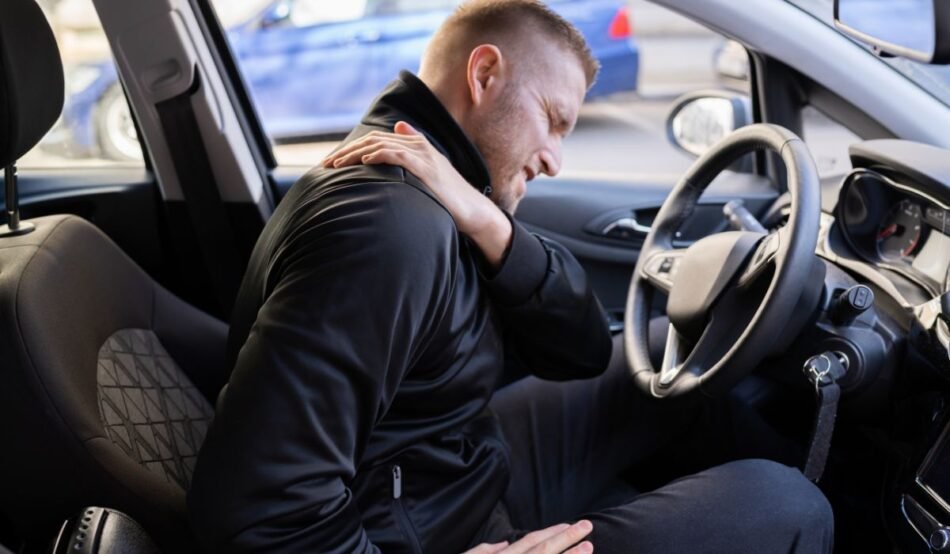
A car accident can change everything in a fraction of a second. The physical impact is obvious. What is less obvious is how much damage can sit beneath the surface, undetected, quietly developing into something significantly more difficult to treat the longer it goes unaddressed. Most accident victims leave the emergency room with a prescription and discharge paperwork, believing the hard part is behind them. For many, it is only just beginning.
Car accident injury treatment that actually works does not start and end with the ER. It starts when the structural and soft tissue damage the collision caused gets assessed and addressed by someone trained specifically to find it.
Why Car Accident Injuries Are Different
The force of a car accident moves through the body faster than the muscles can brace. In the milliseconds before impact, the body has not had time to prepare. The result is a category of injury that behaves differently from most musculoskeletal problems.
Adrenaline is the first complicating factor. In the hours following a collision, the body’s stress response suppresses pain signals. Patients walk away from accidents feeling functional, sometimes even fine, and use that window as evidence that the damage was minimal. It is not evidence of that at all. It is evidence that adrenaline is doing its job.
The injuries that define most accident recoveries, whiplash, cervical strain, disc displacement, and soft tissue tears, often surface 24 to 72 hours after the collision. By that point, inflammation has set in, muscle guarding has begun, and the compensation patterns that will drive recovery in the wrong direction are already forming.
What Chiropractic Care for Car Accident Injuries Actually Addresses

Chiropractic care for car accident injuries works by identifying and correcting the structural disruption the collision created, rather than managing the pain sitting on top of it.
Every vertebra that shifted on impact is putting pressure on the nerve root passing through that segment of the spine. That pressure does not stay local. It travels. Neck pain from a rear-end collision becomes arm numbness. A lumbar shift from a broadside impact becomes hip and leg pain that seems disconnected from the original injury. Chiropractic adjustments correct the structural source of those downstream symptoms directly.
Soft tissue damage runs alongside the structural component in almost every car accident case. Muscles tighten to guard the injured area. Scar tissue begins forming in the damaged fibers. The nervous system locks into a stress response that keeps the surrounding musculature contracted. Targeted massage therapy works on that layer, releasing the guarding and restoring circulation to tissue that has been cut off from the repair process.
Together, structural correction and soft tissue treatment address both dimensions of what a car accident does to the body. That combination is why chiropractic care for car accident injuries produces recovery outcomes that rest and medication consistently fall short of.
The Most Common Injuries Treated After a Car Accident
Whiplash and Cervical Strain
The cervical spine absorbs enormous force in a rear-end collision. Ligaments overstretch, vertebrae shift, and the surrounding musculature seizes up in response. Whiplash that goes untreated becomes chronic neck stiffness, recurring headaches, and restricted range of motion that follows patients for years.
Disc Injuries

A collision compresses the lumbar and cervical discs in ways that can push disc material out of position. A herniated or bulging disc pressing on a nerve root produces radiating pain that can travel down the leg or into the arm, depending on where in the spine the disc is affected. Spinal decompression therapy addresses disc injuries by creating negative pressure inside the disc, drawing the displaced material away from the nerve and allowing the disc to repair.
Post Accident Headaches
Most headaches that appear in the days following a collision originate in the upper cervical spine. Misaligned vertebrae irritate the nerves feeding into the skull, and patients experience recurring headaches that medication manages temporarily but never resolves. Cervical adjustments remove the structural source of that nerve irritation.
Soft Tissue Injuries
Muscle tears, ligament sprains, and fascial damage occur throughout the back, shoulders, and neck during a collision. These injuries respond to targeted massage and soft tissue work, not passive rest that leaves the damage unaddressed.
Why Timing Matters More Than Most Patients Realize
Starting car accident injury treatment within the first 72 hours after a collision produces meaningfully better outcomes than waiting. The structural disruption is easier to correct before the body has fully adapted around it. The soft tissue damage is more responsive before scar tissue has consolidated. And the documentation that begins on day one protects the legal case in ways that a gap in treatment cannot recover.
A chiropractor in Pottsville who specializes in accident cases understands this timeline and builds the treatment plan around it. The assessment covers not just where the pain is, but what structures were disrupted, how far the misalignment extends, and what the compensation patterns developing around the injury look like.
Conclusion
Car accident injuries do not follow a predictable timeline, and the standard discharge advice of rest and follow up rarely accounts for what actually happens inside the body during and after a collision. Chiropractic care for car accident injuries provides the structural and soft tissue treatment that fills the gap standard care leaves open.
Complete Injury Care in Pottsville PA handles the full spectrum of car accident recovery, from initial assessment and chiropractic adjustments to soft tissue treatment and workers comp documentation. Same day assessments are available, and for patients with legal representation, there is no out of pocket cost.
Frequently Asked Questions (FAQs)
Q1. How soon after a car accident should I start car accident injury treatment?
Within 24 to 72 hours. Starting care early prevents structural and soft tissue damage from compounding and creates the documentation trail that protects your legal case from the first visit.
Q2. What if I felt fine after the accident?
Adrenaline suppresses pain signals in the hours following a collision. Whiplash, disc injuries, and nerve compression frequently surface 24 to 72 hours later. Getting assessed early catches the damage before it compounds.
Q3. Does chiropractic care for car accident injuries work alongside my attorney?
Yes. A chiropractor who specializes in accident cases handles all claim documentation and works directly with your attorney so you never have to manage the paperwork yourself.
Q4. Can soft tissue damage from a car accident be treated at the same clinic?
Yes. Targeted massage therapy addresses the muscle guarding and scar tissue that form around structural injuries, and it produces better recovery outcomes when combined with chiropractic adjustments rather than pursued separately.
Q5. How many sessions does car accident injury treatment typically take?
It depends on the severity and type of injury. Minor soft tissue injuries may resolve within several weeks of consistent care. Disc injuries with nerve involvement typically require a longer treatment course. Your chiropractor sets a realistic timeline after the initial assessment.


