 WhatsApp Us Now

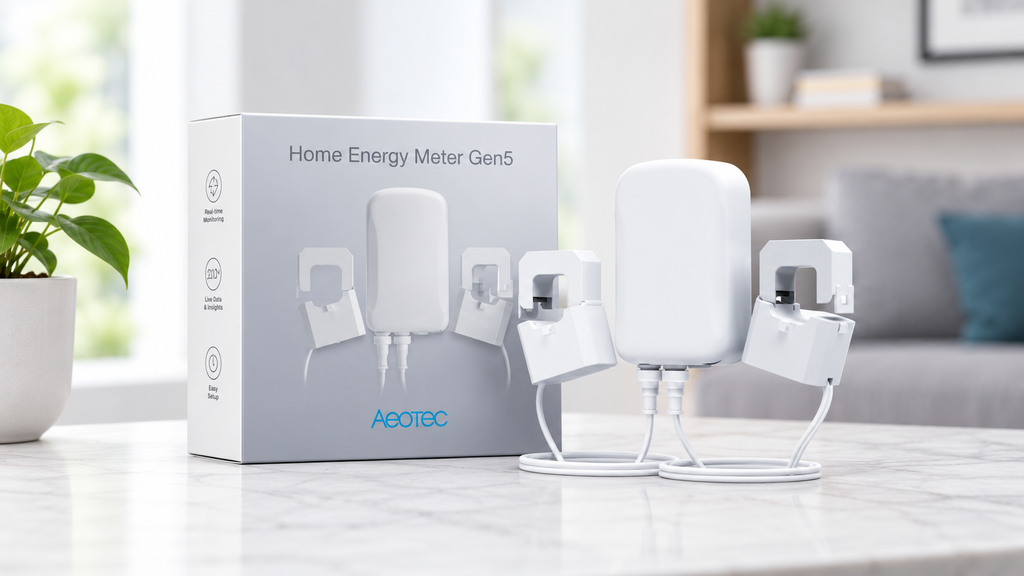
Smart electricity monitoring gives homeowners real-time visibility into how and where energy is consumed across their property. By tracking usage at the circuit or device level, these systems help identify waste, reduce unnecessary consumption, and support smarter automation decisions — leading to measurable reductions in electricity bills and a more intentionally managed home environment.
If you have ever looked at your monthly utility bill and wondered exactly what is driving the cost, you are not alone. Most households in Singapore pay for electricity without ever knowing which appliances consume the most or when peak usage occurs. An energy monitoring system in Singapore closes that gap — not just by showing numbers, but by changing how you engage with your home entirely.
Why Energy Visibility Is the Foundation of a Smarter Home
You cannot manage what you cannot measure. This principle, simple as it sounds, is at the heart of what makes smart electricity monitoring so effective. When consumption data is presented clearly — broken down by device, time of day, or room — patterns emerge that were previously invisible.
In Singapore, electricity tariffs are reviewed quarterly by the Energy Market Authority (EMA). As of 2024, the average household electricity tariff stood at around 32.44 cents per kWh. With the average HDB household consuming roughly 400 to 500 kWh per month, even a 10–15% reduction in usage translates directly into meaningful savings over a year.
Smart monitoring makes that reduction achievable — not through sacrifice, but through awareness.
What a Smart Electricity Meter Actually Does
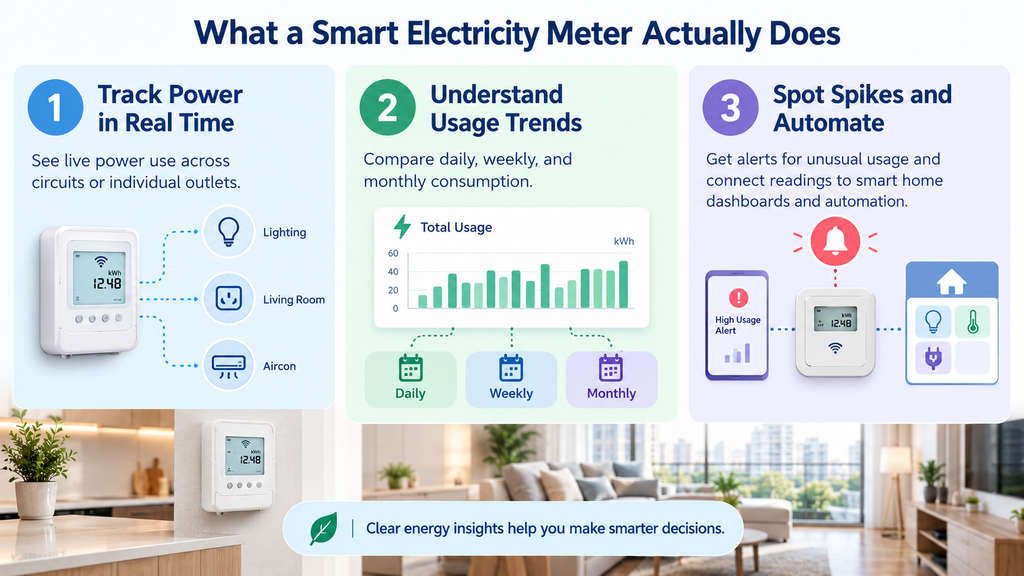
A smart electricity meter does more than record total usage. Modern systems offer:
- Real-time consumption tracking — see live power draw across circuits or individual outlets
- Historical data analysis — compare daily, weekly, and monthly usage trends
- Anomaly detection — receive alerts when usage spikes unexpectedly
- Integration with smart home platforms — connect readings to automation rules and dashboards
Some advanced meters can distinguish between standby power and active consumption, identifying “vampire loads” — devices that quietly drain electricity around the clock even when not in use. Air conditioners, water heaters, and older refrigerators are common culprits in Singapore homes.
How Energy Monitoring Connects to Smart Home Automation in Singapore
This is where monitoring stops being passive and starts becoming powerful. When your energy data feeds into a broader smart home automation Singapore ecosystem, you can build automation rules around actual consumption behaviour — not just schedules.
For example:
- If the energy meter detects that the living room TV has been on for four hours with no motion detected, an automation can prompt a turn-off.
- If total household consumption crosses a threshold, non-essential devices can be temporarily reduced.
- Appliances can be programmed to run during off-peak hours if your plan offers time-of-use pricing.
This kind of responsive automation is the difference between a home that is connected and a home that is genuinely intelligent.
Energy Management System vs. Basic Smart Plugs — What Is the Difference?
| Feature | Smart Plug | Energy Management System |
|---|---|---|
| Device-level monitoring | One device at a time | Whole-home or multi-circuit |
| Automation capability | Basic scheduling | Condition-based, threshold-driven |
| Data depth | Limited | Historical trends, anomaly alerts |
| Integration | Single platform | Multi-system (voice, hub, app) |
| Best suited for | Spot monitoring | Whole-home energy strategy |
Smart plugs are a fine starting point. But a dedicated energy management system offers the kind of whole-home intelligence that genuinely supports long-term efficiency goals — and scales as your smart home devices grow.
Changing Household Habits Through Data
Awareness Leads to Action
Research consistently shows that households with access to granular energy data reduce consumption more effectively than those relying on monthly bill summaries alone. When you can see in real time that your air conditioning accounts for nearly 40% of your electricity draw — a common figure for Singapore homes — you start making different decisions about temperature settings, scheduling, and maintenance.
Gamification and Household Engagement
Many smart monitoring apps now include weekly reports, usage comparisons, and goal-setting features. These tools shift energy management from a chore into something the household engages with actively. Families have reported setting friendly competitions around who can reduce their portion of the household draw — a simple but effective nudge toward lasting behavioural change.
Related Post: How to Set Up a Home Smart System in an HDB or BTO Flat
Is a Smart Energy Monitoring System Worth It for Singapore Homes?
The answer is yes — with context. The value depends on how integrated it becomes with your overall home setup. A standalone meter that feeds data to an app you rarely check will underdeliver. But when it is part of a broader system — connected to your lighting, climate control, and other smart home devices — it becomes a central nervous system for your home’s efficiency.
For homeowners in Singapore navigating rising utility costs and increasing adoption of smart living technologies, the investment case is straightforward. The payback period on a quality energy monitoring setup can be under 12 months when it drives consistent behavioural and automation changes.
L3 Homeation offers smart electricity meters designed to integrate seamlessly into wider smart home ecosystems — built for Singapore homes and backed by a team that understands both the technology and the local context. Visit L3 Homeation to explore how their solutions fit your setup.
Frequently Asked Questions
What is a smart energy monitoring system in Singapore?
A smart energy monitoring system tracks real-time and historical electricity usage across your home, either at the circuit level or device level. It connects to apps or smart home hubs, giving you visibility into consumption patterns and helping identify areas where energy and cost savings are possible.
How does an energy monitoring system reduce my electricity bill?
By showing exactly which appliances consume the most power and when, an energy monitoring system enables you to eliminate wasteful habits, schedule high-draw appliances during off-peak periods, and automate shutoffs for idle devices — all of which contribute directly to lower monthly utility charges.
Can a smart electricity meter integrate with other smart home devices?
Yes. Most modern smart electricity meters are designed to integrate with smart home platforms, allowing energy data to trigger automation rules. For example, usage thresholds can activate or deactivate connected appliances, linking your energy management strategy directly to your broader smart home automation setup.
What are vampire loads and how does monitoring help?
Vampire loads are devices that consume electricity in standby mode — such as televisions, game consoles, and older appliances. A smart energy monitor can detect this low-level but continuous draw, alerting you to devices worth switching off fully or replacing with more efficient alternatives.


