 WhatsApp Us Now

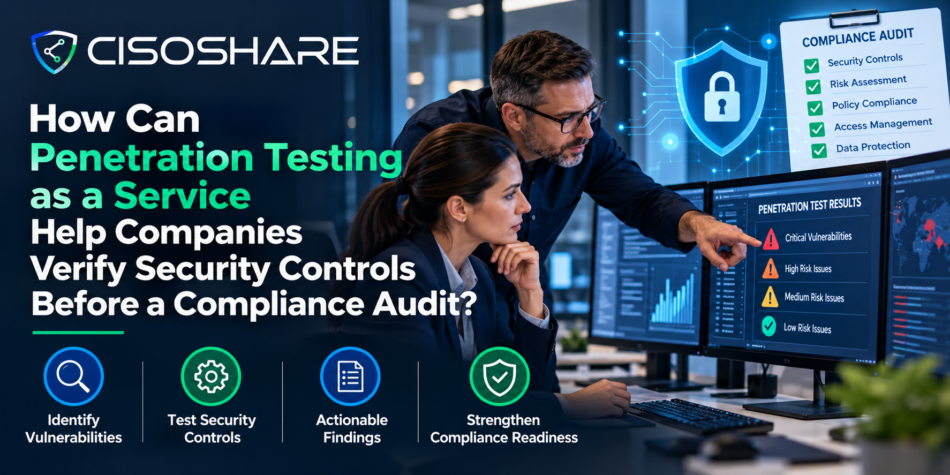
Discover how penetration testing as a service helps verify security controls, identify vulnerabilities, support remediation, and prepare for compliance audits.
Preparing for a cybersecurity compliance audit involves more than documenting policies and implementing security tools. Organizations must also understand whether their technical controls can withstand realistic attack scenarios. Penetration testing as a service helps businesses identify exploitable vulnerabilities and evaluate selected security defenses before an assessment. This approach provides actionable findings that security teams can use to prioritize improvements. For companies facing customer security reviews, ISO 27001 assessments, or other compliance requirements, proactive testing can strengthen audit preparation.
Why Is Security Control Verification Important Before a Compliance Audit?
Compliance audits often examine whether organizations have established appropriate information security policies, processes, and controls. However, documented procedures do not always reflect how effectively technical safeguards operate in practice. Misconfigured systems, excessive permissions, and outdated software can create security weaknesses despite existing policies. Testing helps organizations identify these problems before they become significant operational risks. Security teams can then document corrective actions and demonstrate a more structured approach to security assurance.
What Is the Difference Between Compliance and Security Testing?
Compliance assessments evaluate whether an organization meets specified requirements within an established audit scope. Penetration testing examines whether selected systems or applications contain weaknesses that an attacker could exploit. These activities support different objectives, although their findings may complement one another. A successful penetration test does not automatically establish compliance with an entire security framework. Similarly, passing an audit does not guarantee that an organization’s systems are free from exploitable vulnerabilities.
How Does Penetration Testing as a Service Evaluate Security Controls?
Organizations using penetration testing as a service can arrange structured security assessments aligned with their technical environment and business priorities. Testing may examine externally accessible systems, internal networks, web applications, or other agreed-upon assets. Authorized security professionals use defined methodologies to identify vulnerabilities and evaluate potential exploitation paths. The resulting findings help organizations understand which controls are functioning as intended and where improvements may be necessary. Testing scope, permissions, and operational safeguards should be agreed upon before any assessment begins.
Can Penetration Testing Identify Misconfigured Security Controls?
Security tools can create a false sense of protection when they are incorrectly configured or inconsistently deployed. Penetration testing may reveal weaknesses involving authentication, access permissions, exposed services, and application security. For example, a test might identify an unnecessary administrative interface accessible from the internet. Such findings can help IT teams investigate configuration problems and strengthen relevant controls. The objective is to identify meaningful weaknesses rather than simply generate a list of technical issues.
How Are Vulnerabilities Prioritized After Testing?
Penetration testing reports commonly describe identified vulnerabilities, potential business impact, and recommended remediation steps. Security teams should consider exploitability, asset importance, data sensitivity, and existing compensating controls when prioritizing findings. Critical weaknesses affecting sensitive systems may require immediate attention, while lower-risk issues can be addressed through scheduled remediation. Clear ownership and deadlines help ensure that findings lead to measurable improvements. Retesting may then be used to verify whether corrective actions resolved the identified weaknesses.
Can Penetration Testing Support ISO 27001 Audit Preparation?
ISO 27001 emphasizes a risk-based approach to establishing, operating, and improving an information security management system. Technical security assessments can provide useful evidence of how an organization evaluates vulnerabilities and manages related risks. Businesses pursuing ISO 27001 Certification Services may use penetration testing results to inform their risk treatment activities. However, certification requirements depend on the organization’s scope, applicable controls, and assessment process. Penetration testing alone does not guarantee certification or satisfy every ISO 27001 requirement.
What Evidence Can Security Teams Present During an Audit?
Relevant documentation may include the authorized testing scope, assessment methodology, executive summary, and remediation records. Organizations can also maintain evidence showing when findings were reviewed, assigned, corrected, and retested. Sensitive technical details should be shared according to appropriate confidentiality and access controls. Auditors determine whether submitted evidence is relevant and sufficient for the applicable requirements. Maintaining organized records throughout the year can reduce preparation difficulties before an audit.
How Does Vulnerability Management Complement Penetration Testing?
Penetration testing typically evaluates an agreed-upon environment during a defined assessment period. Continuous vulnerability management provides an ongoing process for identifying, evaluating, and addressing weaknesses as systems change. Organizations using vulnerability management as a service can support regular vulnerability discovery and remediation tracking. These activities complement penetration testing because automated scanning does not always establish whether a weakness can be exploited in a realistic scenario. Combining both approaches can improve visibility into technical security risks.
Why Is Ongoing Monitoring Necessary?
New vulnerabilities emerge as software, infrastructure, and business applications evolve. Security configurations can also change when systems are upgraded or new services are introduced. A penetration test performed several months earlier may not reflect the organization’s current exposure. Regular monitoring helps teams identify emerging issues between formal assessments. This supports a more consistent security improvement process rather than relying entirely on annual testing.
How Can Risk Management Improve Remediation Decisions?
Not every vulnerability creates the same level of risk for every organization. A weakness affecting a public-facing application that processes sensitive customer information may require greater urgency than an isolated low-impact issue. Cyber Security Risk Management Services can help businesses evaluate findings in the context of their operational environment. Risk-based prioritization enables leadership to allocate resources according to potential business consequences. Documenting these decisions also supports accountability during compliance reviews.
How Should Companies Track Corrective Actions?
Organizations should maintain a remediation register that records findings, assigned owners, target dates, and current status. Security and IT teams can use this information to coordinate changes across applications, infrastructure, and third-party systems. Significant unresolved risks should be escalated to appropriate business stakeholders. After remediation, validation testing can help determine whether the original weakness remains exploitable. This process creates a clearer connection between security testing and measurable risk reduction.
Can Virtual CISO Leadership Help Coordinate Audit Readiness?
Technical testing is only one component of a comprehensive cybersecurity governance program. Organizations using virtual ciso services can receive strategic guidance on security priorities, remediation planning, and executive reporting. Security leadership can coordinate responsibilities between IT personnel, compliance teams, and business decision-makers. This helps ensure that testing findings are addressed within an organized security program. It also supports clearer communication about outstanding risks before customer assessments or compliance audits.
How Does Penetration Testing Relate to CMMC Requirements?
Organizations working with the United States Department of Defense may need to address applicable Cybersecurity Maturity Model Certification requirements. The specific assessment obligations depend on contract requirements, assessment level, and the systems within scope. Businesses exploring cmmc consulting services can review how technical testing fits into their broader security preparation. Penetration testing may provide useful security insights, but it should not be presented as a universal standalone CMMC certification requirement. Organizations must evaluate the actual requirements applicable to their contracts and assessment scope.
When Should Companies Schedule Penetration Testing Before an Audit?
Organizations should schedule testing early enough to allow time for reviewing findings and completing remediation. Waiting until the final weeks before an audit can leave significant vulnerabilities unresolved. Companies considering penetration testing as a service should establish a clear assessment scope and identify critical systems before testing begins. The schedule should also account for potential retesting and documentation updates. Early preparation helps teams approach compliance reviews with a more accurate understanding of their security posture.
What Should You Ask a Penetration Testing Provider?
Ask which systems will be assessed, what methodology will be used, and how testing activities will be authorized. Confirm whether the engagement includes a detailed report, remediation guidance, and optional retesting. Discuss how the provider will protect sensitive information and minimize disruption to business operations. The organization should also understand which vulnerabilities or systems fall outside the agreed testing scope. Clear expectations help ensure that the assessment produces findings relevant to security and audit preparation.
Why Choose CISOSHARE for Security Testing and Compliance Support?
CISOSHARE provides cybersecurity services designed to help organizations identify risks, evaluate security controls, and strengthen their security programs. Based in San Clemente, California, CISOSHARE supports businesses across the United States with security testing, risk management, and compliance-related services. Organizations preparing for customer assessments or formal audits can explore how technical testing fits into their broader cybersecurity objectives. A coordinated approach helps connect assessment findings with practical remediation and security governance. Businesses should select services according to their systems, applicable requirements, and organizational risk profile.
Conclusion
Compliance readiness requires organizations to understand whether important security controls are operating effectively. Penetration testing as a service can help identify exploitable weaknesses, guide remediation, and produce evidence that may support audit preparation. When combined with vulnerability management and risk-based governance, testing can contribute to a stronger cybersecurity program. CISOSHARE in San Clemente, California, United States, helps businesses evaluate cybersecurity risks and prepare for security assessments. To discuss your organization’s testing requirements, contact info@cisoshare.com or visit CISOSHARE to explore available cybersecurity services.


