 WhatsApp Us Now

A Step-by-Step Florist’s Guide to Mastering the Hand-Tied Bouquet Technique
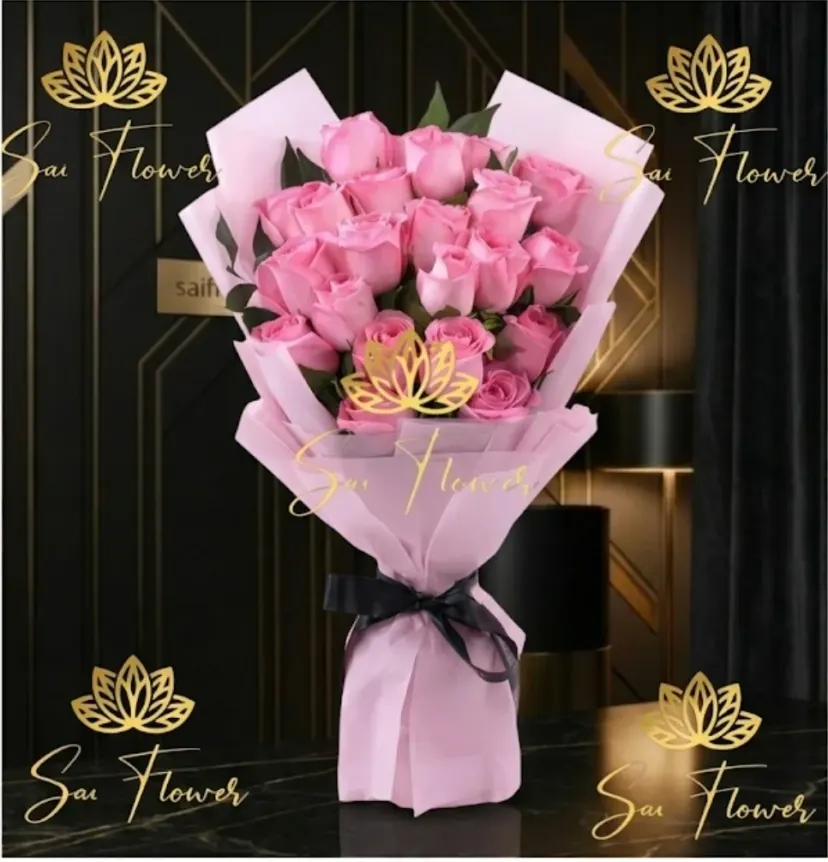
Crafting a hand-tied bouquet involves learning to form a spiral stem pattern, utilizing fresh flowers, and tying their stems together at a binding point to create a free-standing design. In comparison to a traditional bouquet that uses a foam base, a properly tied hand-tied bouquet offers greater flower longevity, ecological sustainability, and a superior finishing touch for a special occasion.
When I wake up at 4:00 AM to head towards Ghazipur Phool Mandi on East Delhi, I look forward to discovering fresh flower varieties since every floral design requires character to bring out its beauty. For instance, all rose stems, whether Dutch, oriental lily, and gerbera have a unique curvature to develop a stunning hand-tied bouquet. My experience while working at Sai Flower has taught me that good floristry requires learning to tie a stem. Furthermore, one also discovers how to value natural flowers.
Therefore, I have compiled a step-by-step guide to hand-tied bouquets containing elaborate instructions that enable you to create stunning floral designs like a professional. If you are a novice, this guide will be a masterclass in tying a hand-tied bouquet. Alternatively, if you already have experience, this tutorial will help you discover new ideas and methods.
Why Is a Hand-Tied Bouquet the Preferred Floral Arrangement?
I use my professional judgment to review the best floral arrangements based on five industry benchmarks:
Structural Integrity Freshness Eco-Friendliness Design Versatility Unboxing Experience
My Honest Review
As a florist, I can honestly review this product with 4.86 out of 5 stars. However, a hand-tied bouquet is a masterpiece that allows blooms to spread out beautifully. When creating a hand-tied bouquet, one does not rely on floral foam to hold the stems together. Instead, they use the stem binding technique to make a bouquet with volume and depth comparable to factory-made designs.
A hand-tied bouquet is an eco-friendly alternative to traditional floral arrangements. This bouquet type utilizes the spiral stem technique to create a free-standing design with greater stem longevity and design versatility compared to floral foam-based creations.
How Do You Prepare Flowers For Tying?
I always believe that flower conditioning and preparation account for 80% of the hard work involved in creating a hand-tied bouquet. However, one must know how to avoid killing the floral design during preparation. Here are some tips:
- Conditioning and Stripping Leaves
I always begin by conditioning the flower stems by removing leaves and thorns from the lower third part of the stem. The reason is that leaves that fall below the binding point get buried under the vase, thereby rotting away and generating bacteria that clog the xylem tissue of the flower stem. I always use a stem stripper to remove thorns and leaves from rose stems.
- Cutting the Stems at an Angle
I always use sharp trimming shears to cut into the flower stem at a 45-degree angle. The stem cut at an angle has a larger surface area to absorb more water from the vase. However, one should avoid cutting the stems with regular scissors since they crush and damage the water channels inside the stem.
- Sorting the Flower Stems According to Design Roles
I always sort the flower stems according to their design roles to ensure visual balance in my finished floral design. For instance, I identify the focal point of my floral creation and set it aside. In most cases, focal flowers include popular varieties of large blooms such as lilies, hydrangeas, and open roses. I also put aside secondary flowers and foliage, including carnations, spray roses, and gerberas with fine accents. Finally, flowers such as baby’s breath, limonium, and hypericum berries also play a significant role in floral design.
Preparing flowers for a hand-tied bouquet involves conditioning the stem by removing leaves and thorns, cutting the flower stem at a 45-degree angle, and sorting the blooms according to their design roles.
What Is the Step-by-Step Procedure for Making a Hand-Tied Bouquet?
The spiral technique is the only mechanical method for creating a hand-tied bouquet. Using this method, one can easily achieve a standard hand-tied bouquet with a single focal bloom. Hand-tied bouquets always have angled and spaced-out flower heads forming a dome shape with stems bound tightly at a focal binding point.
Step 1: Begin by Holding the Focal Stem
I always begin by holding a single focal stem in my non-dominant hand with the flower facing out and back. Moreover, I ensure that my thumb and index finger hold the stem just below the middle to create the binding point. This focal stem will determine the bouquet size, shape, and design.
Step 2: Hold the Second Stem at an Angle
I begin by placing the second stem across the first one at an angle, ensuring that the top points to the left while the bottom points to the right and behind the middle stem. In most cases, I ensure that every additional stem or foliage I add to create the bouquet follows the same pattern while holding the stems in my non-dominant hand. The objective is to keep the bouquet rotating in a spiral-like pattern as I add more stems.
Step 3: Continue Adding Stems and Rotate the Bundle
To begin with, I always ensure that the stems are spaced out well to allow the flowers to spread out nicely and create a dome shape. I also ensure that every time I add a filler or foliage, I follow the same pattern. After adding every set of stems, I rotate the bundle in my hand to ensure that the shape is visually appealing from all angles. For instance, I add secondary flowers and foliage in between the focal blooms to ensure that the bouquet has an excellent contrast.
Step 4: Bind the Bouquet Stems at the Binding Point
Once I have added enough stems to create the dome shape, I bind the stems at the binding point where my non-dominant hand was holding the focal stem. I use jute twine to bind the stems by wrapping the bundle 3x before tightening it securely to keep the stems together. However, I ensure that the binding is firm enough to maintain the spiral pattern without damaging the delicate flower stems.
Step 5: Trim the Bound Bouquet to Size
The final step is to ensure that the bouquets I have tied have trimmed stems to an even length. As a result, one can easily place the trimmed bouquet on a flat surface and have it stand upright on its binding point.
Design Comparison Between Hand-Tied and Traditional Floral Arrangements, Floral Arrangement Features Hand-Tied Bouquets Traditional Floral Foam Arrangements
Hydration Efficiency Good Fair,Environmental Friendliness Super High Low
Design Versatility High Low,Average Freshness Long Short
The procedure for making a hand-tied bouquet involves holding the focal stem in one’s non-dominant hand, adding the second stem at 45 degrees, and continuing to add stems in a spiral pattern.
How Can You Pair a Hand-Tied Bouquet for Different Occasions?
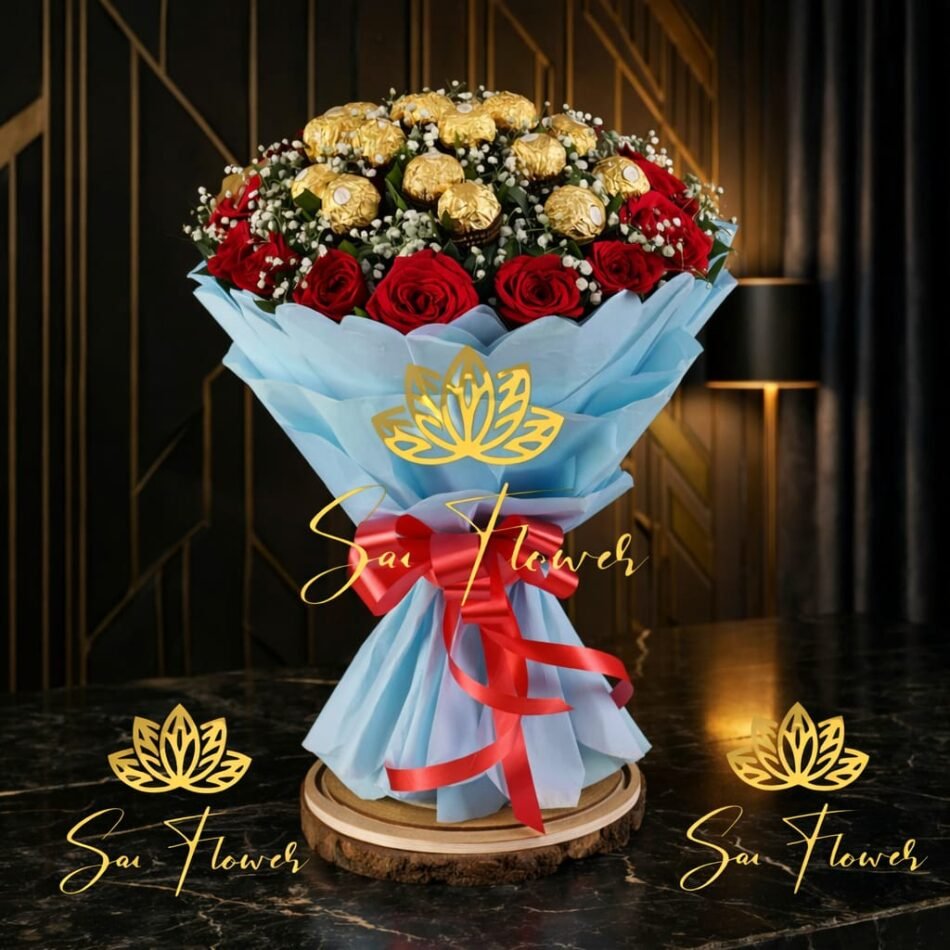
When shopping at my flower shop in Lodhi Road, I always remind my clients that flowers speak volumes, but pairing them with the right accessories creates a lifetime memory. Although a bouquet of fresh flowers is an excellent gift, pairing it with handpicked treats transforms an ordinary gift into a delightful surprise.
In my experience, gifting a fresh bouquet of flowers with dark chocolates, cakes, and keepsakes has been an excellent way to elevate simple gifts into grandeur. For instance, when arranging combo gifts, I always ensure that I pair dark green foliage with dark chocolates in pastel-colored roses or lilies. Alternatively, one can also opt for gift combo delivery services to ensure the timely delivery of gifts.
Creating a hand-tied bouquet of fresh flowers and pairing it with dark chocolates and gift cards makes a thoughtful gift. Furthermore, delivery services also ensure that handpicked treats and floral designs arrive at the doorstep of loved ones in excellent condition.
How Do You Keep Hand-Tied Bouquets Fresh?
After I have delivered a hand-tied bouquet to my client, flower longevity always depends on the care and maintenance they provide. However, one can easily keep their hand-tied bouquets fresh for more than a week by learning how to care for them.
Do not cut the stems binding string: The string that binds a hand-tied bouquet together plays a crucial role in holding the stems together. For instance, one should always avoid cutting the binding wire or twine since it keeps the bouquet together. Moreover, one should always avoid using floral foam to hold the bouquet in the vase since it restricts the stem from opening fully.
Clean the vase: One should always avoid using a dirty vase to hold their bouquets of fresh flowers. Therefore, one should clean the glass vase with soap and warm water before submerging their bouquets in the fresh water.
Trim the stems every 2 days: I always advise my clients to cut 1 cm of the stem with sharp trimming shears at a 45-degree angle every 2 days. The reason is that the new cut has a larger surface area to absorb more water from the vase.
Change the vase water every two days: When watering the bouquet, one should ensure that they do not refill the vase with dirty water. Therefore, one should always change the water every two days to ensure that their bouquets stay fresh for longer.
Avoid exposing the bouquet to heat emission sources: I always remind my clients that they should avoid placing their hand-tied bouquets near heating vents and sunlight. For instance, one should avoid placing fresh flowers near ripening fruits since they emit gases that cause the flowers to wilt faster.
Caring for a hand-tied bouquet of fresh flowers involves leaving the binding string intact, using a clean vase with fresh water, trimming 1 cm of the stems at a 45-degree angle, and avoiding direct exposure to sunlight.
Frequently Asked Questions (FAQs)
What makes a hand-tied bouquet different from a regular vase arrangement?
A hand-tied bouquet of fresh flowers is created by a spiral stem tying technique followed by stem binding at the focal point. Alternatively, one can describe a regular vase arrangement as a floral design made in a vase without any specified stem binding. For instance, when one removes the paper covering from a hand-tied bouquet, they discover that it stands well on its binding. However, a regular type of floral arrangement lacks this feature and cannot stand independently.
Should I remove the string binding a hand-tied bouquet when putting it in a vase?
One should never remove the string that binds a hand-tied bouquet together when putting it in a vase. The reason is that the binding string holds the stems together in a spiral shape to allow full blossom. Therefore, removing the binding string will restrict the flower from opening up fully to reveal its beauty.
How long does a fresh hand-tied bouquet of flowers last?
A fresh hand-tied bouquet of fresh flowers rarely lasts longer than a week. However, one can prolong the lifespan of their bouquets through proper maintenance. For instance, fresh carnations and chrysanthemums can last up to two weeks, while roses and tulips only last for five days in a vase.
Can I turn a hand-tied bouquet into a gift hamper?
Yes, one can turn a hand-tied bouquet of fresh flowers into a gift hamper by adding handpicked treats such as dark chocolates and greeting cards. For instance, when creating a hand-tied bouquet gift combo, I always secure the bouquets of fresh flowers together with the selected treat in a basket.
Making a hand-tied bouquet of fresh flowers is an art that requires good preparation and practice. However, creating this type of bouquet at home is always fun, especially with the right materials. Alternatively, one can also hire professional florists to create stunning hand-tied bouquets in Delhi.Sai Flower, Shop No 1, Sai Mandir, Lodhi Rd, Gokalpuri, Institutional Area, Lodhi Colony, New Delhi, Delhi 110003, 088020 04527


