 WhatsApp Us Now

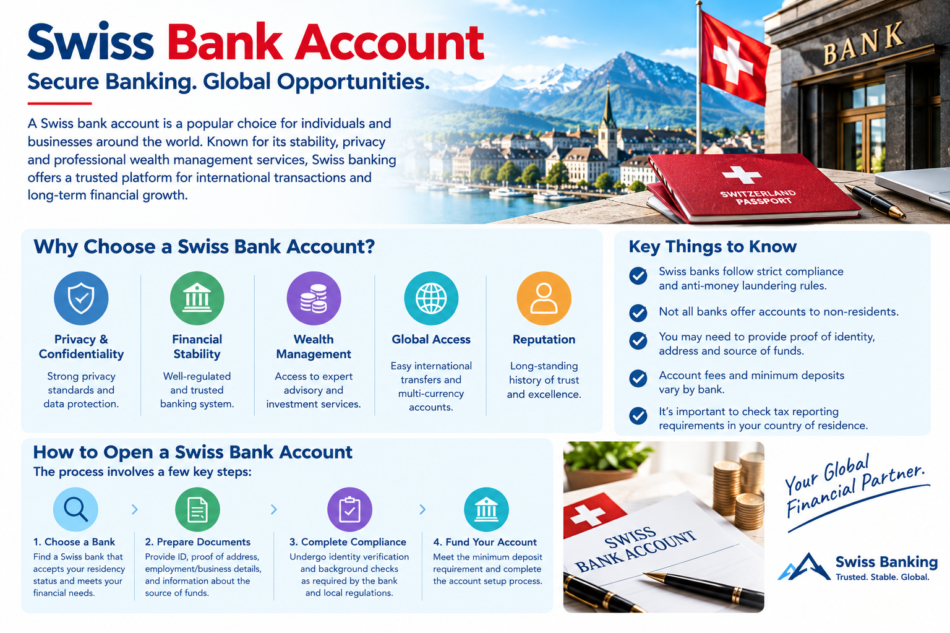
Ever had a thought on why a Swiss bank account is a preferred option for international banking and wealth management? Switzerland has a well-developed financial system, political stability and an experienced banking sector. Swiss banking is studied by individuals and businesses worldwide who want to handle international finances, spread their banking risk and benefit from special financial services.
But, it is not possible to simply open a Swiss bank account in Switzerland. Applicants need to be eligible, submit identification documents and undergo compliance checks. Learning about how to open a Swiss Bank Account can make you better prepared to go through the process and pick a banking solution that is right for you.
What Is a Swiss Bank Account and Why Is Swiss Banking Popular?
A Swiss bank account is an account held by a financial institution in Switzerland. The Swiss banks provide services, such as personal banking, business accounts, savings accounts, investment management and wealth planning. The answer to this question will vary according to your state of residence, financial situation and banking goals.
Swiss banking is renowned worldwide for its stability and professional financial services. But it is important to note that a Swiss bank account is not an investment return promise or absolute anonymity. The Swiss financial sector is subject to all relevant laws, anti-money-laundering controls and international tax information exchange requirements.
When people are thinking about getting a bank account in Switzerland they compare the account fees, the minimum amount to deposit, the currencies supported and whether they can access international transfers. Certain banks accept applications from non-residents, others accept applications only for nationals or country of residence.
A Swiss bank account can be used to accept payments in Swiss francs – and in some banks, other currencies, like EUR, USD and GBP. This can be helpful for individuals who get paying from abroad or handle costs in a number of nations.
When selecting a Swiss bank, you should conduct a thorough investigation of its services, as well as check its regulation. By comparing Swiss bank accounts, you can gain a better understanding of the various fee and account access differences as well as the accompanying financial services.
How to Open a Swiss Bank Account in Switzerland
When you wish to learn on how to open a Swiss bank account, you need to find a bank which welcomes the applicant of your status. Requirements for residents may be different from the requirements for international applicants. Many Swiss banks do not accept non-resident customers, so it is advisable to find out if your account is accepted before applying.
Once you have done the above, the next step in Swiss bank account opening is a preparation of the necessary documents. Typical documents banks ask for are a valid passport or government-issued ID, proof of residence, and employment/business information. They may ask for information regarding the source of funds, likely transactions and tax residency.
Depending on the bank, some banks allow remote applications when the applicant is researching on how to open a bank account in Switzerland from abroad, others, however, need an appointment or additional proof of identity. There may also be minimum depositions and account maintenance fees.
When opening a Swiss bank account, the Swiss banks will carry out compliance procedures to check the identity of the applicant and the legality of the funds. The timely provision of accurate information can help the application run smoothly.
Depending on the reason for opening a bank account in a Swiss bank for business purposes, other documents may be required, such as company registration records, details about company ownership, and info regarding the business activities.
In conclusion, a Swiss bank account may be beneficial for certain individuals and businesses that require international banking solutions. When looking for an institution, make sure to do so carefully, because you don’t want to end up with higher costs. You also want to make sure that your account meets the reporting requirements in your country of residence. An informed approach can help you make a judicious choice for Swiss banking.
For more details visit us – Accountance


