 WhatsApp Us Now

Introduction
A few clicks and a selection of property photos are frequently the first steps in the rental house search process.. Before contacting a landlord or arranging a viewing, prospective tenants want to know whether a property suits their lifestyle, furniture needs, and budget. High-quality rental listing images can help answer these questions by presenting rooms clearly and highlighting the features that matter most.
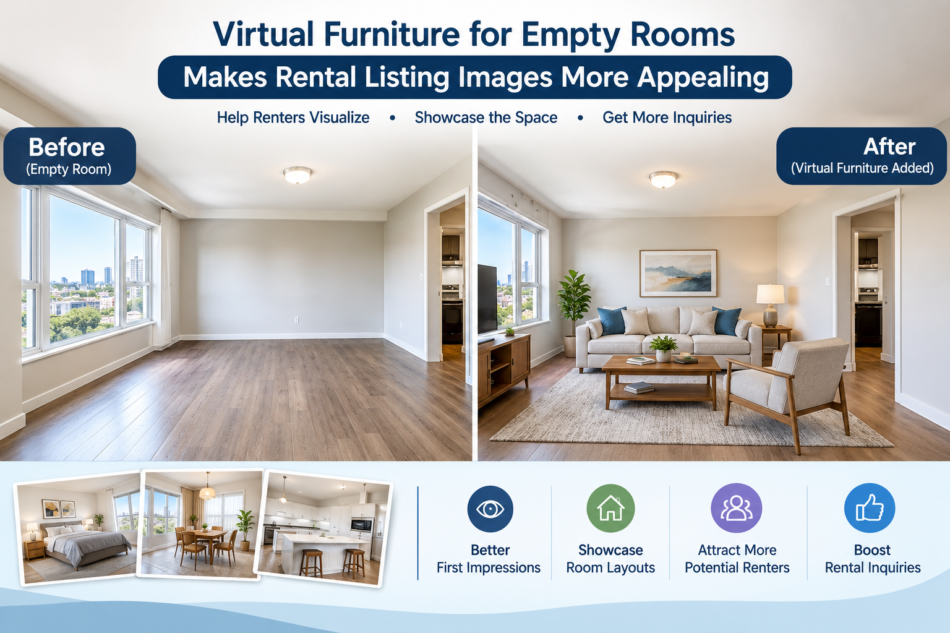
However, vacant properties can be challenging to market visually. An empty bedroom may look unfamiliar, while a spacious living area may be difficult to judge without furniture for reference. Virtual furniture for empty rooms offers a practical solution by adding realistic digital furnishings to photographs, allowing viewers to explore possible room arrangements without physically staging the property.
When applied carefully, this technique can make rental advertisements more informative, visually appealing, and useful for people comparing available homes.
Why Professional Rental Listing Images Make a Difference
Property photographs provide an initial impression long before a potential tenant walks through the front door. Clear images help viewers understand the layout, assess visible features, and decide whether a rental deserves further consideration.
Effective rental listing images should show the property’s genuine characteristics rather than relying solely on decoration.Accurate perspectives, natural lighting, and careful camera placement may show how various parts of a house relate to one another.
For instance, a photograph of an empty apartment might show a kitchen connected to a living room, but viewers may struggle to understand how both areas could function together. A well-planned visual presentation can make the layout easier to interpret.
Good photography also helps landlords communicate consistently across property portals, rental websites, and social media advertisements. Instead of leaving important details to the imagination, they can provide images that support a clearer understanding of the space.
How Virtual Furniture for Empty Rooms Changes Property Presentation
Virtual staging uses digital editing techniques to place furniture and decorative elements inside photographs of vacant interiors. These additions may include beds, sofas, dining tables, lamps, curtains, rugs, and artwork.
Unlike physical staging, this process does not require furniture to be transported into the property. The original room remains empty, while the edited photograph illustrates one possible furnishing arrangement.
Making Room Dimensions Easier to Understand
One challenge with vacant interiors is that viewers have few familiar objects to use as a reference for scale. A digitally furnished image can demonstrate how a standard bed might fit in a bedroom or how a sofa could be positioned within a living area.
Imagine a small apartment with a narrow lounge. Adding appropriately sized seating and a compact coffee table can illustrate a practical arrangement while showing how much walking space remains.
The key is to use furniture that matches the room’s actual proportions. Excessively large rooms, unusually small furniture, or unrealistic perspectives can create misleading impressions and undermine confidence in the advertisement.
Presenting a Welcoming Interior Style
Empty rooms sometimes lack the warmth that helps prospective tenants connect emotionally with a property. Digital furnishings can introduce a coordinated interior style without making permanent changes.
Neutral colors, simple furniture, and restrained decorations are useful choices for rental marketing because they allow architectural features to remain the focus. A bright living room might benefit from a light-colored sofa and a small wooden table, while a bedroom could be presented with understated bedding and matching bedside furniture.
These choices help viewers imagine how the space might accommodate their belongings without suggesting that every decorative item will be supplied by the landlord.
Practical Ways to Improve Rental Property Photographs
Digital staging delivers the best results when the original photography is already clear and accurate.
Capture the Property From Useful Angles
Start by photographing each room in good lighting. Whenever possible, use natural daylight and position the camera to show the room’s layout without excessive distortion.
Include important features such as windows, doors, built-in wardrobes, flooring, and permanent fixtures. These details help renters assess the property beyond its decorative appearance.
Avoid editing techniques that stretch walls or make narrow spaces appear unusually wide. Accurate proportions provide a more reliable foundation for digital furnishing.
Select Furniture That Suits the Available Space
Every room should be staged according to its intended function and dimensions. A compact bedroom might need only a bed, a small wardrobe, and a bedside table. A larger living area may accommodate a sofa, occasional chair, and dining space.
Virtual furniture for empty rooms should demonstrate realistic possibilities rather than fill every available corner. Leaving sufficient visible floor space makes it easier for viewers to understand circulation and furniture placement.
Keep Digital Enhancements Realistic
Furniture should match the room’s lighting direction, perspective, and shadows. Poorly blended digital objects can look artificial and distract from the property’s actual features.
Landlords and property marketers should also avoid removing visible defects or digitally altering permanent features in ways that misrepresent the rental. The purpose of staging is to illustrate furnishing possibilities, not to disguise the property’s condition.
Virtual Staging Versus Traditional Furniture Staging
Traditional staging requires physical furniture, transportation, setup, and potentially storage or rental arrangements. It can be valuable when a landlord wants a furnished environment available for in-person viewings.
Digital staging serves a different purpose. It allows marketers to prepare furnished-looking photographs while leaving the property physically vacant. This can be convenient when advertising newly renovated apartments, empty investment properties, or several rental units at once.
Before selecting a service, review its portfolio, image quality, editing process, and delivery requirements. If you are exploring options for, look for examples that preserve realistic proportions and clearly distinguish digital additions from features actually present in the property.
The right choice depends on the property’s marketing needs, the intended audience, and whether physical furnishings will be available during viewings.
Why Honest Property Marketing Matters
Visual appeal should always be supported by accurate information. If a photograph includes digitally added furnishings, label it clearly as virtually staged or digitally furnished.
Where practical, include both the original photograph and the staged version. This allows prospective tenants to see the property’s current condition while considering different ways to arrange the space.
Descriptions should also explain which appliances, furnishings, parking facilities, and storage options are included in the rental. A digitally added sofa or dining table should not create an expectation that these items come with the property.
Clear communication can help prevent confusion, support productive conversations, and ensure that prospective tenants understand what they are considering before scheduling a visit.
Conclusion
Well-prepared rental listing images help landlords present vacant properties in a way that is easy to understand and visually engaging. By incorporating virtual furniture for empty rooms, property marketers can illustrate possible layouts, establish a consistent presentation, and help prospective tenants imagine how an unfamiliar space might suit their needs.
The strongest results come from combining realistic digital furnishings with accurate photography and transparent descriptions. When visual creativity supports honest property information, rental listings become more useful to prospective tenants and more professional in their overall presentation.


